
Giulio Caccini was an influential Italian composer of the late Renaissance and early Baroque eras, born in 1551 and passing in 1618.
Caccini was not only a composer but also a teacher, singer, and instrumentalist, playing a crucial role in the birth of opera.
He was a member of the Florentine Camerata, a group that significantly influenced the development of monody, a precursor to opera.
Биография
Early Life
Giulio Romolo Caccini was born in Rome on October 8, 1551, to Michelangelo Caccini, a carpenter. He was the elder brother of the Florentine sculptor Giovanni Caccini. Caccini's early musical education included studying the lute, viol, and harp, which laid the foundation for his future career as a singer and composer. His talent caught the attention of Francesco de' Medici, Grand Duke of Tuscany, who brought him to Florence for further training. By 1579, Caccini was performing at the Medici court as a tenor, showcasing his ability to accompany himself on the viol or archlute.
Career
Caccini was a pivotal figure in the development of early opera and the Baroque style. He was a member of the Florentine Camerata, a group of intellectuals dedicated to reviving ancient Greek dramatic music. This collaboration led to the creation of monody, a style characterized by a single vocal line with simple chordal accompaniment, which marked a significant shift from the complex polyphony of the late Renaissance. His most notable work, "Le nuove musiche," published in 1602, is often regarded as the first collection of monodies, solidifying his role as a key innovator in this genre.
Legacy
Caccini's influence extended beyond his lifetime, as his innovations in musical expression laid the groundwork for the operatic recitative and significantly shaped the Baroque music landscape. His work not only popularized the stile recitativo but also contributed to the evolution of musical styles in Florence and Venice, two of the most progressive musical centers of the time. Caccini's legacy is preserved through his compositions, including numerous albums such as "L’Euridice" and "Amor che fai? : Madrigali e Arie," which continue to be celebrated in the world of classical music.
Собрано из открытых источников (4) · факты со ссылками · обработка ИИ
Дискография
 Amarilli, Le Nuove Musiche 16012021
Треклист пока не собран.
 Le nuove musiche2019
Треклист пока не собран.
 Songs of Orpheus2018
Треклист пока не собран.
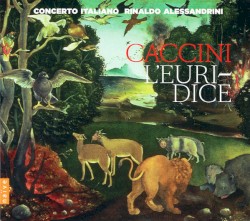 L'Euridice2013
Треклист пока не собран.
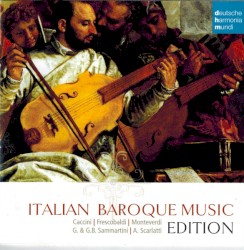 Italian Baroque Music Edition2011
Треклист пока не собран.
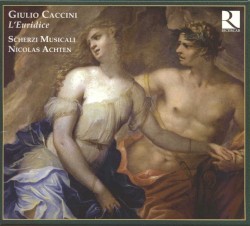 L’Euridice2008
Треклист пока не собран.
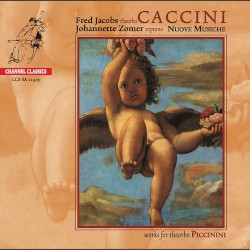 Nuove Musiche2005
Треклист пока не собран.
 Amor che fai? : Madrigali e Arie2005
Треклист пока не собран.
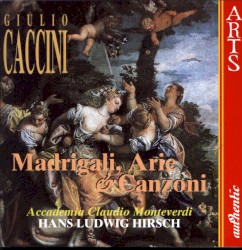 Madrigali, Arie & Canzoni2000
Треклист пока не собран.
 King of the Low Seas : Arias by Caccini and Puliaschi1996
Треклист пока не собран.
 Intégrale des madrigaux & arias, Volume 1 : Le nuove musiche (1601)1992
Треклист пока не собран.
 Intégrale des madrigaux & arias, Volume 2 : Nuove musiche e nuova maniera di scriverle (1614) (soprano: Maurizia Barazzoni, luth: Sandro Volta)1992
Треклист пока не собран.
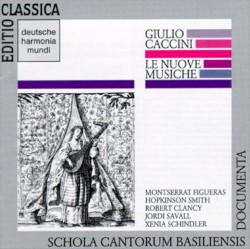 Le Nuove Musiche1990
Треклист пока не собран.
Галерея


Похожие исполнители


Архив
Паспорт
Идентификаторы и алиасы
Также известен как: Džulio Kačīni, Giulio Romano, Giulio Romolo Caccini, Kačīni
Giulio Romolo Caccini was an Italian composer, teacher, singer, instrumentalist and writer of the late Renaissance and early Baroque eras. He was one of the founders of the genre of opera, and one of the most influential creators of the new Baroque style. He was also the father of the composer Francesca Caccini and the singer Settimia Caccini.
Все ссылки
Мнения фанатов — не проверенные факты.
…