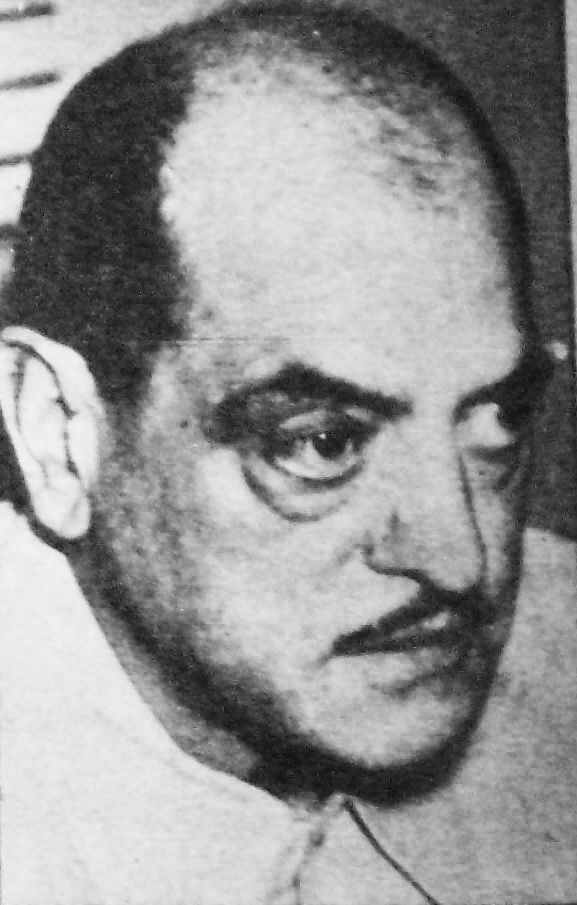
He began his film career in Paris, where he became involved in cinema and met influential figures like pianist Ricardo Viñes.
He married Jeanne Rucar Lefebvre, a bronze medalist at the 1924 Paris Olympics, in 1934.
Buñuel was known for his economical filmmaking style, often shooting films in just a few weeks.
Биография
машинный переводEarly Life
Luis Buñuel Portolés was born on February 22, 1900, in Calanda, a small town in the Aragon region of Spain. He was the eldest of seven children in a wealthy family, with his father, Leonardo Buñuel, having made a fortune in Havana before returning to Calanda. The family moved to Zaragoza when Buñuel was just four months old, where he received a strict Jesuit education. His early experiences in Zaragoza, including a notable incident where he refused to return to school after being insulted, shaped his rebellious spirit. Even as a child, he exhibited a flair for the dramatic, creating shadow shows for his friends.
Career
Buñuel's cinematic journey began in Paris in 1925, where he immersed himself in the film and theater scene. He worked as a secretary for the International Society of Intellectual Cooperation and met influential figures like pianist Ricardo Viñes. His directorial debut came with the Dutch premiere of Manuel de Falla's puppet-opera in 1926. Buñuel's filmmaking style was marked by surrealism and political commentary, earning him a reputation as one of the greatest filmmakers of all time. His works, characterized by their avant-garde approach, include notable films that garnered prestigious awards such as the Palme d'Or and the Golden Lion.
Personal Life
In 1926, Buñuel met Jeanne Rucar Lefebvre, a gymnastics teacher and Olympic medalist, whom he married in 1934. Their relationship endured despite warnings from peers about Buñuel's character. He was also known for his interest in hypnosis, claiming that watching films could induce a hypnotic state in viewers. Buñuel's life was a blend of personal and artistic exploration, with his atheism and surrealist influences deeply embedded in his work, making him a pivotal figure in the film industry until his death in 1983.
Собрано из открытых источников (4) · факты со ссылками · обработка ИИ
Галерея


Достижения
машинный перевод- Награда
- Grand Cross of the Order of Isabella the Catholic
- Награда
- National Prize for Arts and Sciences
- Награда
- honorary doctor of the University of Madrid Complutense
- Награда
- honorary doctor of the University of Zaragoza
- Награда
- Palme d'Or
- Награда
- Golden Lion
- Награда
- Golden Ariel
- Награда
- Cannes Best Director Award
- Награда
- Grand Jury Prize of the Venice Film Festival
- Награда
- BAFTA Award for Best Screenplay
- Награда
- Gold Medal of Merit in the Fine Arts
Архив
Паспорт
Идентификаторы и алиасы
Luis Buñuel Portolés was a Spanish filmmaker who worked in France, Mexico, and Spain. He has been widely considered by many film critics, historians, and directors to be one of the greatest and most influential filmmakers of all time. Buñuel's works are known for their avant-garde surrealism which was also infused with political commentary.
Все ссылки
Метрики точно
Мнения фанатов — не проверенные факты.
…