
Samuel Barber was an influential American composer, pianist, and conductor, celebrated for his lyrical and emotional music.
He won the prestigious Pulitzer Prize for Music twice during his illustrious career.
Barber received the Edward MacDowell Medal in 1980 for his outstanding contributions to the arts.
Биография
Early Life
Samuel Osmond Barber II was born on March 9, 1910, in the United States. He was a prodigious talent, showing early promise as a composer and pianist. Barber's formal education in music began at the Curtis Institute, where he studied composition under Rosario Scalero for nine years. His musical upbringing was further enriched by his uncle, composer Sidney Homer, who mentored him for over 25 years. This combination of rigorous training and familial influence shaped Barber's distinctive style, which favored traditional harmonic language and emotional expression over the experimental trends of his time.
Career
Barber emerged as one of the most celebrated composers of the mid-20th century, known for his lyrical melodies and rich harmonies. His works include notable compositions such as the "Adagio for Strings," the "Violin Concerto, Op. 14," and the "Cello Concerto, Op. 22." Throughout his career, Barber received numerous accolades, including two Pulitzer Prizes for Music, the Rome Prize, and the Edward MacDowell Medal. His music often reflected a blend of modernism and traditional forms, particularly evident in pieces like the "Piano Sonata" and "Medea's Dance of Vengeance."
Personal Life
Barber's personal life was marked by a long-term relationship with Italian composer Gian Carlo Menotti, which lasted over 40 years. The couple lived together in a home called Capricorn, just north of New York City, where they hosted gatherings for prominent figures in music and academia. Menotti collaborated with Barber as a librettist for two of his operas. Despite their separation in 1970, they maintained a close friendship until Barber's death from cancer on January 23, 1981.
Legacy
Barber's impact on American music is profound, with a legacy that continues to resonate. He was inducted posthumously into the American Classical Music Hall of Fame in 1998. His contributions to the arts extended beyond composition; he was also an advocate for musicians' rights and served as president of the International Music Council of UNESCO. Critics have noted that no other American composer has enjoyed such early and lasting acclaim as Barber, solidifying his place in the pantheon of great American composers.
Собрано из открытых источников (4) · факты со ссылками · обработка ИИ
Дискография
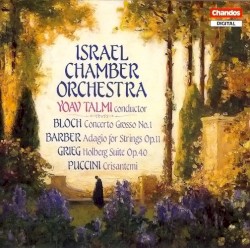 Bloch: Concerto Grosso no. 1 / Barber: Adagio for Strings, op. 11 / Grieg: Holberg Suite, op. 40 / Puccini: Crisantemi1988
Треклист пока не собран.
 Dances Round the World1988
Треклист пока не собран.
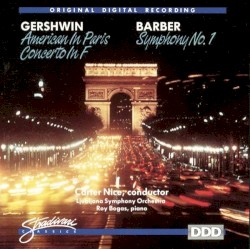 Gershwin: American in Paris / Concerto in F / Barber: Symphony no. 11988
Треклист пока не собран.
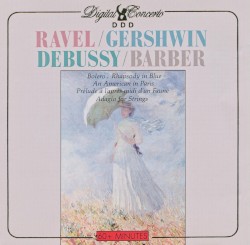 Ravel: Bolero / Gershwin: Rhapsody in Blue / Gershwin: An American in Paris / Debussy: Prélude à l'après-midi d'un faune / Barber: Adagio for Strings1988
Треклист пока не собран.
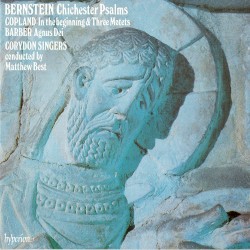 Bernstein: Chichester Psalms / Copland: In the beginning and Three Motets / Barber: Agnus Dei1987
Треклист пока не собран.
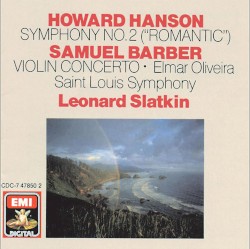 Hanson: Symphony no. 2 "Romantic" / Barber: Concerto for Violin and Orchestra1987
Треклист пока не собран.
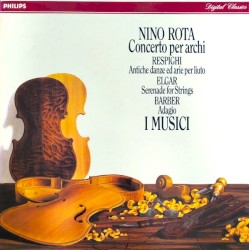 Respighi: Ancient Airs & Dances; Barber: Adagio for Strings; Rota: Concerto for Strings; Elgar: Serenade1986
Треклист пока не собран.
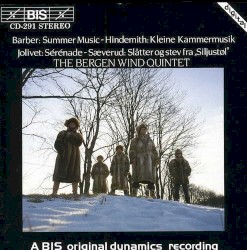 Barber: Summer Music / Hindemith: Kleine Kammermusk / Jolivet: Sérénade / Sæverud: Slåtter og stev fra „Siljustøl”1985
Треклист пока не собран.
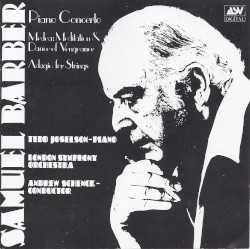 Piano concerto / Medea: Meditation & Dance of Vengance/ Adagio for strings1985
Треклист пока не собран.
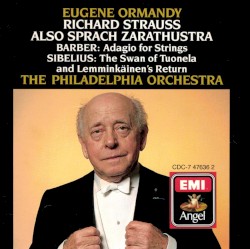 Strauss: Also sprach Zarathustra / Barber: Adagio for Strings / Sibelius: The Swan of Tuonela / Lemminkäinen's Return1985
Треклист пока не собран.
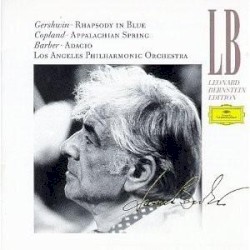 Gershwin: Rhapsody in Blue / Barber: Adagio for Strings / Copland: Appalachian Spring1983
Треклист пока не собран.
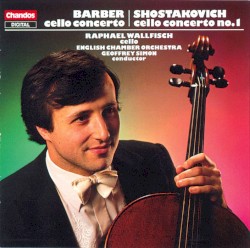 Barber: Cello Concerto / Shostakovich: Cello Concerto no. 11983
Треклист пока не собран.
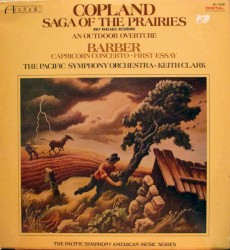 Music of Barber and Copland1983
Треклист пока не собран.
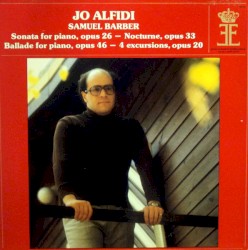 Sonata for piano, op. 26 / Nocturne, op. 33 / Ballade for piano, op. 46 / 4 Excursions, op. 201983
Треклист пока не собран.
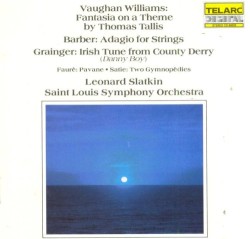 Vaughan Williams: Fantasia on a Theme by Thomas Tallis / Barber: Adagio for Strings / Grainger: Irish Tune from County Derry1982
Треклист пока не собран.
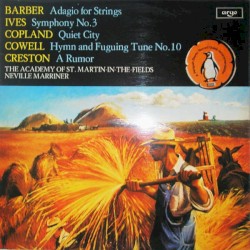 Barber: Adagio for Strings / Ives: Symphony no. 3 / Copland: Quiet City1976
Треклист пока не собран.
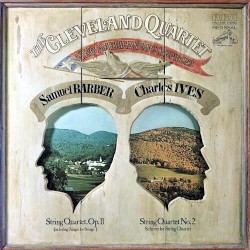 String Quartet, Op. 11 (Including "Adagio for Strings") / String Quartet No. 2 / Scherzo for String Quartet1976
Треклист пока не собран.
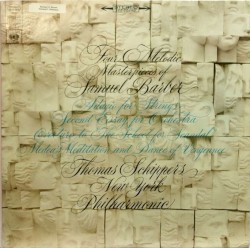 Four Melodic Masterpieces of Samuel Barber1966
Треклист пока не собран.
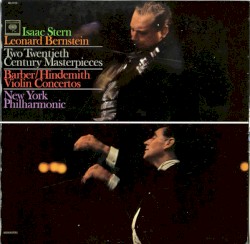 Two Twentieth Century Masterpieces: Violin Concertos1965
Треклист пока не собран.
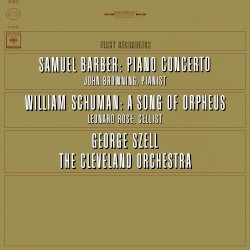 Barber: Concerto for Piano and Orchestra, op. 38 / Schuman: A Song of Orpheus: Fantasy for Cello and Orchestra1964
Треклист пока не собран.
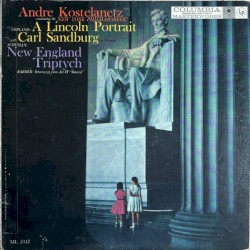 A Lincoln Portrait /New England Triptych1959
Треклист пока не собран.
 The First Symphony / Dover Beach / Songs From Chamber Music1952
Треклист пока не собран.
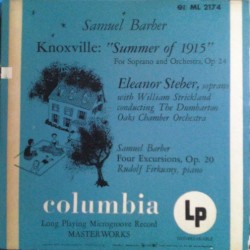 Knoxville: “Summer of 1915” for Soprano and Orchestra, op. 24 / Four Excursions, op. 201951
Треклист пока не собран.
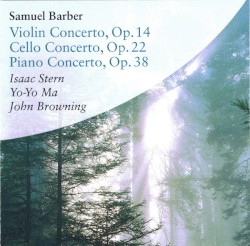 Violin Concerto, op. 14 / Cello Concerto, op. 22 / Piano Concerto, op. 382001
Треклист пока не собран.
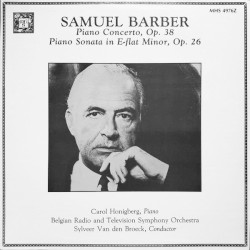 Samuel Barber: Piano Concerto Opus 38 / Piano Sonata in E Flat Minor, Opus 261984
Треклист пока не собран.
Галерея


Достижения
- Award
- Edward MacDowell Medal
- Award
- Joseph H. Bearns Prize
- Award
- Fellow of the American Academy of Arts and Sciences
- Award
- Guggenheim Fellowship
- Award
- Pulitzer Prize for Music
- Award
- Rome Prize
Похожие исполнители


Архив
Паспорт
Идентификаторы и алиасы
Также известен как: Barber, Samuel Barber (1910-1981), Samuel Osmond Barber II, バーバー
Samuel Osmond Barber II was an American composer, pianist, conductor, baritone, and music educator, and one of the most celebrated composers of the mid-20th century. Principally influenced by nine years' composition studies with Rosario Scalero at the Curtis Institute and more than 25 years' study with his uncle, the composer Sidney Homer, Barber's music usually eschewed the experimental trends of musical modernism in favor of traditional 19th-century harmonic language and formal structure embracing lyricism and emotional expression. However, he adopted elements of modernism after 1940 in some of his compositions, such as an increased use of dissonance and chromaticism in the Cello Concerto (1945) and Medea's Dance of Vengeance (1955); and the use of tonal ambiguity and a narrow use of serialism in his Piano Sonata (1949), Prayers of Kierkegaard (1954), and Nocturne (1959).
Все ссылки
Мнения фанатов — не проверенные факты.
…