
He passed away on October 30, 1953, in Paris, marking the end of a significant era in operetta composition.
He was awarded the title of Knight of the Legion of Honour for his contributions to music.
Kálmán's music was influenced by Hungarian folk traditions and the Viennese style, as well as American jazz in his later works.
Biography
Early Life
Emmerich Kálmán was born on October 24, 1882, in Hungary, where he would later become a prominent composer of operettas. His early exposure to music and the rich cultural heritage of his homeland influenced his artistic development, leading him to explore various musical styles throughout his career.
Career
Kálmán's career flourished in the early 20th century, particularly with the success of his operettas. Among his most celebrated works are "Die Csárdásfürstin" (The Gypsy Princess), premiered in 1915, and "Gräfin Mariza" (Countess Mariza), which debuted in 1924. His compositions were characterized by a blend of Hungarian folk music and the Viennese operetta style, drawing inspiration from predecessors like Johann Strauss II and Franz Lehár. Kálmán's later works also incorporated elements of American jazz, showcasing his adaptability and innovation in music.
Due to the political upheaval following the Anschluss, Kálmán and his family fled to Paris and subsequently to the United States. After a period of exile, he returned to Europe in 1949, where he continued to compose until his death in Paris on October 30, 1953.
Legacy
Kálmán's contributions to the operetta genre have left a lasting impact on musical theater. His works remain popular and are frequently performed, ensuring that his legacy endures in the world of music. He was honored as a Knight of the Legion of Honour, recognizing his significant achievements in the arts.
Collected from open sources (4) · facts link to sources · AI-processed
Discography
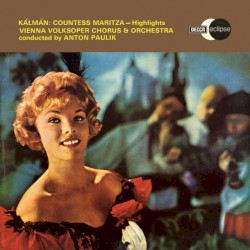 Kálmán: Gräfin Mariza - Excerpts (Opera Gala - Volume 8)2020
Tracklist not collected yet.
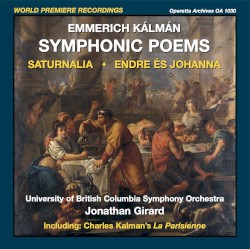 Emmerich Kálmán: Symphonic Poems2020
Tracklist not collected yet.
 Die Faschingsfee2019
Tracklist not collected yet.
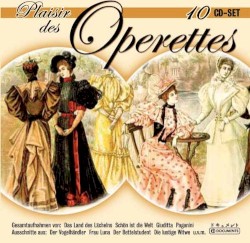 Plaisir des Operettes2005
Tracklist not collected yet.
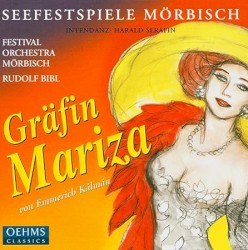 Gräfin Mariza2004
Tracklist not collected yet.
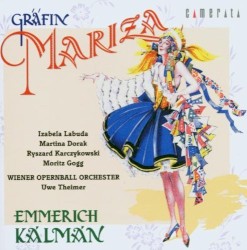 Gräfin Mariza2003
Tracklist not collected yet.
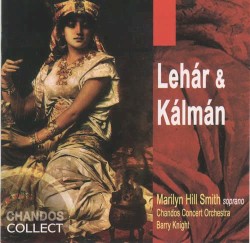 Marilyn Hill Smith sings Franz Lehár and Emmerich Kálmán2001
Tracklist not collected yet.
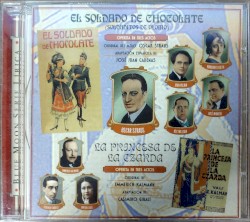 El soldado de chocolate (Soldaditos de plomo) / La princesa de la czarda (Opereta en tres actos)2000
Tracklist not collected yet.
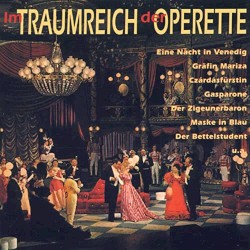 Im Traumreich der Operette2000
Tracklist not collected yet.
 Stephen Hough's New Piano Album1999
Tracklist not collected yet.
 Die Herzogin von Chicago1999
Tracklist not collected yet.
 Operette Festival1997
Tracklist not collected yet.
 Die Csárdásfürstin1996
Tracklist not collected yet.
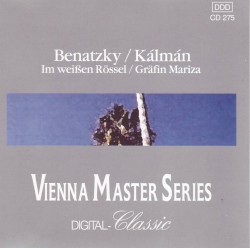 Im weißen Rössl + Gräfin Mariza1994
Tracklist not collected yet.
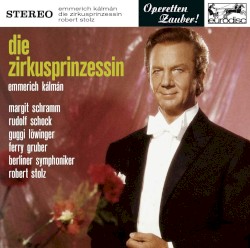 Die Zirkusprinzessin (Höhepunkte)1994
Tracklist not collected yet.
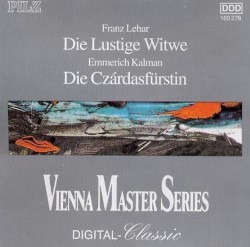 Die lustige Witwe / Die Czárdásfürstin1992
Tracklist not collected yet.
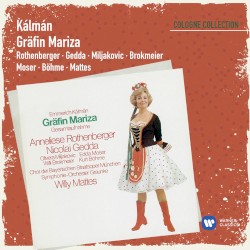 Gräfin Mariza1988
Tracklist not collected yet.
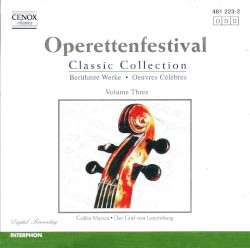 Operettenfestival: Classic Collection, Volume 31988
Tracklist not collected yet.
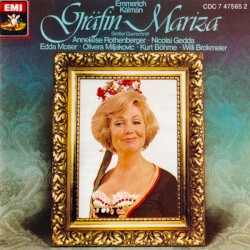 Gräfin Mariza: Großer Querschnitt1986
Tracklist not collected yet.
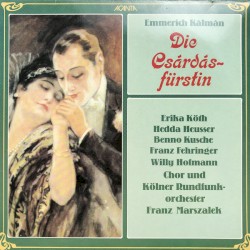 Die Csárdásfürstin1979
Tracklist not collected yet.
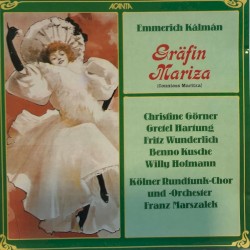 Gräfin Mariza
Tracklist not collected yet.
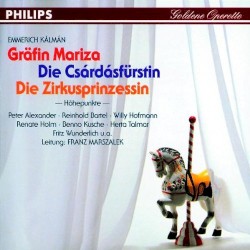 Gräfin Mariza / Die Csárdásfürstin / Die Zirkusprinzessin: Höhepunkte
Tracklist not collected yet.
 Die Csárdásfürstin (The Gypsy Princess)2004
Tracklist not collected yet.
 Die Csàrdàsfürstin
Tracklist not collected yet.
Gallery


Achievements
- Award
- Knight of the Legion of Honour
Similar artists


Archive
Passport
Identifiers & aliases
Also known as: E. Kalmen, Emmerich Kalman, Emmerich Kalmann, Imre Kalman, Kálmán Imre
Emmerich Kálmán was a Hungarian composer of operettas and a prominent figure in the development of Viennese operetta in the 20th century. Among his most popular works are Die Csárdásfürstin (1915) and Gräfin Mariza (1924). Influences on his compositional style include Hungarian folk music, the Viennese style of precursors such as Johann Strauss II and Franz Lehár, and, in his later works, American jazz. As a result of the Anschluss, Kálmán and his family fled to Paris and then to the United States. He eventually returned to Europe in 1949 and died in Paris in 1953.
All links
Opinions of fans — not verified facts.
…