
Henryk Mikołaj Górecki was a Polish composer known for his contemporary classical music, particularly his minimalist style.
Górecki became a leading figure of the Polish avant-garde during the post-Stalin cultural thaw, significantly influencing modern classical music.
He was awarded the prestigious Order of the White Eagle, one of Poland's highest honors.
Biography
Early Life
Henryk Mikołaj Górecki was born on December 6, 1933, in Poland. He emerged as a prominent composer in contemporary classical music, gaining recognition for his unique style that evolved significantly throughout his career. His early works were heavily influenced by the avant-garde movements of the time, particularly the serialism of Anton Webern and the dissonant modernism of composers like Luigi Nono and Karlheinz Stockhausen.
Career Development
Górecki's career took off during the post-Stalin cultural thaw, where he became a leading figure in the Polish avant-garde. His initial compositions in the 1950s and 1960s, such as the First Symphony and Epitaph, showcased his adherence to complex serial techniques. However, by the mid-1970s, he shifted towards a more minimalist and sacred sound, exemplified by his renowned Symphony No. 3, also known as the "Symphony of Sorrowful Songs." This work, along with others like Beatus Vir and Miserere, solidified his status as a significant composer in the minimalist genre.
Achievements and Legacy
Throughout his life, Górecki received numerous accolades, including the Order of the White Eagle and the Golden Medal for Merit to Culture. He was also honored with honorary doctorates from prestigious institutions such as the Jagiellonian University of Krakow and the Catholic University of Lublin. His music continues to resonate, influencing contemporary composers and audiences alike, marking him as a pivotal figure in the evolution of modern classical music. Górecki passed away on November 12, 2010, leaving behind a rich legacy of profound and moving compositions.
Collected from open sources (4) · facts link to sources · AI-processed
Discography
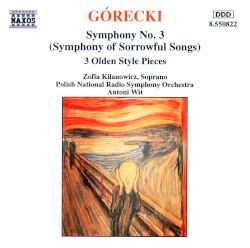 Symphony no. 3 / 3 Olden Style Pieces1994
Tracklist not collected yet.
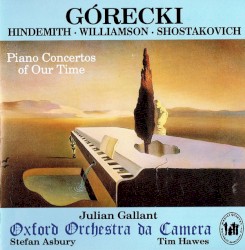 Piano Concertos of Our Time1994
Tracklist not collected yet.
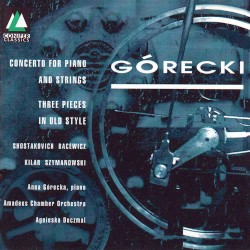 Concerto for Piano and Strings / Three Pieces in Old Style1994
Tracklist not collected yet.
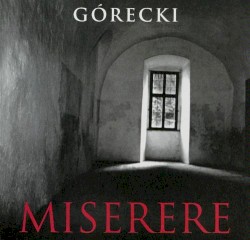 Miserere1994
Tracklist not collected yet.
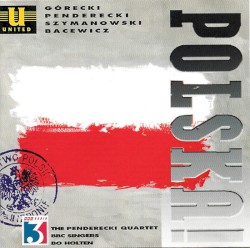 Polska! A Celebration of Polish Music1994
Tracklist not collected yet.
 String Quartets nos. 1 & 2 / Sonata for 2 Violins / Genesis 11994
Tracklist not collected yet.
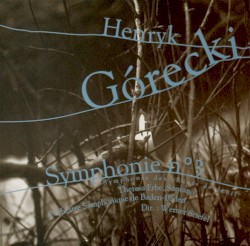 Symphonie nº 31994
Tracklist not collected yet.
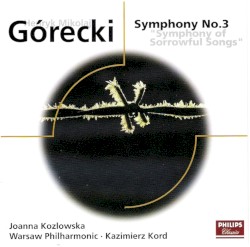 Symphony no. 31994
Tracklist not collected yet.
 Symphony no. 3, op. 36 "Symphony of Sorrowful Songs"1994
Tracklist not collected yet.
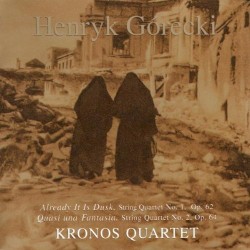 String Quartet no. 1, op. 62 "Already It Is Dusk" / String Quartet no. 2, op. 64 "Quasi una fantasia"1993
Tracklist not collected yet.
 Symfonia no. 1 „1959“ / Choros I / Three Pieces in the Old Style1993
Tracklist not collected yet.
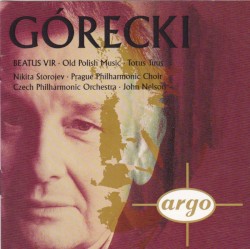 Beatus Vir / Old Polish Music / Totus Tuus1993
Tracklist not collected yet.
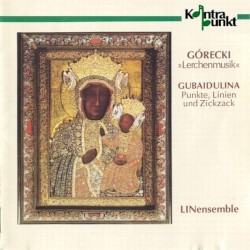 Górecki : Lerchenmusik / Gubaidulina: Punkte, Linien Und Zickzack1993
Tracklist not collected yet.
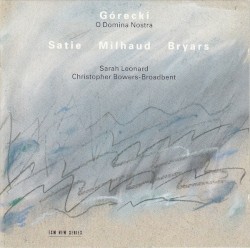 O Domina Nostra1993
Tracklist not collected yet.
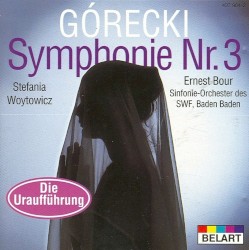 Symphonie Nr. 31993
Tracklist not collected yet.
 Veni Sancte Spiritus1993
Tracklist not collected yet.
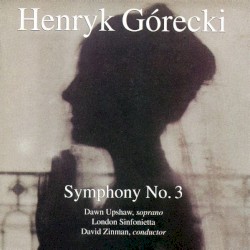 Symphony no. 31992
Tracklist not collected yet.
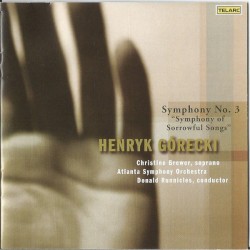 Symphony no. 3 "Symphony of Sorrowful Songs"1992
Tracklist not collected yet.
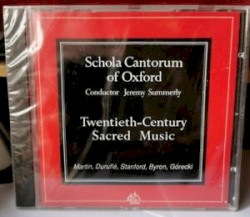 20th Century Sacred Music1991
Tracklist not collected yet.
 Already It Is Dusk / ''Lerchenmusik''1991
Tracklist not collected yet.
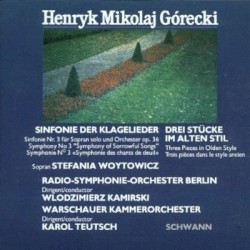 Sinfonie der Klagelieder / Drei Stücke im alten Stil1988
Tracklist not collected yet.
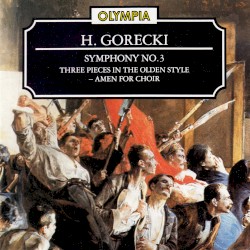 Symphony no. 3 / Three Pieces in the Olden Style / Amen for Choir1988
Tracklist not collected yet.
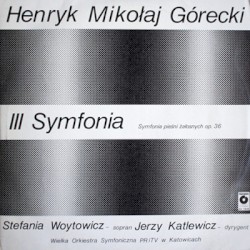 III Symfonia (Symfonia pieśni żałosnych, op. 36)1980
Tracklist not collected yet.
 Joan Carroll singt1971
Tracklist not collected yet.
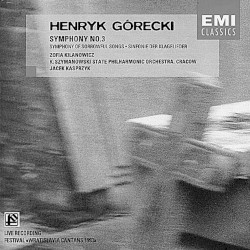 Symphony No. 31995
Tracklist not collected yet.
Gallery


Label
- Record label
- Nonesuch Records
Achievements
- Award
- Order of the White Eagle
- Award
- Golden Medal for Merit to Culture
- Award
- Knight Grand Cross of the Order of St. Gregory the Great
- Award
- Commander with Star of the Order of Polonia Restituta
- Award
- honorary doctor of the Jagiellonian University of Krakow
- Award
- Herder Prize
- Award
- honorary doctorate from the Catholic University of Lublin
- Award
- Order Ecce Homo
Similar artists


Archive
Passport
Identifiers & aliases
Also known as: Górecki, Henryk Gorecki, Henryk Mikolaj Gorecki
Henryk Mikołaj Górecki was a Polish composer of contemporary classical music. According to critic Alex Ross, no recent classical composer has had as much commercial success as Górecki. He became a leading figure of the Polish avant-garde during the post-Stalin cultural thaw. His Anton Webern-influenced serialist works of the 1950s and 1960s were characterized by adherence to dissonant modernism and influenced by Luigi Nono, Karlheinz Stockhausen, Krzysztof Penderecki and Kazimierz Serocki. He continued in this direction throughout the 1960s, but by the mid-1970s had changed to a less complex sacred minimalist sound, exemplified by the transitional Symphony No. 2 "Copernician" and the Symphony No. 3 "Symphony of Sorrowful Songs". This later style developed through several other distinct phases, from such works as his 1979 Beatus Vir, to the 1981 choral hymn Miserere, the 1993 Kleines Requiem für eine Polka and his requiem Good Night.
All links
Opinions of fans — not verified facts.
…