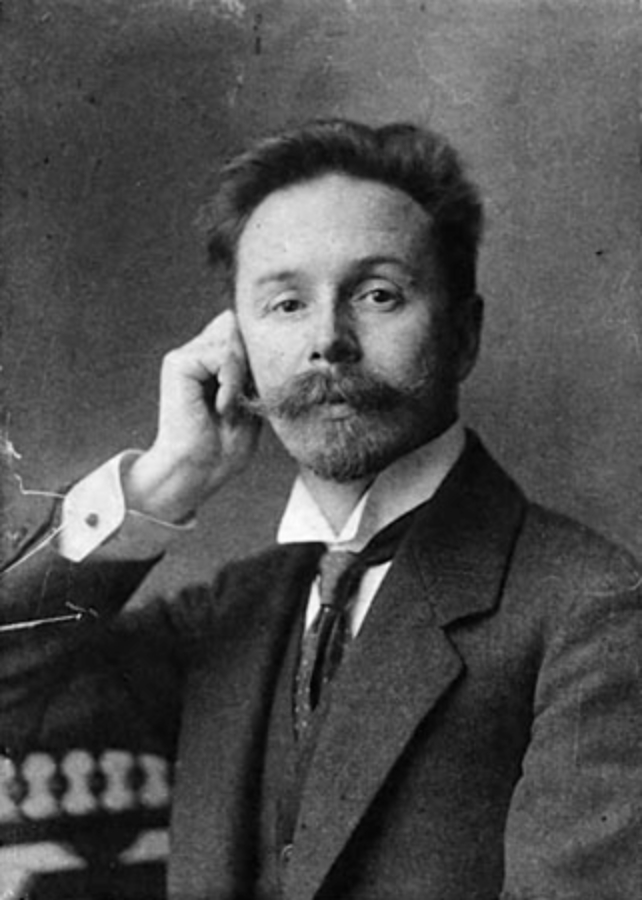
Scriabin was born and spent most of his life in Russia, contributing significantly to its musical heritage.
Alexander Scriabin was a prominent Russian composer and pianist known for his innovative musical language.
Scriabin was heavily influenced by the works of Frédéric Chopin, which shaped his early compositions.
Biography
Early Life
Alexander Nikolayevich Scriabin was born on January 6, 1872, in Russia. He was a gifted pianist and composer, whose early musical education was heavily influenced by the works of Frédéric Chopin. Scriabin's unique approach to music began to take shape as he developed his own style, which initially adhered to a late-Romantic idiom but later evolved into a more dissonant and innovative musical language.
Career Development
Scriabin's career flourished in the early 20th century, during which he composed a series of significant works that showcased his evolving artistic vision. His compositions, such as "Le Poème de l'extase" and various symphonies, reflect his exploration of metaphysical themes and the integration of synesthesia into his music. He famously created a color-coded circle of fifths, associating specific colors with musical harmonies, influenced by his interest in theosophy. Scriabin's late works, while often considered challenging, marked him as a pivotal figure in the transition from Romanticism to modernism in music.
Legacy
Scriabin passed away on April 27, 1915, but his influence on music continued long after his death. His funeral was attended by many prominent musicians, including Rachmaninoff, who performed only Scriabin's works during a subsequent tour. Scriabin's innovative ideas about music and color have inspired numerous composers, and his legacy is evident in the works of later musicians who sought to explore the boundaries of musical expression. Despite facing criticism during his lifetime, Scriabin is now celebrated as a major figure in the history of Russian music and a key contributor to the Silver Age of Russian Poetry.
Collected from open sources (4) · facts link to sources · AI-processed
Discography
 Symphony no. 3 “Le Divin Poème” / Le Poème de l’extase1989
- 1.Symphony no. 3, op. 43 “Le Divin Poème”: I. Lento1:07
- 2.Symphony no. 3, op. 43 “Le Divin Poème”: II. Luttes. Allegro23:54
- 3.Symphony no. 3, op. 43 “Le Divin Poème”: III. Voluptés. Lento – Vivo13:14
- 4.Symphony no. 3, op. 43 “Le Divin Poème”: IV. Jeu Divin. Allegro11:03
- 5.Le Poème de l’extase, op. 5420:25
 Symphony No. 4 “Poème de l’extase” & Symphony No. 3 “Divine Poem”1988
- 1.Symphony no. 4, op. 54 “Poème de l’extase”19:50
- 2.Symphony no. 3 in C Minor, op. 43 “Divine Poem”: I. Lento1:25
- 3.Symphony no. 3 in C Minor, op. 43 “Divine Poem”: II. Luttes27:00
- 4.Symphony no. 3 in C Minor, op. 43 “Divine Poem”: III. Voluptés13:00
- 5.Symphony no. 3 in C Minor, op. 43 “Divine Poem”: IV. Jeu divin10:39
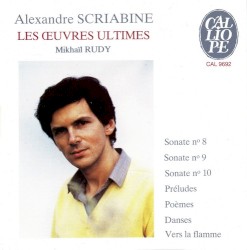 Les Œuvres Ultimes1988
- 1.Trois Études, op. 65: I. Allegro fantastico3:10
- 2.Trois Études, op. 65: II. Allegretto1:52
- 3.Trois Études, op. 65: III. Molto vivace1:47
- 4.Huitième Sonate, op. 6614:58
- 5.Deux Préludes, op. 67: I. Andante1:35
- 6.Deux Préludes, op. 67: II. Presto0:58
- 7.Neuvième Sonate, op. 688:38
- 8.Deux Poèmes, op. 69: I. Allegretto2:02
- 9.Deux Poèmes, op. 69: II. Allegretto1:29
- 10.Dixième Sonate, op. 7012:38
- 11.Deux Poèmes, op. 71: I. Fantastique2:18
- 12.Deux Poèmes, op. 71: II. En revant2:03
- 13.Vers la flamme, op. 724:56
- 14.Deux Danses, op. 73: I. Guirlandes3:49
- 15.Deux Danses, op. 73: II. Flammes sombres2:13
- 16.Cinq Préludes, op. 74: I. Douloureux, déchirant1:10
- 17.Cinq Préludes, op. 74: II. Très lent, contemplatif1:06
- 18.Cinq Préludes, op. 74: III. Allegro dramatico0:48
- 19.Cinq Préludes, op. 74: IV. Lent, vague, indécis1:20
- 20.Cinq Préludes, op. 74: V. Fier, belliqueux1:03
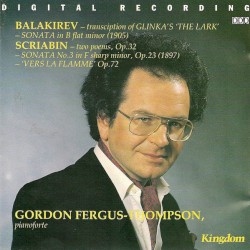 Balakirev: The Lark / Sonata in B-flat minor / Scriabin: Two Poems, op. 32 / Sonata no. 3 in F-sharp minor, op. 23 / Vers la flamme, op. 721988
- 1.The Lark6:09
- 2.Piano Sonata in B-flat minor: I. Andantino6:53
- 3.Piano Sonata in B-flat minor: II. Mazurka. Moderato / Intermezzo. Larghetto / IV. Finale. Allegro non troppo ma non fuoco24:32
- 4.Two Poems, op. 32: Poem no. 1 in F-sharp4:39
- 5.Two Poems, op. 32: Poem no. 2 in D1:49
- 6.Piano Sonata no. 3 in F-sharp minor, op. 23: I. Drammatico6:51
- 7.Piano Sonata no. 3 in F-sharp minor, op. 23: II. Allegretto2:45
- 8.Piano Sonata no. 3 in F-sharp minor, op. 23: III. Andante / IV. Presto con fuoco11:54
- 9.Vers la flamme5:44
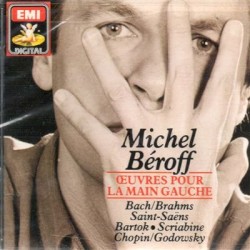 Œuvres pour la main gauche1988
- 1.Chaconne14:54
- 2.Prélude2:13
- 3.Alla fuga1:36
- 4.Moto perpetuo2:04
- 5.Bourrée3:29
- 6.Élégie5:40
- 7.Gigue1:45
- 8.Étude8:14
- 9.Prélude2:55
- 10.Nocturne5:35
- 11.Étude No. 31:35
- 12.Étude No. 55:26
- 13.Étude No. 132:50
- 14.Étude No. 222:58
- 15.Étude No. 232:37
- 16.Étude No. 415:09
- 17.Étude No. 433:18
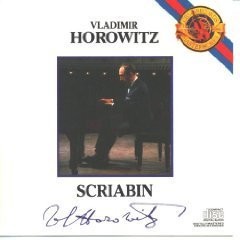 Horowitz plays Scriabin1987
- 1.Étude in C-sharp minor, op. 2 no. 13:04
- 2.Étude in F-sharp minor, op. 8 no. 21:30
- 3.Étude in A-flat major, op. 8 no. 83:42
- 4.Étude in D-flat major, op. 8 no. 101:46
- 5.Étude in B-flat minor, op. 8 no. 113:58
- 6.Étude in D-sharp minor, op. 8 no. 122:07
- 7.Poème in F-sharp major, op. 32 no. 13:00
- 8.Étude in F-sharp major, op. 42 no. 30:49
- 9.Étude in F-sharp major, op. 42 no. 42:39
- 10.Étude in C-sharp minor, op. 42 no. 53:07
- 11.Feuillet d'album in E-flat major, op. 45 no. 11:13
- 12.Piano Sonata no. 9, op. 68 "Black Mass"9:07
- 13.2 Poèmes, op. 69: I. Allegretto2:00
- 14.2 Poèmes, op. 69: II. Allegretto1:29
- 15.Piano Sonata no. 10, op. 70 "Trill"12:06
- 16.Vers la Flamme, op. 725:45
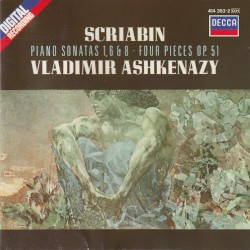 Piano Sonatas 1, 6 & 8 / 4 Pieces, op. 511987
- 1.Piano Sonata no. 1, op. 6: I. Allegro con fuoco6:38
- 2.Piano Sonata no. 1, op. 6: II4:50
- 3.Piano Sonata no. 1, op. 6: III. Presto3:21
- 4.Piano Sonata no. 1, op. 6: IV. Funèbre6:12
- 5.4 Pieces, op. 51: Fragilité2:22
- 6.4 Pieces, op. 51: Prélude2:26
- 7.4 Pieces, op. 51: Poeme ailé0:58
- 8.4 Pieces, op. 51: Danse languide1:10
- 9.Piano Sonata no. 6, op. 6211:36
- 10.Piano Sonata no. 8, op. 6613:26
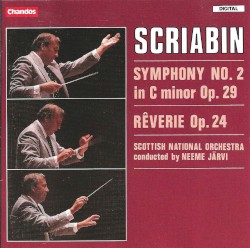 Symphony no. 2 in C minor, op. 29 / Rêverie, op. 241986
- 1.Symphony no. 2 in C minor, op. 29: I. Andante -5:42
- 2.Symphony no. 2 in C minor, op. 29: II. Allegro9:16
- 3.Symphony no. 2 in C minor, op. 29: III. Andante11:37
- 4.Symphony no. 2 in C minor, op. 29: IV. Tempestoso -5:30
- 5.Symphony no. 2 in C minor, op. 29: V. Maestoso7:55
- 6.Rêverie, op. 243:49
 Symphony no. 11986
- 1.Symphony no. 1 in E major, op. 26: I. Lento7:39
- 2.Symphony no. 1 in E major, op. 26: II. Allegro dramatico8:54
- 3.Symphony no. 1 in E major, op. 26: III. Lento10:13
- 4.Symphony no. 1 in E major, op. 26: IV. Vivace3:15
- 5.Symphony no. 1 in E major, op. 26: V. Allegro7:35
- 6.Symphony no. 1 in E major, op. 26: VI. Andante13:03
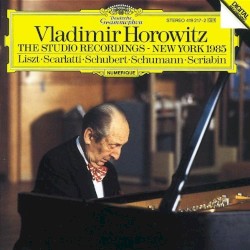 The Studio Recordings: New York 19851986
- 1.Kreisleriana, Op. 16: Robert Schumann31:08
- 2.Keyboard Sonata in B minor, K. 874:25
- 3.Keyboard Sonata in E major, K. 1353:22
- 4.Impromptu in F sharp major "Nocturne", S. 191ii3:26
- 5.Valse oubliée, S. 215 No. 13:12
- 6.Etude in D sharp minor, Op. 8 No. 122:22
- 7.Impromptu in B flat major, Op. 142 No. 310:10
- 8.Marche Militaire in D major, Op. 51 No. 1 (arr. Carl Tausig)6:09
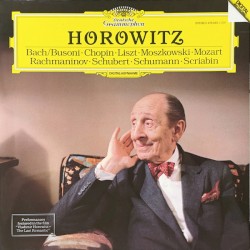 Horowitz1985
- 1.Chorale Prelude „Nun komm’ der Heiden Heiland“5:00
- 2.Piano Sonata in C major, K. 330 (300h): I. Allegro moderato4:34
- 3.Piano Sonata in C major, K. 330 (300h): II. Andante cantabile5:11
- 4.Piano Sonata in C major, K. 330 (300h): III. Allegretto3:45
- 5.Mazurka in A minor, op. 17 no. 4: Lento, ma non troppo4:01
- 6.Scherzo no. 1 in B minor, op. 20: Presto con fuoco8:30
- 7.Impromptu in A-flat major, D 899 no. 4 (op. 90 No. 4): Allegretto7:55
- 8.Consolation no. 3 in D-flat major: Lento placido4:19
- 9.Novellette in F major, op. 21 no. 1: Markiert und kräftig5:57
- 10.Prelude in G-sharp minor, op. 32 no. 12: Allegro3:00
- 11.Etude in C-sharp minor, op. 2 no. 1: Andante3:03
- 12.Polonaise no. 6 in A-flat major, op. 53 “Eroica”: Maestoso7:24
- 13.Etude in F major, op. 72 no. 6: Presto1:28
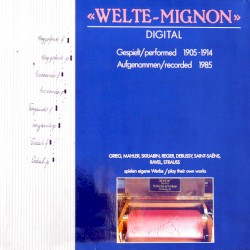 »Welte-Mignon« Digital (Gespielt 1905-1914 / Aufgenommen 1985)1985
- 1.Schmetterling (Nr. 1 aus Lyrische Stücke)2:02
- 2.Trauermarsch (1. Satz aus der Sinfonie Nr. 5 Cis‐moll)12:51
- 3.Désir (Nr. 1 aus “Klavierstücke” op. 57)1:29
- 4.Rhapsodie d’Auvergne op. 737:20
- 5.Intermezzo (Nr. 3 aus “Stimmungsbilder” op. 9)3:35
- 6.Intermezzo Es‐Moll (Nr. 3 aus “Intermezzi” op. 45)3:43
- 7.Silhouette Fis‐Dur (Nr. 3 aus “Silhouetten” op. 53)3:28
- 8.Sonatina Fis‐moll, 2. Satz3:03
- 9.D’un cahier d’esquisses3:43
- 10.La Soirée dans Grenade (Nr. 2 aus “Estampes”)5:26
- 11.Tanz der sieben Schleier (Salomes Tanz aus “Salome” op. 54)8:55
- 12.Valse mignonne op. 1042:27
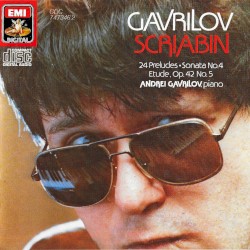 24 Preludes / Sonata no. 4 / Étude, op. 42 no. 51984
Tracklist not collected yet.
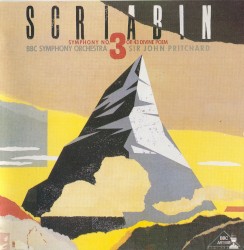 Symphony no. 3, op. 43, Divine Poem1984
Tracklist not collected yet.
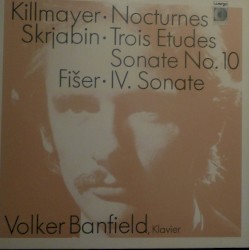 Killmayer: Nocturnes / Skrjabin: Trois Etudes / Sonate no. 10 / Fišer: IV. Sonate1979
Tracklist not collected yet.
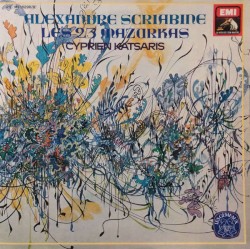 Les 23 Mazurkas1979
Tracklist not collected yet.
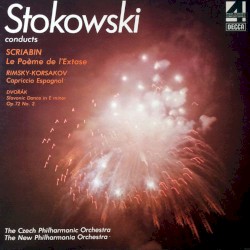 Le Poème de l'extase / Capriccio espagnol / Slavonic Dance in E minor Op.72 No. 21975
Tracklist not collected yet.
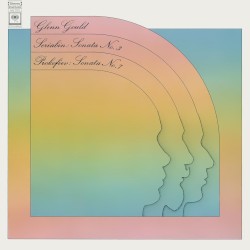 Scriabin: Sonata no. 3 / Prokofiev: Sonata no. 71969
Tracklist not collected yet.
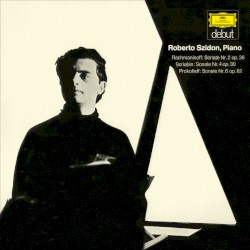 Rachmaninoff: Sonate Nr. 2 op. 36 / Scriabin: Sonate Nr. 4 op. 30 / Prokofiev: Sonate Nr. 6 op. 821969
Tracklist not collected yet.
 The Poem of Ecstasy / Azerbaijan Mugam1959
Tracklist not collected yet.
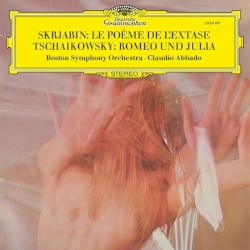 Le Poème De L'Extase / Romeo Und Julia2025
Tracklist not collected yet.
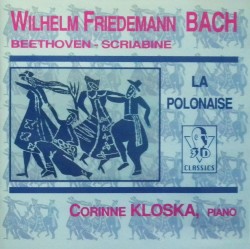 La Polonaise1996
Tracklist not collected yet.
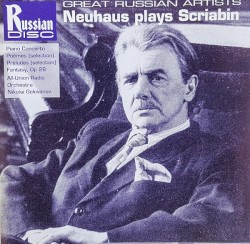 Neuhaus Plays Scriabin1993
Tracklist not collected yet.
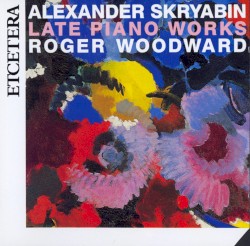 Late Piano Works1991
Tracklist not collected yet.
 Skriabin Symphonies
Tracklist not collected yet.
Gallery


Influenced by
Archive
Passport
Identifiers & aliases
Also known as: A. Scriabin, Aleksandr Nikolajevitj Skrjabin, Aleksandr Nikoláyevich Skriabin, Aleksandr Skrjabin, Alexander Nikolajewitsch Skrjabin, Alexander Nikolayevich Scriabin
Alexander Nikolayevich Scriabin was a Russian composer and pianist. Initially influenced by Frédéric Chopin, he composed in a relatively tonal, late-Romantic idiom. Later, independently of his contemporary Arnold Schoenberg, Scriabin developed a highly dissonant musical language that transcended traditional tonality without being strictly atonal, aligning with his personal brand of metaphysics. He embraced the concepts of Gesamtkunstwerk and synesthesia, creating a colour-coded circle of fifths inspired by theosophy to associate colours with harmonies. Scriabin is widely considered the primary Russian symbolist composer and a major figure of the Silver Age of Russian Poetry.
All links
Opinions of fans — not verified facts.
…