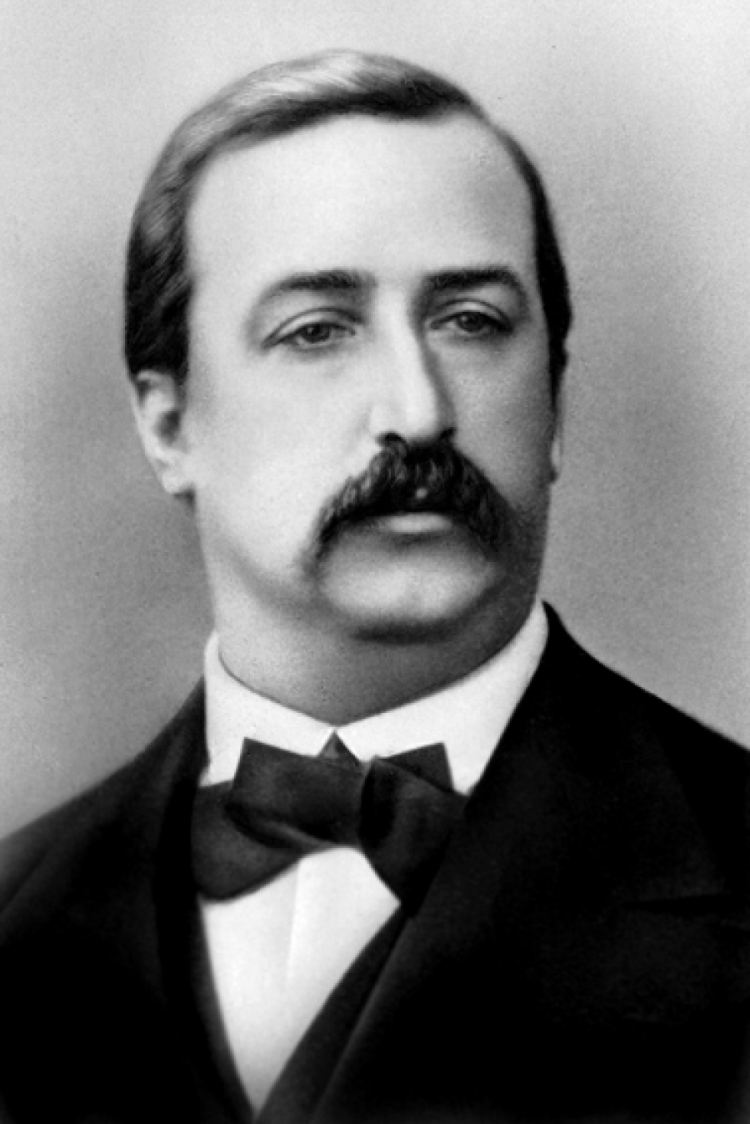
Александр Порфирьевич Бородин
Musician · Russia · 1833–1887
Alexander Borodin was not only a composer but also a respected chemist, known for his work on aldehydes.
Borodin was a member of 'The Five', a group of composers dedicated to creating a uniquely Russian classical music style.
He married pianist Ekaterina Protopopova in 1863 and they adopted several daughters together.
Biography
Early Life
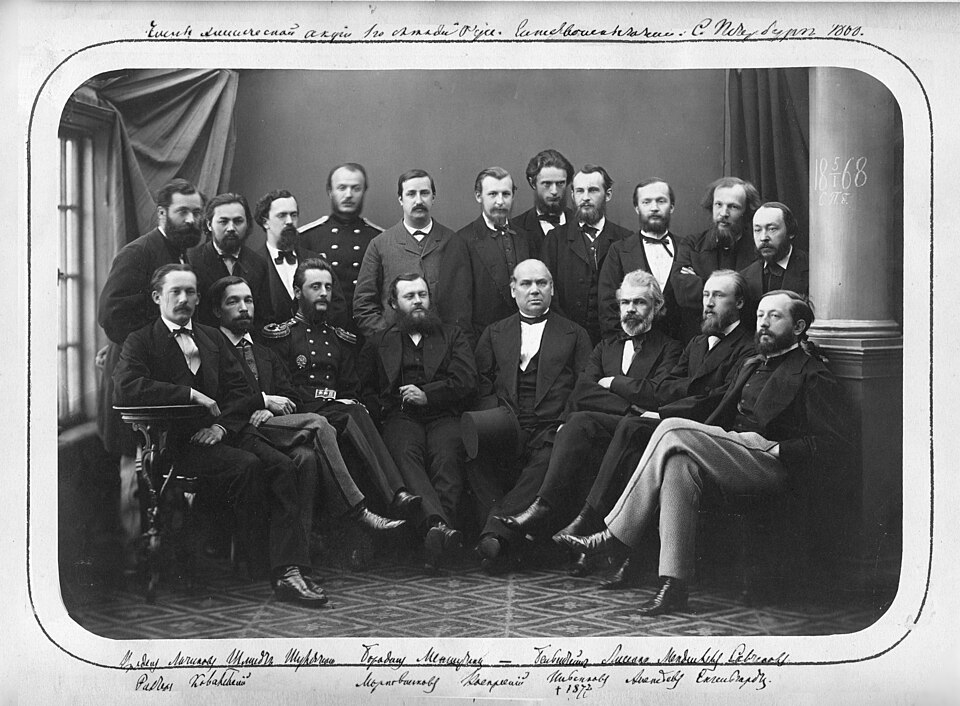
Alexander Porfiryevich Borodin was born on November 12, 1833, in Saint Petersburg, Russia, as the illegitimate son of a Georgian nobleman, Luka Stepanovich Gedevanishvili, and a Russian woman, Evdokia Konstantinovna Antonova. Due to the circumstances of his birth, he was registered as the son of one of his father's serfs, Porfiry Borodin, which led to his Russian surname. Despite this, Borodin was well cared for by his father, who emancipated him from serfdom at the age of seven. He received a good education through private tutors and later enrolled in the Medical–Surgical Academy in Saint Petersburg, where he pursued a career in chemistry.
Career as a Chemist and Composer
Borodin gained respect in the field of chemistry, particularly for his work on aldehydes. He held a postdoctoral position at Heidelberg University and later returned to Saint Petersburg to accept a professorship in chemistry. While his career as a chemist was significant, Borodin was also a prominent composer and a member of "The Five," a group dedicated to creating a distinctly Russian style of classical music. His notable works include the symphonic poem "In the Steppes of Central Asia," his two string quartets, and the opera "Prince Igor."
Personal Life and Death
In 1863, Borodin married Ekaterina Protopopova, a pianist, and they adopted several daughters. Music remained a secondary vocation for him, as he balanced his scientific career with his artistic pursuits. Borodin faced health challenges throughout his life, including cholera and heart issues, and he died suddenly on February 27, 1887, during a ball. He was interred in the Tikhvin Cemetery at the Alexander Nevsky Monastery in Saint Petersburg.
Musical Legacy
Borodin's music is characterized by its lyricism and rich harmonies, blending influences from Western composers with a distinctly Russian style. His works have had a lasting impact, influencing composers like Debussy and Ravel. Notably, his compositions were adapted into the 1953 musical "Kismet," which earned him a posthumous Tony Award for Best Musical in 1954.
Collected from open sources (4) · facts link to sources · AI-processed
Discography
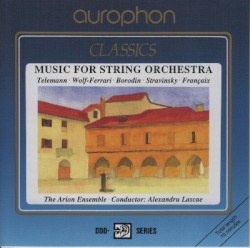 Music for String Orchestra1986
- 1.Suite in G major "Don Quichotte": I. Ouverture2:44
- 2.Suite in G major "Don Quichotte": II. Don Quichotttes Erwachen2:46
- 3.Suite in G major "Don Quichotte": III. Sein Angriff auf die Windmühlen1:34
- 4.Suite in G major "Don Quichotte": IV. Die Liebesseufzer nach der Prinzessin Dulcinée2:11
- 5.Suite in G major "Don Quichotte": V. Der geprellte Sancho Pansa1:21
- 6.Suite in G major "Don Quichotte": VI. Der Galopp der Rosinante0:49
- 7.Suite in G major "Don Quichotte": VII. Der Galopp des Esels Sancho Pansas1:24
- 8.Suite in G major "Don Quichotte": VIII. Don Quichottes Ruhe2:10
- 9.Serenade for Strings in E-flat major: I. Allegro5:01
- 10.Serenade for Strings in E-flat major: II. Andante6:49
- 11.Serenade for Strings in E-flat major: III. Scherzo2:47
- 12.Serenade for Strings in E-flat major: IV. Finale5:16
- 13.Les Vendredis: Scherzo9:48
- 14.Concerto in D for String Orchestra: I. Vivace5:51
- 15.Concerto in D for String Orchestra: II. Arioso - Andantino2:32
- 16.Concerto in D for String Orchestra: III. Rondo - Allegro3:19
- 17.Sei preludi: I. Apertura - Allegretto1:39
- 18.Sei preludi: II. Elegia per violoncello1:45
- 19.Sei preludi: III. Scherzo2:35
- 20.Sei preludi: IV. Intermezzo alla tedesca per contrabasso solo2:28
- 21.Sei preludi: V. Sogno - Adagio2:44
- 22.Sei preludi: VI. Finale - Vivace2:59
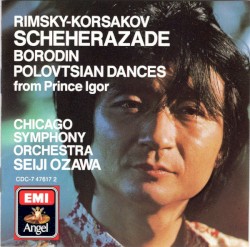 Scheherazade • Polovtsian Dances From Prince Igor1986
Tracklist not collected yet.
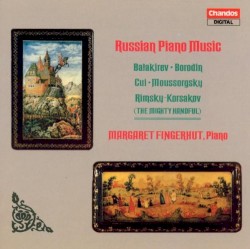 Russian Piano Music1986
- 1.Toccata in C-sharp minor4:27
- 2.In the Garden5:05
- 3.Polka in F-sharp minor4:03
- 4.A Teardrop3:46
- 5.A Children’s Prank2:34
- 6.In the Village4:28
- 7.Nanny and I (Souvenir d’enfance no. 1)1:02
- 8.First Punishment (Souvenir d’enfance no. 2)1:38
- 9.25 Preludes, op. 64: No. 9 in E major3:10
- 10.25 Preludes, op. 64: No. 10 in G-sharp minor1:55
- 11.25 Preludes, op. 64: No. 2 in E minor2:40
- 12.25 Preludes, op. 64: No. 8 in C-sharp minor2:30
- 13.Scherzino, op. 11 no. 31:02
- 14.A little song2:04
- 15.Novellette, op. 11 no. 22:06
- 16.In the Monastery (from Petite Suite)5:53
- 17.Scherzo in A-flat major2:59
- 18.Nocturne (from Petite Suite)3:04
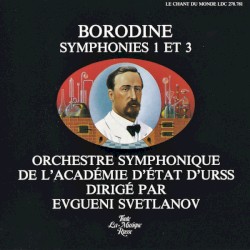 Symphonies 1 & 31983
- 1.Symphonie n° 1 en mi bémol majeur : Adagio - allegro13:30
- 2.Symphonie n° 1 en mi bémol majeur : Scherzo - prestissimo6:42
- 3.Symphonie n° 1 en mi bémol majeur : Andante8:21
- 4.Symphonie n° 1 en mi bémol majeur : Finale - Allegro molto vivo6:44
- 5.Symphonie n° 3 en la mineur (inachevée) : Moderato assaï9:18
- 6.Symphonie n° 3 en la mineur (inachevée) : Scherzo - vivo10:25
 Pachelbel: Kanon / Tchaikovsky: Serenade in C major1983
- 1.Kanon6:14
- 2.Nocturne for String Orchestra7:14
- 3.Fantasia on “Greensleeves”4:33
- 4.Serenade in C for Strings, op. 48: I. Pezzo in forma di Sonatina – Andante non troppo9:32
- 5.Serenade in C for Strings, op. 48: II. Walzer Moderato. Tempo di Valse3:39
- 6.Serenade in C for Strings, op. 48: III. Elegie Larghetto elegiaco8:25
- 7.Serenade in C for Strings, op. 48: IV. Finale (Tema Russo) Andante‐Allegro con spirito7:32
 String Quartets nos. 1 & 21982
- 1.String Quartet no. 1 in A major: I. Moderato - Allegro13:28
- 2.String Quartet no. 1 in A major: II. Andante con moto7:45
- 3.String Quartet no. 1 in A major: III. Scherzo. Prestissimo5:18
- 4.String Quartet no. 1 in A major: IV. Andante - Allegro risoluto10:43
- 5.String Quartet no. 2 in D major: I. Allegro moderato8:19
- 6.String Quartet no. 2 in D major: II. Scherzo. Allegro4:51
- 7.String Quartet no. 2 in D major: III. Notturno. Andante8:39
- 8.String Quartet no. 2 in D major: IV. Finale. Andante - Vivace7:19
 A Russian Festival Gala1982
- 1.Polovtsian Dances from "Prince Igor" act 213:33
- 2.Capriccio Espagnol, op. 3415:46
- 3.Russian Easter Festival Overture, op. 3616:26
- 4.A Night on the Bare Mountain11:39
 Mussorgsky, Borodin1980
- 1.Khovanschina - Entr'acte, Act 44:46
- 2.Pictures at an Exhibition - Promenade1:42
- 3.Pictures at an Exhibition - Gnome2:31
- 4.Pictures at an Exhibition - Promenade0:58
- 5.Pictures at an Exhibition - The Old Castle4:50
- 6.Pictures at an Exhibition - Promenade0:36
- 7.Pictures at an Exhibition - Tuileries1:04
- 8.Pictures at an Exhibition - Bydlo2:51
- 9.Pictures at an Exhibition - Promenade1:00
- 10.Pictures at an Exhibition - Ballet of the Unhatched Chickens1:12
- 11.Pictures at an Exhibition - Two Polish Jews2:19
- 12.Pictures at an Exhibition - Limoges1:23
- 13.Pictures at an Exhibition - Catacombs4:32
- 14.Pictures at an Exhibition - The Hut on Fowls' Legs3:27
- 15.Pictures at an Exhibition - The Great Gate at Kiev6:12
- 16.Khovanschina - Dance of the Persian Slaves5:53
- 17.Prince Igor - Dance of the Polovtsian Maidens, Act 2 No. 82:22
- 18.Prince Igor - Polovtsian Dances, Act 2 No. 1711:31
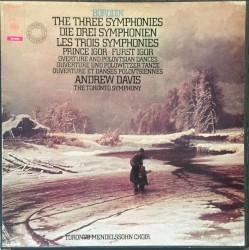 Borodin: The Three Symphonies1977
- 1.Adagio-Allegro-Andantio13:16
- 2.Prestissimo Allegro6:54
- 3.Andante7:00
- 4.Allegro Molto Vivo7:49
- 5.Moderato Assai8:02
- 6.Moderato Tempo9:44
- 7.Allegro Animato Assai7:03
- 8.Prestissimo Allegretto4:52
- 9.Andante Allegro14:29
- 10.Prince Igor: Overture10:34
- 11.Polovetsian Dances12:57
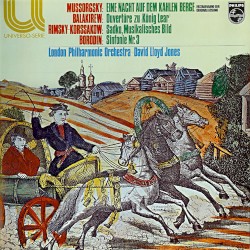 Music by Mussorgsky, Balakirev, Rimsky-Korsakov, Borodin1971
- 1.Night on the Bare Mountain13:37
- 2.Overture to 'King Lear'11:02
- 3.Sadko, op. 510:39
- 4.Symphony no. 3: I. Moderato assai8:11
- 5.Symphony no. 3: II. Scherzo (Vivo - Moderato)9:00
 Ouverture solennelle "1812" / Polovtsian Dances / Pastorale1970
- 1.Ouverture solennelle "1812", op. 4917:15
- 2.Polovtsian Dances11:17
- 3.Pastorale3:40
 Tschaikowsky: Streichquartett Nr. 1 D-dur / Borodin: Streichquartett Nr. 2 D-dur1969
- 1.Streichquartett Nr. 1 D-dur, op. 11: 1. Satz: Moderato e semplice
- 2.Streichquartett Nr. 1 D-dur, op. 11: 2. Satz: Andante Cantabile
- 3.Streichquartett Nr. 1 D-dur, op. 11: 3. Satz: Scherzo: Allegro non tanto
- 4.Streichquartett Nr. 1 D-dur, op. 11: 4. Satz: Finale: Allegro giusto
- 5.Streichquartett Nr. 2 D-dur: 1. Satz: Allegro moderato
- 6.Streichquartett Nr. 2 D-dur: 2. Satz: Scherzo: Allegro
- 7.Streichquartett Nr. 2 D-dur: 3. Satz: Notturno: Andante
- 8.Streichquartett Nr. 2 D-dur: 4. Satz: Finale: Andante - Vivace
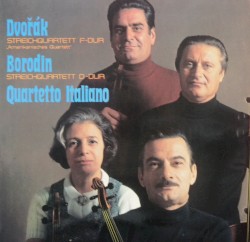 Dvořák: String Quartet In F, Op. 96 "American" / Borodin: String Quartet In D1968
Tracklist not collected yet.
 Prince Igor1967
Tracklist not collected yet.
 Prokofiev / Borodine / Glinka1962
Tracklist not collected yet.
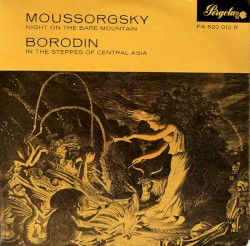 Moussorgsky: Night on the Bare Mountain / Borodin: In the Steppes of Central Asia1961
Tracklist not collected yet.
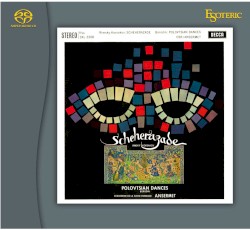 Scheherazade / Polovtsian Dances1961
Tracklist not collected yet.
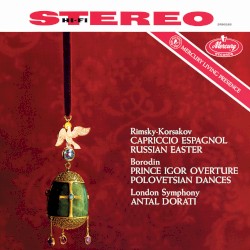 Rimsky-Korsakov: Capriccio espagnol / Russian Easter / Borodin: Prince Igor Overture / Polovetsian Dances1960
Tracklist not collected yet.
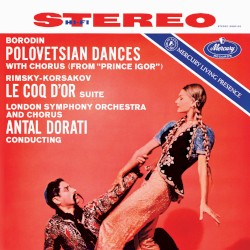 Borodin: Polovetsian Dances With Chorus (From “Prince Igor”) / Rimsky-Korsakov: Le Coq d’or1959
Tracklist not collected yet.
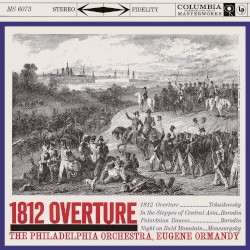 1812 Overture1959
Tracklist not collected yet.
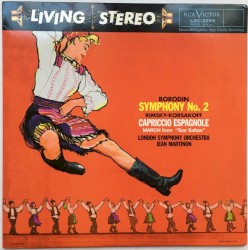 Borodin: Symphony no. 2 / Rimsky‐Korsakoff: Capriccio espagnole / March from “Tsar Saltan”1959
Tracklist not collected yet.
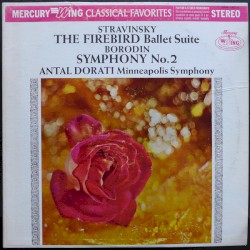 Stravinsky: The Firebird Ballet Suite / Borodin: Symphony no. 21952
Tracklist not collected yet.
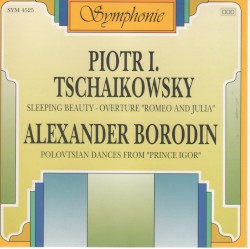 Piotr I. Tschaikowsky: Sleeping Beauty / Overture “Romeo and Julia” / Alexander Borodin: Polovtsian Dances from “Prince Igor”1993
Tracklist not collected yet.
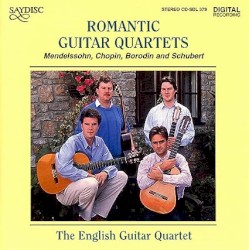 Romantic Guitar Quartets1990
Tracklist not collected yet.
 Polovtsian Dances
Tracklist not collected yet.
Gallery


Achievements
- Award
- Honorary Citizen of the Russian Empire
- Award
- Tony Award for Best Musical
Similar artists




Archive
Passport
Identifiers & aliases
Also known as: A. Borodin, Aleksandr Borodin, Aleksandr Porfirjevitj Borodin, Aleksandr Porfirjevič Borodin, Aleksandre Porfirevich Borodin, Alexander Borodin
Alexander Porfiryevich Borodin was a Russian Romantic composer and chemist of Georgian–Russian parentage. He was one of the prominent 19th-century composers known as "The Five", a group dedicated to producing a "uniquely Russian" kind of classical music. Borodin is known best for his symphonies, his two string quartets, the symphonic poem In the Steppes of Central Asia and his opera Prince Igor.
All links
Opinions of fans — not verified facts.
…