
Alois Hába was a pioneering composer known for his contributions to microtonal music.
He was a Czech music educator and composer active from 1893 to 1973.
Hába is celebrated for his use of the quarter-tone scale and other microtonal systems in his compositions.
Biography
Early Life
Alois Hába was born in 1893 in the small town of Vizovice, located in Moravian Wallachia, into a large family of ten children. From a young age, he exhibited remarkable musical talent, as he was discovered to have absolute pitch at just five years old. His family often engaged in singing and playing native Wallachian folk songs, which fostered his early love for music. During his schooling, Hába developed a keen interest in the musical aspects of the Czech language, including pitch and rhythm, which would later influence his compositions.
Career
After completing his education at a teachers' training college in Kroměříž, where he began to explore Czech national music, Hába took a teaching position in Bílovice. His dissatisfaction with small-town life led him to Prague in 1914, where he studied under the neoromantic composer Vítězslav Novák. Throughout his prolific career, Hába became known as a significant figure in modern classical music, particularly for his contributions to microtonal music, utilizing quarter-tone scales and other tunings. He composed three operas, numerous chamber works including 16 string quartets, and various pieces for piano, organ, and choir. His innovative spirit also led him to create special instruments capable of playing quarter-tone scales.
Legacy
Alois Hába's impact on music is profound, as he is recognized as one of the pioneers of microtonal music. His theoretical works and compositions have influenced generations of musicians and composers. He received several accolades throughout his life, including the title of Merited Artist of Czechoslovakia and the Order of the Republic. Hába passed away in 1973, leaving behind a rich legacy that continues to inspire contemporary music.
Collected from open sources (4) · facts link to sources · AI-processed
Discography
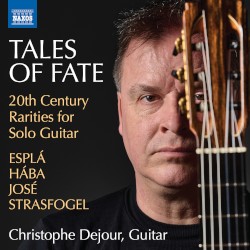 Tales of Fate: 20th Century Rarities for Solo Guitar2026
Tracklist not collected yet.
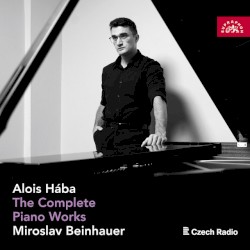 The Complete Piano Works2025
Tracklist not collected yet.
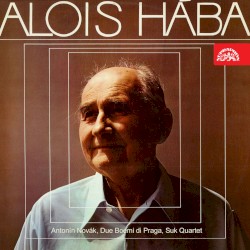 Alois Hába2023
Tracklist not collected yet.
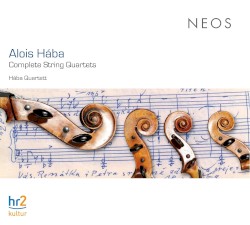 Complete String Quartets2015
Tracklist not collected yet.
 Hába: Life’s Way / Ceremuga: Hommage aux étudiants, Prague Sinfonietta2011
Tracklist not collected yet.
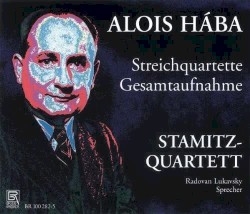 Streichquartette / Gesamtaufnahme2006
Tracklist not collected yet.
 Complete Nonets1995
Tracklist not collected yet.
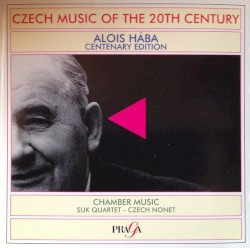 Chamber Music1993
Tracklist not collected yet.
 Matka1993
Tracklist not collected yet.
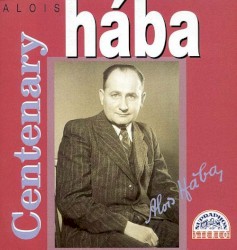 Centenary1993
Tracklist not collected yet.
 Six Compositions for Sixth-tone Harmonium, op. 372019
Tracklist not collected yet.
Gallery


Achievements
- Award
- Merited Artist of Czechoslovakia
- Award
- Order of the Republic
- Award
- Honorary Member of the International Society for Contemporary Music
Similar artists


Archive
Passport
Identifiers & aliases
Alois Hába was a Czech composer, music theorist and teacher. He belongs to the important discoverers in modern classical music, and to the major composers of microtonal music, especially using the quarter-tone scale, though he used others such as sixth-tones, fifth-tones, and twelfth-tones. From the other microtonal conceptions, he discussed a "three-quarter tone" system in his theoretical works but he used scales in this tuning in sections of some of his compositions. In his prolific career, Hába composed three operas, an enormous collection of chamber music including 16 string quartets, piano, organ and choral pieces, some orchestral works and songs. He also had special keyboard and woodwind instruments constructed that were capable of playing quarter-tone scales.
All links
Opinions of fans — not verified facts.
…