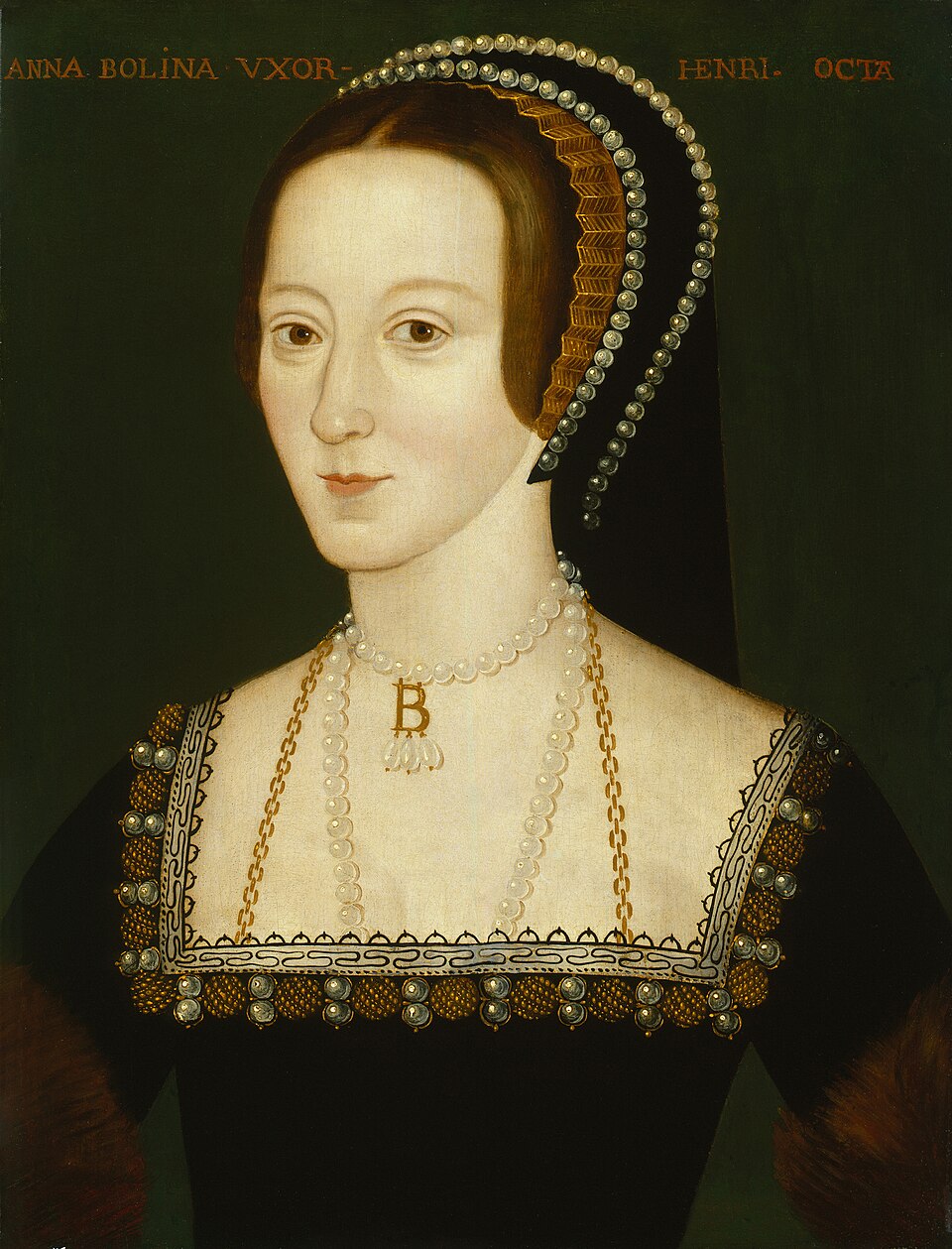
Anne Boleyn was described as intelligent and gifted in musical arts, showcasing her talents in a male-dominated court.
Anne Boleyn was the second wife of Henry VIII and played a crucial role in the political and religious upheaval of her time.
Her life ended tragically when she was executed for treason on May 19, 1536, a fate that has captivated historians for centuries.
Biography
Early Life
Anne Boleyn was born into an English noble family and became a prominent figure in the court of King Henry VIII. Her early life was marked by her education in the Netherlands and France, where she developed a keen interest in music and scholarly pursuits. This education would later influence her role in the English court, where she was known for her intelligence and charm.
Marriage and Reign
Anne became the second wife of Henry VIII in 1533, a union that was pivotal in the English Reformation. Her marriage to Henry was fraught with political and religious implications, as it led to the Church of England's break from the Roman Catholic Church. Despite her initial favor with the king, their relationship was tumultuous, characterized by frequent quarrels and power struggles.
Execution and Legacy
Tragically, Anne's reign as queen ended with her execution on May 19, 1536, when she was beheaded for treason. Her death marked a significant moment in English history, and she has since been remembered as a complex figure—intelligent, strong-willed, and often misunderstood. Biographers have noted her contradictions, portraying her as both religious and aggressive, which adds to her enduring legacy as a key player in the political and religious upheaval of her time. Anne Boleyn's life continues to fascinate historians and the public alike, as her story intertwines with themes of power, love, and betrayal.
Collected from open sources (4) · facts link to sources · AI-processed
Gallery


Archive
Passport
Identifiers & aliases
Anne Boleyn was Queen of England from 1533 to 1536, as the second wife of King Henry VIII. The circumstances of her marriage and execution, by beheading for treason, made her a key figure in the political and religious upheaval that marked the start of the English Reformation.
All links
Metrics in detail
Opinions of fans — not verified facts.
…