
Anton Webern was an influential Austrian composer and conductor known for his modernist music.
Webern's music is recognized for its lyrical, poetic concision and innovative use of atonal and twelve-tone techniques.
He was born on December 3, 1883, marking the beginning of a significant era in modern music.
Biography
Early Life
Anton Webern was born on December 3, 1883, in Austria, where he would later become a pivotal figure in the world of modernist music. His early education in music was heavily influenced by the Franco-Flemish School under Guido Adler, which laid the groundwork for his innovative approach to composition. Webern's studies also included a deep engagement with the works of Johann Sebastian Bach and the First Viennese School, which would shape his artistic development.
Career
Webern emerged as a prominent composer and conductor, known for his radical modernist style characterized by lyrical concision and the use of atonal and twelve-tone techniques. He was a key member of the Second Viennese School alongside Arnold Schoenberg and Alban Berg, contributing significantly to the evolution of contemporary music. His works, such as the "Symphony, op. 21" and various string quartets, exemplify his unique compositional voice. Despite the complexity of his music, which was often deemed inaccessible, Webern's influence on later composers and the development of post-Webernism is undeniable.
Legacy
Webern's music, while initially challenging for both performers and audiences, has gained a richer understanding over time, particularly through the efforts of scholars who archived his sketches and writings. His legacy is complex, intertwined with his political views and the reception of his work in the context of post-World War II. Despite the controversies surrounding his personal beliefs, Webern's commitment to his artistic identity remains a significant aspect of his enduring influence in the realm of classical music.
Collected from open sources (4) · facts link to sources · AI-processed
Discography
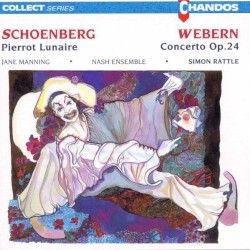 Schoenberg: Pierrot lunaire / Webern: Concerto, op. 241991
- 1.Pierrot lunaire: Part I: 1. Mondestrunken / 2. Colombine / 3. Der Dandy / 4. Eine blasse Wäscherin - 5. Valse de Chopin / 6. Madonna / 7. Der kranke Mond9:02
- 2.Pierrot lunaire: Part II: 8. Nacht / 9. Gebet an Pierrot / 10. Raub / 11. Rote Messe / 12. Galgenlied / 13. Enthauptung / 14. Die Kreuze13:03
- 3.Pierrot lunaire. Part III: 15. Heimweh / 16. Gemeinheit! / 17. Parodie / 18. Der Mondfleck / 19. Serenade / 20. Heimfart / 21. O alter Duft11:28
- 4.Concerto, op. 24: I. Etwas lebhaft2:22
- 5.Concerto, op. 24: II. Sehr langsam2:28
- 6.Concerto, op. 24: III. Sehr rasch1:15
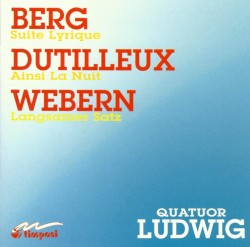 Berg: Suite lyrique / Dutilleux: Ainsi la nuit / Webern: Langsamer Satz1991
- 1.Lyrische Suite: I. Allegretto giovale3:01
- 2.Lyrische Suite: II. Andante amoroso5:43
- 3.Lyrische Suite: III. Allegro misterioso - Trio estatico3:45
- 4.Lyrische Suite: IV. Allegro appassionato5:34
- 5.Lyrische Suite: V. Presto delirando - Tenebroso4:38
- 6.Lyrische Suite: VI. Largo desolato6:05
- 7.Ainsi la nuit: I. Nocturne / II. Miroir d'espace / III. Litanies7:46
- 8.Ainsi la nuit: IV. Litanies 2 / V. Constellations / VI. Nocturne 2 / VII. Temps suspendu9:42
- 9.Langsamer Satz9:52
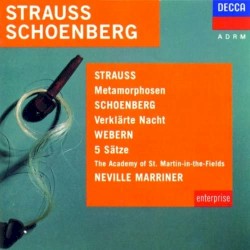 Metamorphosen / Verklärte Nacht / 5 Sätze1990
- 1.Metamorphosen26:16
- 2.Verklärte Nacht29:26
- 3.5 Sätze: I. Heftig bewegt3:03
- 4.5 Sätze: II. Sehr langsam2:22
- 5.5 Sätze: III. Sehr lebhaft0:43
- 6.5 Sätze: IV. Sehr langsam1:30
- 7.5 Sätze: V. In zarter Bewegung3:19
 La nuova musica, Volume 8: Stravinsky: Elegy for J.F.K. / Abraham and Isaac / Webern: Das Augenlicht / Kantaten I, II / Dallapiccola: Cinque canti / Boulez: Le Soleil des eaux1990
- 1.Le Soleil des eaux9:31
- 2.Das Augenlicht, op. 265:36
- 3.Kantate II, op. 3114:40
- 4.Kantate I, op. 298:40
- 5.Cinque canti: Aspettiamo la stella mattutina1:49
- 6.Cinque canti: Dorati uccelli2:41
- 7.Cinque canti: Acheronte1:43
- 8.Cinque canti: Dormono le cime dei monti3:28
- 9.Cinque canti: Ardano attraverso la notte1:35
- 10.Elegy for J.F.K.2:17
- 11.Abraham and Isaac11:49
 Schoenberg, Webern, Berg: Orchestral Works1989
- 1.5 Orchesterstücke, op. 16: I. Vorgefühle: Sehr rasch2:22
- 2.5 Orchesterstücke, op. 16: II. Vergangenes: Mässige Viertel5:54
- 3.5 Orchesterstücke, op. 16: III. Farben: Mässige Viertel4:13
- 4.5 Orchesterstücke, op. 16: IV. Peripetie: Sehr rasch2:33
- 5.5 Orchesterstücke, op. 16: V. Das obligate Rezitativ: Bewegte Achtel3:41
- 6.6 Orchesterstücke, op. 6: I. Langsam1:04
- 7.6 Orchesterstücke, op. 6: II. Bewegt1:34
- 8.6 Orchesterstücke, op. 6: III. Mässig0:55
- 9.6 Orchesterstücke, op. 6: IV. Sehr mässig4:24
- 10.6 Orchesterstücke, op. 6: V. Sehr langsam2:43
- 11.6 Orchesterstücke, op. 6: VI. Langsam1:56
- 12.Lulu-Suite: I. Rondo: Andante und Hymne14:50
- 13.Lulu-Suite: II. Ostinato: Allegro3:52
- 14.Lulu-Suite: III. Lied der Lulu: Comodo3:01
- 15.Lulu-Suite: IV. Variationen: Moderato3:24
- 16.Lulu-Suite: V. Adagio9:06
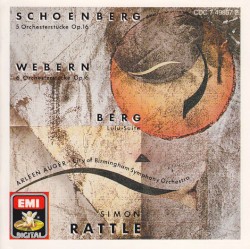 Schoenberg: 5 Orchesterstücke, op. 16 / Webern: 6 Orchesterstücke, op. 6 / Berg: Lulu-Suite1989
- 1.5 Orchesterstücke, op. 16: I. Vorgefühle: Sehr rasch2:22
- 2.5 Orchesterstücke, op. 16: II. Vergangenes: Mässige Viertel5:54
- 3.5 Orchesterstücke, op. 16: III. Farben: Mässige Viertel4:13
- 4.5 Orchesterstücke, op. 16: IV. Peripetie: Sehr rasch2:33
- 5.5 Orchesterstücke, op. 16: V. Das obligate Rezitativ: Bewegte Achtel3:41
- 6.6 Orchesterstücke, op. 6: I. Langsam1:04
- 7.6 Orchesterstücke, op. 6: II. Bewegt1:34
- 8.6 Orchesterstücke, op. 6: III. Mässig0:55
- 9.6 Orchesterstücke, op. 6: IV. Sehr mässig4:24
- 10.6 Orchesterstücke, op. 6: V. Sehr langsam2:43
- 11.6 Orchesterstücke, op. 6: VI. Langsam1:56
- 12.Lulu-Suite: I. Rondo: Andante und Hymne14:50
- 13.Lulu-Suite: II. Ostinato: Allegro3:52
- 14.Lulu-Suite: III. Lied der Lulu: Comodo3:01
- 15.Lulu-Suite: IV. Variationen: Moderato3:24
- 16.Lulu-Suite: V. Adagio9:06
 Bruno Maderna interpreta Malipiero e Webern / Sergiu Celibidache interpreta Dallapiccola1989
- 1.Pause del silenzio11:46
- 2.6 pezzi, op. 6: Langsam1:11
- 3.6 pezzi, op. 6: Bewegt1:33
- 4.6 pezzi, op. 6: Mässig1:22
- 5.6 pezzi, op. 6: Sehr mässig4:08
- 6.6 pezzi, op. 6: Sehr langsam3:04
- 7.6 pezzi, op. 6: Langsam2:10
- 8.Partita: Passacaglia10:09
- 9.Partita: Burlesca4:29
- 10.Partita: Recitativo e fanfara5:17
- 11.Partita: Naenia Beatae Mariae Virginis11:19
 Lieder1988
- 1.Drei Gedichte: I. Vorfrühling1:16
- 2.Drei Gedichte: II. Nachtgebet der Braut2:51
- 3.Drei Gedichte: III. Fromm2:52
- 4.Drei Avenarius Lieder: I. Gefunden1:30
- 5.Drei Avenarius Lieder: II. Gebet2:35
- 6.Drei Avenarius Lieder: III. Freunde1:59
- 7.Fünf Dehmel Lieder: I. Ideale Landschaft2:45
- 8.Fünf Dehmel Lieder: II. Am Ufer1:49
- 9.Fünf Dehmel Lieder: III. Himmelfahrt3:44
- 10.Fünf Dehmel Lieder: IV. Nächtliche Scheu2:20
- 11.Fünf Dehmel Lieder: V. Helle Nacht3:19
- 12.Fünf Lieder aus "Der siebente Ring" von Stefan George, op. 3: I. Dies ist ein Lied0:57
- 13.Fünf Lieder aus "Der siebente Ring" von Stefan George, op. 3: II. Im windesweben0:31
- 14.Fünf Lieder aus "Der siebente Ring" von Stefan George, op. 3: III. Am Bachesranft0:53
- 15.Fünf Lieder aus "Der siebente Ring" von Stefan George, op. 3: IV. Im Morgentaun1:03
- 16.Fünf Lieder aus "Der siebente Ring" von Stefan George, op. 3: V. Kahl reckt der Baum1:54
- 17.Fünf George Lieder, op. 4: I. Eingang4:23
- 18.Fünf George Lieder, op. 4: II. Noch zwingt mich Treue1:26
- 19.Fünf George Lieder, op. 4: III. Ja heil und dank2:22
- 20.Fünf George Lieder, op. 4: IV. So ich traurig bin0:51
- 21.Fünf George Lieder, op. 4: V. Ihr tratet zu dem Herde1:22
- 22.Vier George Lieder: I. Erwachen aus dem tiefsten traumesschosse3:53
- 23.Vier George Lieder: II. Kunfttag I1:13
- 24.Vier George Lieder: III. Trauer I1:29
- 25.Vier George Lieder: IV. Das lockere Saatgefilde lechzet krank0:54
- 26.Vier Lieder, op. 12: I. Der Tag ist vergangen1:16
- 27.Vier Lieder, op. 12: II. Die geheimnisvolle Flöte1:31
- 28.Vier Lieder, op. 12: III. Schien mir’s, als ich sah die Sonne1:29
- 29.Vier Lieder, op. 12: IV. Gleich und gleich0:52
- 30.Drei Gesänge aus "Viae Inviae" von Hildegard Jone, op. 23: I. Das dunkle Herz2:50
- 31.Drei Gesänge aus "Viae Inviae" von Hildegard Jone, op. 23: II. Es stürzt aus Höhen Frische1:45
- 32.Drei Gesänge aus "Viae Inviae" von Hildegard Jone, op. 23: III. Herr Jesus mein2:19
- 33.Drei Jone Lieder, op. 25: I. Wie bin ich froh!1:01
- 34.Drei Jone Lieder, op. 25: II. Des Herzens Purpurvogel1:44
- 35.Drei Jone Lieder, op. 25: III. Sterne, Ihr silbernen Bienen der Nacht1:32
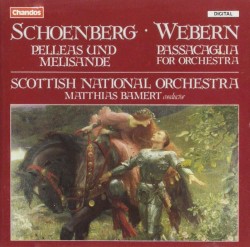 Schoenberg: Pelleas und Melisande / Webern: Passacaglia1988
- 1.Pelleas und Melisande: Ein wenig bewegt - zögernd11:16
- 2.Pelleas und Melisande: Sehr rasch8:51
- 3.Pelleas und Melisande: Langsam7:27
- 4.Pelleas und Melisande: Sehr langsam15:41
- 5.Passacaglia for Orchestra, op. 110:57
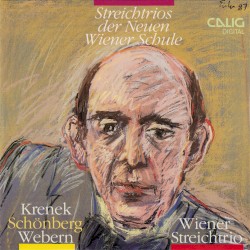 Streichtrios der Neuen Wiener Schule1987
- 1.Streichtrio, op. 4519:01
- 2.Satz für Streichtrio, op. posth.2:20
- 3.Streichtrio, op. 11813:30
- 4.Streichtrio, op. 209:50
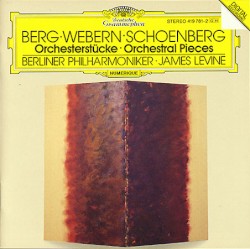 Orchesterstücke1987
- 1.Three Orchestral Pieces, op. 6: I. Präludium. Langsam5:16
- 2.Three Orchestral Pieces, op. 6: II. Reigen. Anfangs etwas zögernd - Leicht beschwingt6:00
- 3.Three Orchestral Pieces, op. 6: III. Marsch. Mässiges Marschtempo9:58
- 4.Six Pieces for Orchestra, op. 6: I. Etwas bewegte Achtel1:13
- 5.Six Pieces for Orchestra, op. 6: II. Bewegt1:31
- 6.Six Pieces for Orchestra, op. 6: III. Zart bewegt0:57
- 7.Six Pieces for Orchestra, op. 6: IV. Langsam5:39
- 8.Six Pieces for Orchestra, op. 6: V. Sehr langsam2:35
- 9.Six Pieces for Orchestra, op. 6: VI. Zart bewegt2:17
- 10.Five Orchestral Pieces, op. 16: I. Vorgefühle. Sehr rasch2:21
- 11.Five Orchestral Pieces, op. 16: II. Vergangenes. Mässige Viertel5:21
- 12.Five Orchestral Pieces, op. 16: III. Farben. Mässige Viertel3:22
- 13.Five Orchestral Pieces, op. 16: IV. Peripetie. Sehr rasch1:57
- 14.Five Orchestral Pieces, op. 16: V. Das obligate Rezitativ. Bewegte Achtel3:54
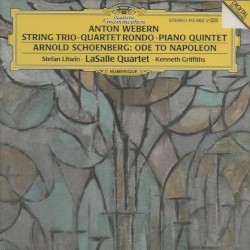 Webern: String Trio / Quartet Rondo / Piano Quintet / Schoenberg: Ode to Napoleon1986
Tracklist not collected yet.
 Neue Wiener Schule1986
- 1.Fünf Stücke für Streichorchester, op. 5: I. Heftig bewegt - Etwas ruhiger2:51
- 2.Fünf Stücke für Streichorchester, op. 5: II. Sehr langsam2:37
- 3.Fünf Stücke für Streichorchester, op. 5: III. Sehr lebhaft0:48
- 4.Fünf Stücke für Streichorchester, op. 5: IV. Sehr langsam1:40
- 5.Fünf Stücke für Streichorchester, op. 5: V. In zarter Bewegung3:52
- 6.Drei Stücke aus der Lyrischen Suite für Streichorchester: Andante amoroso5:57
- 7.Drei Stücke aus der Lyrischen Suite für Streichorchester: Allegro misterioso - Trio estatico3:34
- 8.Drei Stücke aus der Lyrischen Suite für Streichorchester: Adagio appassionato5:59
- 9.2. Streichquartett Fis-moll, op. 10: I. Mäßig6:10
- 10.2. Streichquartett Fis-moll, op. 10: II. Sehr rasch7:06
- 11.2. Streichquartett Fis-moll, op. 10: III. Litanei5:12
- 12.2. Streichquartett Fis-moll, op. 10: IV. Entrückung10:34
 Berg: String Quartet / Webern: Five Movements / Zemlinsky: String Quartet no. 31985
Tracklist not collected yet.
 Chamber & Piano Works1983
Tracklist not collected yet.
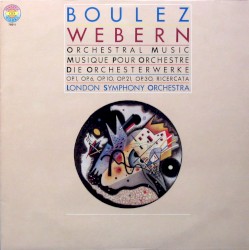 Orchestral Music: op. 1 / op. 6 / op. 10 / op. 21 / op. 30 / Ricercata1980
Tracklist not collected yet.
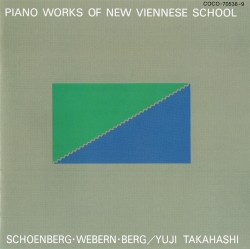 新ウィーン楽派ピアノ作品集成1979
Tracklist not collected yet.
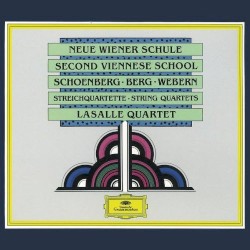 Neue Wiener Schule: Die Streichquartette1971
Tracklist not collected yet.
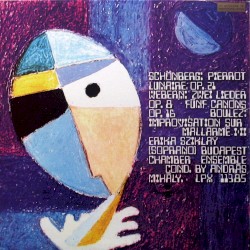 Schoenberg: Pierrot lunaire / Webern: Zwei Lieder, op. 8 / Fünf Canon, op. 16 / Boulez: Improvisation sur Mallarmé1971
Tracklist not collected yet.
 Complete Music for String Quartet1970
Tracklist not collected yet.
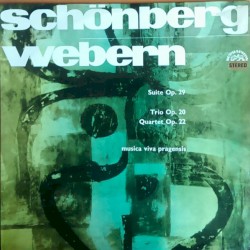 Schönberg: Suite op. 29 / Webern: Trio op. 20 / Webern: Quartet op. 221967
Tracklist not collected yet.
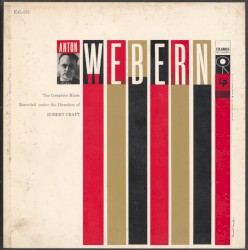 The Complete Music Recorded Under the Direction of Robert Craft1957
Tracklist not collected yet.
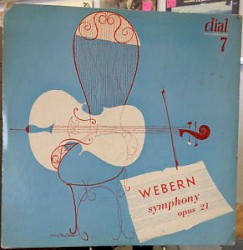 Symphony, op. 211950
Tracklist not collected yet.
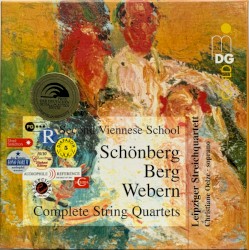 Second Viennese School: Complete String Quartets2000
Tracklist not collected yet.
 Webern ~ Demystified
Tracklist not collected yet.
Gallery


Label
- Record label
- Deutsche Grammophon
- Record label
- Philips Records
- Record label
- Supraphon
- Record label
- Naxos
Similar artists


Archive
Passport
Identifiers & aliases
Also known as: Anton Werbern, Anton von Webern, Webern, Webern, Anton
Anton Webern was an Austrian composer, conductor, and musicologist whose modernist music was among the most radical of its milieu in its lyrical, poetic concision and use of then novel atonal and twelve-tone techniques. His approach was typically rigorous, inspired by his studies of the Franco-Flemish School under Guido Adler and by Arnold Schoenberg's emphasis on structure in teaching composition from the music of Johann Sebastian Bach, the First Viennese School, and Johannes Brahms. Webern, Schoenberg, and their colleague Alban Berg were at the core of what became known as the Second Viennese School.
All links
Opinions of fans — not verified facts.
…