
He won an Academy Award for Best Original Dramatic Score, highlighting his significant contributions to film music.
Herrmann's first marriage was to Lucille Fletcher, a noted radio scriptwriter, with whom he collaborated on several projects.
In addition to an Academy Award, Herrmann also received Grammy Awards for his exceptional work in music.
Biography
Early Life
Bernard Herrmann was born on June 29, 1911, in New York City as Maximillian Herman to a Jewish family of Russian descent. His father, Abram Dardik, encouraged his musical pursuits, taking him to the opera and urging him to learn the violin. At the age of thirteen, Herrmann discovered Hector Berlioz's "Treatise on Instrumentation," which significantly influenced his musical direction. After winning a composition prize, he decided to focus on music, studying at New York University under Percy Grainger and later at the Juilliard School. By twenty, he had formed the New Chamber Orchestra of New York and befriended notable composers like Aaron Copland and George Gershwin.
Career
Herrmann's career began as an assistant to Johnny Green on the radio program "Music in the Modern Manner," where he composed incidental music and conducted rehearsals. He quickly rose to become the music director of the Columbia Workshop, an experimental radio drama series. Over the years, he became chief conductor of the CBS Symphony Orchestra, introducing American audiences to new works, particularly those of Charles Ives. Herrmann's innovative approach to film scoring revolutionized the industry, moving away from traditional illustrative techniques to create a unique harmonic and rhythmic vocabulary. His collaborations with Alfred Hitchcock produced iconic scores for films like "Psycho" and "Vertigo."
Personal Life
In 1934, Herrmann met Lucille Fletcher, a CBS secretary, and they married in 1939 after a five-year courtship. The couple had two daughters but divorced in 1948. Herrmann later married Lucy Anderson, which lasted until 1964, and then Norma Shepherd in 1967. Throughout his life, he emphasized artistic integrity, often insisting on creative control over his film scores, which led to a notable split with Hitchcock after a decade of collaboration. Herrmann passed away on December 24, 1975, leaving behind a legacy as one of the greatest film composers of all time.
Collected from open sources (4) · facts link to sources · AI-processed
Discography
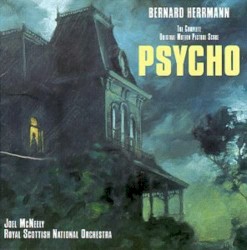 Psycho: Complete Original Motion Picture Score1997
Tracklist not collected yet.
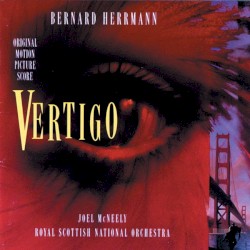 Vertigo1996
Tracklist not collected yet.
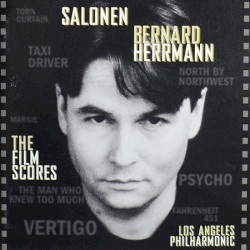 The Film Scores1996
Tracklist not collected yet.
 The Mysterious Film World of Bernard Herrmann (National Philharmonic Orchestra feat. conductor: Bernard Herrmann)1996
Tracklist not collected yet.
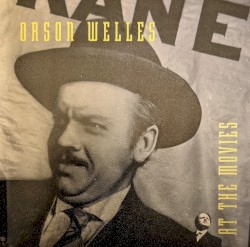 At the Movies1996
Tracklist not collected yet.
 Bernard Hermann conducts Great British Film Music1996
Tracklist not collected yet.
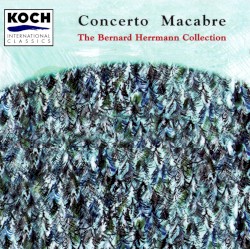 Concerto Macabre1996
Tracklist not collected yet.
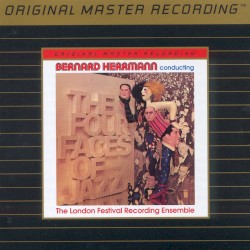 The Four Faces of Jazz1996
Tracklist not collected yet.
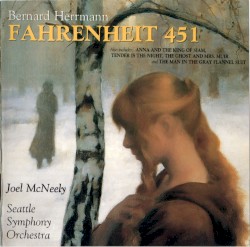 Fahrenheit 4511995
Tracklist not collected yet.
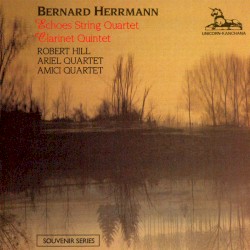 Souvenirs de Voyage / Echoes1994
Tracklist not collected yet.
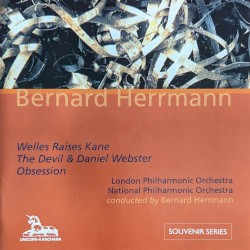 Welles Raises Kane / The Devil & Daniel Webster / Obsession1994
Tracklist not collected yet.
 Moby Dick - Cantata / For the Fallen1993
Tracklist not collected yet.
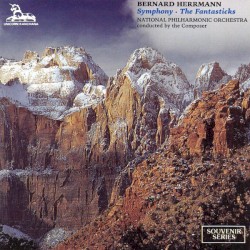 Symphony / The Fantasticks1993
Tracklist not collected yet.
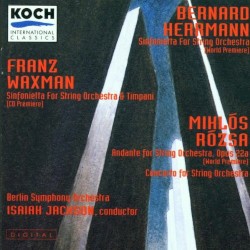 Herrmann / Waxman / Rózsa1992
Tracklist not collected yet.
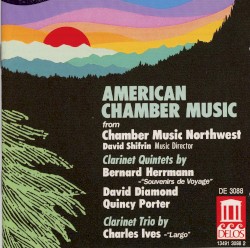 American Chamber Music1991
Tracklist not collected yet.
 The Magnificent Ambersons: Music From the 1942 Motion Picture Score1990
Tracklist not collected yet.
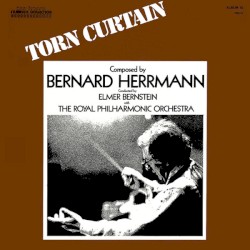 Torn Curtain1977
Tracklist not collected yet.
 Violin Concerto In A Major (In The Popular Style) / Song Sonata For Violin And Piano / Hexapoda (Five Studies In Jitteroptera)1976
Tracklist not collected yet.
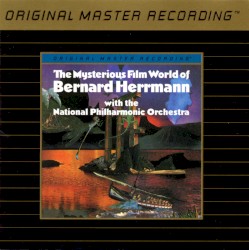 The Fantasy Film World of Bernard Herrmann1974
Tracklist not collected yet.
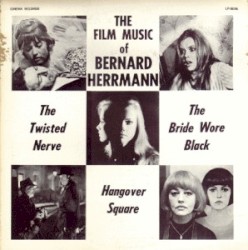 The Film Music Of Bernard Herrmann: "The Twisted Nerve", "The Bride Wore Black", "Hangover Square"1974
Tracklist not collected yet.
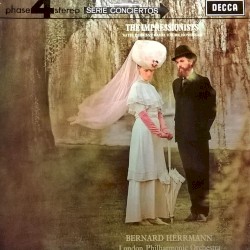 The Impressionists1971
Tracklist not collected yet.
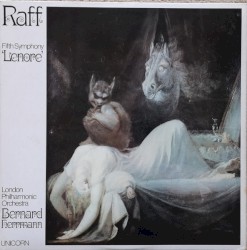 Symphony no. 5 in E “Lenore”1970
Tracklist not collected yet.
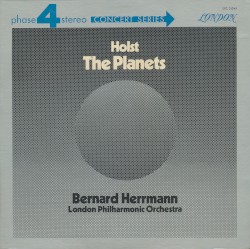 The Planets1970
Tracklist not collected yet.
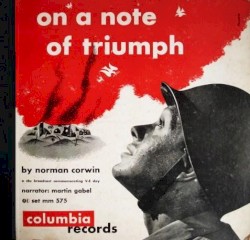 On a Note of Triumph1945
Tracklist not collected yet.
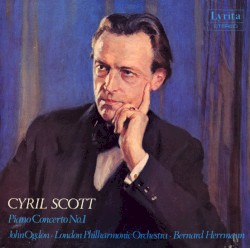 Piano Concerto No.11975
Tracklist not collected yet.
Gallery


Achievements
- Award
- Arts and Letters Award in Music
- Award
- Grammy Awards
- Award
- Academy Award for Best Original Dramatic Score
Influenced by
Groups
- Young Composers' Groupcurrent
Archive
Passport
Identifiers & aliases
Also known as: Bernard Herman, Bernard Hermann, Bernard Herrman
Bernard Herrmann was an American composer and conductor best known for his work in film scoring. He is widely regarded as one of the greatest film composers of all time. Alex Ross writes that "Over four decades, he revolutionized movie scoring by abandoning the illustrative musical techniques that dominated Hollywood in the 1930s and imposing his own peculiar harmonic and rhythmic vocabulary." As a conductor, he championed the music of lesser-known composers.
All links
Opinions of fans — not verified facts.
…