
Claude Joseph Rouget de Lisle is best known for composing "La Marseillaise," which became the French national anthem.
He was born on May 10, 1760, in Lons-le-Saunier, France, and was the eldest son in his family.
Rouget de Lisle was imprisoned in 1793 for refusing to take the oath of allegiance to the new constitution during the French Revolution.
Biography
Early Life
Claude Joseph Rouget de Lisle was born on May 10, 1760, in Lons-le-Saunier, France, on a bustling market day. He was the eldest son of Claude Ignace Rouget and Jeanne Madeleine Gaillande. His family lived in the nearby village of Montaigu, where a plaque marks the spot of his birth, and a statue was erected in his honor in 1882. Rouget de Lisle's early life was marked by his initiation into the masonic lodge "Les Frères discrets" in Charleville in 1784, shortly after he was promoted to officer.
Career
Rouget de Lisle began his military career as an engineer and quickly rose to the rank of captain. Despite his royalist beliefs, which mirrored those of his father, he refused to pledge allegiance to the new constitution during the French Revolution. This act of defiance led to his imprisonment in 1793, where he narrowly escaped execution by guillotine. Following his release during the Thermidorian Reaction, he retired to Montaigu.
It was during his time in Strasbourg in April 1792 that Rouget de Lisle composed his most famous work, "La Marseillaise." Initially titled "Chant de guerre pour l'armée du Rhin," the song was inspired by a dinner hosted by the mayor of Strasbourg, who lamented the lack of a national anthem. The song gained its iconic name from its adoption by the Provençal volunteers during the storming of the Tuileries Palace on August 10, 1792. After the war, Rouget de Lisle continued to write music, publishing "Chants français" in 1825, which included several songs similar to "La Marseillaise."
Legacy
Rouget de Lisle's legacy is immortalized through "La Marseillaise," which became the national anthem of France. His contributions to music and his role in the revolutionary period have earned him recognition as a significant figure in French history. In acknowledgment of his service, he was awarded the title of Knight of the Legion of Honour, solidifying his place in the annals of French culture and history.
Collected from open sources (4) · facts link to sources · AI-processed
Discography
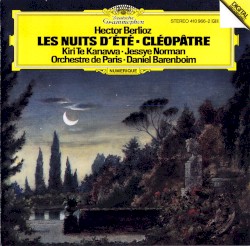 Berlioz: Les nuits d’été – La mort de Cléopâtre / Rouget de Lisle: La Marseillaise1990
- 1.Les nuits d'été, op.7 -- Villanelle -- Allegretto2:07
- 2.Les nuits d'été, op.7 -- Le spectre de la rose -- Adagio un poco lento e dolce assai6:32
- 3.Les nuits d'été, op.7 -- Sur les lagunes -- Lamento. Andantino6:03
- 4.Les nuits d'été, op.7 -- Absence -- Adagio5:37
- 5.Les nuits d'été, op.7 -- Au cimetiere -- Andantino no troppo lento5:29
- 6.Les nuits d'été, op.7 -- L'ile inconnue -- Allegro spiritoso3:35
- 7.La mort de Cléopâtre -- Allegro vivace con impeto -- Recitativo3:12
- 8.La mort de Cléopâtre -- Lento cantabile -- Recitativo7:20
- 9.La mort de Cléopâtre -- Meditation. Largo misterioso5:08
- 10.La mort de Cléopâtre -- Allegro assai agitato3:00
- 11.La mort de Cléopâtre -- Moderato. Recitativo misurato4:08
 Révolution Française1988
- 1.Chant du neuf Thermidor6:05
- 2.Chant national20:10
- 3.Hymne à la Raison6:51
- 4.Le chant du départ5:15
- 5.Marche funèbre à l’occasion de la mort du général Hoche11:28
- 6.Hymne à la statue de la Liberté2:00
- 7.Invocation9:44
- 8.La Marseillaise8:59
Gallery


Achievements
- Award
- Knight of the Legion of Honour
Similar artists




Archive
Passport
Identifiers & aliases
Also known as: C. R. de LIsle, C.J. Rouget de L’Isle, Claude‐Joseph Rouget de l’Isle, Rouget de l'Isle, クロード・ジョゼフ・ルージェ・ド・リール
Claude Joseph Rouget de Lisle was a French army officer of the French Revolutionary Wars. Lisle is known for writing La Marseillaise and it became the French national anthem.
All links
Opinions of fans — not verified facts.
…