
Fabrizio De André was an influential Italian singer-songwriter known for his poignant lyrics and social commentary.
He was born on February 18, 1940, and had a prolific career that lasted until his death in 1999.
De André's music is primarily categorized as traditional folk music, reflecting his roots and influences.
Biography
Early Life
Fabrizio Cristiano De André was born on February 18, 1940, in Italy. He grew up in a culturally rich environment that would later influence his artistic endeavors. Known affectionately as Faber, a nickname given by his friend Paolo Villaggio, De André developed a passion for music and literature from a young age, which would shape his career as a singer-songwriter.
Career
De André's career spanned nearly four decades, during which he became one of Italy's most prominent cantautori, or singer-songwriters. His music is characterized by its deep literary influences, political themes, and a focus on the marginalized in society, earning him the title of "il cantautore degli emarginati" or "the singer-songwriter of the outcasts." He was a key figure in the Genoese School of music and was known for his unique ability to sing in both Italian and Genoese. His discography includes notable albums such as "La buona novella," "Non al denaro non all’amore né al cielo," and "Anime salve," showcasing his evolution as an artist and his commitment to storytelling through song.
Legacy
Fabrizio De André passed away on January 11, 1999, but his legacy continues to resonate in Italian culture. His music has left an indelible mark on the collective memory of Italy, leading to many public places being named in his honor. De André's work remains a testament to the power of music as a form of social commentary and artistic expression, influencing generations of musicians and fans alike.
Collected from open sources (4) · facts link to sources · AI-processed
Discography
 Sogno nº 12011
Tracklist not collected yet.
 Anime salve1996
Tracklist not collected yet.
 La canzone di Marinella1995
Tracklist not collected yet.
 Il viaggio1991
Tracklist not collected yet.
 Le nuvole1990
Tracklist not collected yet.
 Fabrizio De André1986
Tracklist not collected yet.
 Crêuza de mä1984
Tracklist not collected yet.
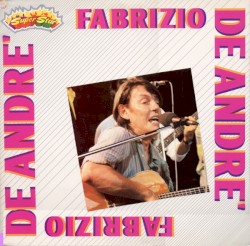 Fabrizio De André1982
Tracklist not collected yet.
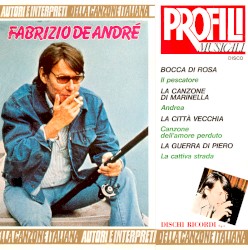 Fabrizio De André1982
Tracklist not collected yet.
 Fabrizio De André1981
Tracklist not collected yet.
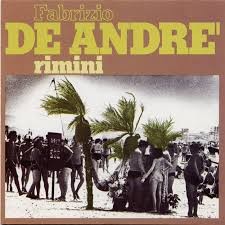 Rimini1978
Tracklist not collected yet.
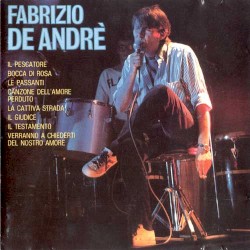 Fabrizio De André1976
Tracklist not collected yet.
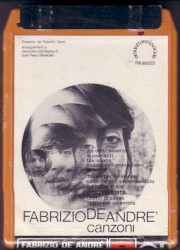 Canzoni1974
Tracklist not collected yet.
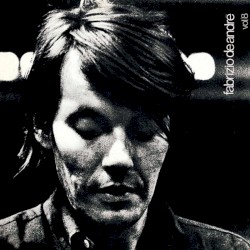 Vol. 81974
Tracklist not collected yet.
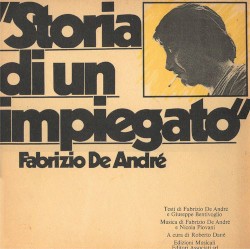 Storia di un impiegato1973
Tracklist not collected yet.
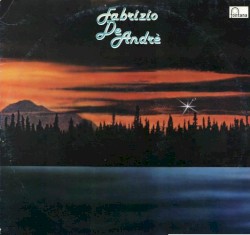 Fabrizio De André1972
Tracklist not collected yet.
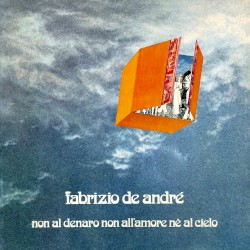 Non al denaro non all’amore né al cielo1971
Tracklist not collected yet.
 La buona novella1970
Tracklist not collected yet.
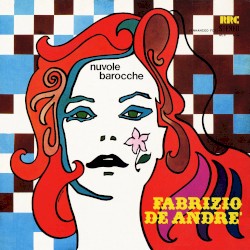 Nuvole barocche1969
Tracklist not collected yet.
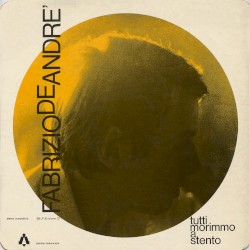 Tutti morimmo a stento1968
Tracklist not collected yet.
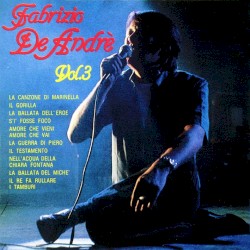 Vol. 31968
Tracklist not collected yet.
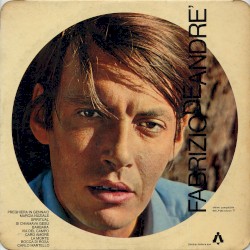 Vol. 11967
Tracklist not collected yet.
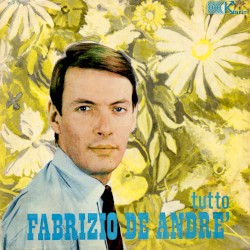 Tutto Fabrizio De André1966
Tracklist not collected yet.
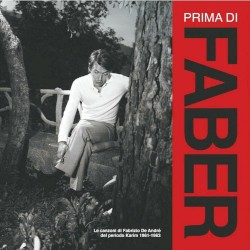 Prima di Faber2020
Tracklist not collected yet.
 Fabrizio De André Opere Complete1999
Tracklist not collected yet.
Gallery


Label
- Record label
- Karim
Similar artists


Archive
Passport
Identifiers & aliases
Also known as: De Andr , Fabrizio, Fabrizio, Fabrizio Cristiano De André, Fabrizio De Andre, Fabrizio De Andre', Fabrizio De Andrè
Fabrizio Cristiano De André was an Italian singer-songwriter and the most-prominent cantautore of his time. He is also known as Faber, a nickname given by the friend Paolo Villaggio, as a reference to his liking towards Faber-Castell's pastels and pencils, aside from the assonance with his own name, and also because he was known as il cantautore degli emarginati or il poeta degli sconfitti. His 40-year career reflects his interests in concept albums, literature, poetry, political protest, and French music. He is considered a prominent member of the Genoese School. He sang in both Italian and in other languages such as Genoese. Because of the success of his music in Italy and its impact on the Italian collective memory, many public places such as roads, squares, and schools in Italy are named after De André.
All links
Opinions of fans — not verified facts.
…