
Franz Lehár was an Austro-Hungarian composer known for his operettas, particularly "The Merry Widow."
He received the prestigious Ring of Honour of the City of Vienna for his contributions to music.
Lehár was awarded the Goethe Medal for Art and Science, recognizing his artistic achievements.
Biography
Early Life
Franz Lehár was born on April 30, 1870, in Komárom, which was part of the Kingdom of Hungary at the time (now Komárno, Slovakia). He was the eldest son of Franz Lehár Sr., an Austrian bandmaster, and Christine Neubrandt, a Hungarian woman of German descent. Growing up, Lehár spoke only Hungarian until he was twelve years old. He later modified his surname to include an acute accent to reflect Hungarian pronunciation.
Career Development
Lehár's musical journey began with violin studies at the Prague Conservatory, where he was taught by Antonín Bennewitz. Although he was encouraged to focus on performance, he was advised by the renowned composer Antonín Dvořák to pursue composition. Despite the conservatory's restrictions, he became self-taught in composition after graduating in 1888. He initially joined his father's band in Vienna as an assistant bandmaster and quickly rose to become the youngest bandmaster in the Austro-Hungarian Army. However, he left the army to join the navy, marking the beginning of a prolific career in music.
Lehár is best known for his operettas, with "The Merry Widow" being his most celebrated work. His compositions have left a lasting impact on the genre, and he is recognized as one of the leading figures in operetta history. Throughout his career, he received numerous accolades, including the Ring of Honour of the City of Vienna and the Goethe Medal for Art and Science.
Legacy
Franz Lehár passed away on October 24, 1948, but his legacy endures. He was honored as an honorary citizen of Sopron in 1940, and several streets in cities across Europe, including Vienna and The Hague, bear his name. In 1995, an asteroid was named after him, commemorating his contributions to music. His works continue to be performed and celebrated worldwide, solidifying his status as a monumental figure in the world of operetta.
Collected from open sources (4) · facts link to sources · AI-processed
Discography
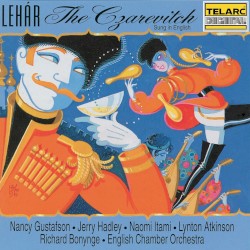 The Czarevitch (Sung in English)1996
Tracklist not collected yet.
 Paganini. Operette in 3 Akten1995
Tracklist not collected yet.
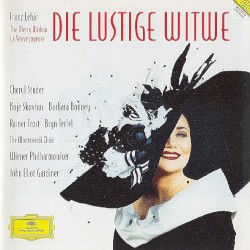 Die lustige Witwe1994
Tracklist not collected yet.
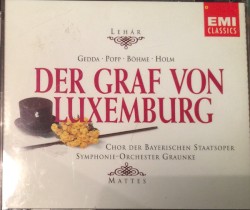 Der Graf von Luxemburg1994
Tracklist not collected yet.
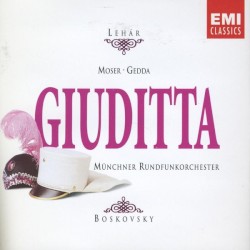 Giuditta1994
Tracklist not collected yet.
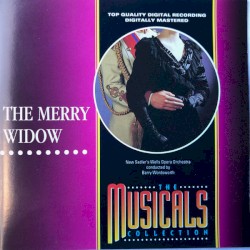 The Merry Widow1994
Tracklist not collected yet.
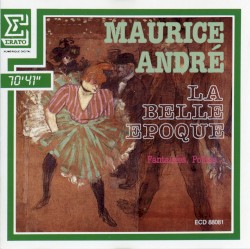 La Belle Époque1993
Tracklist not collected yet.
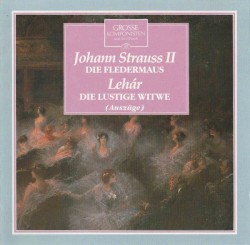 Grosse Komponisten und ihre Musik 65: Johann Strauss - Die Fledermaus / Franz Lehár: Die lustige Witwe1993
Tracklist not collected yet.
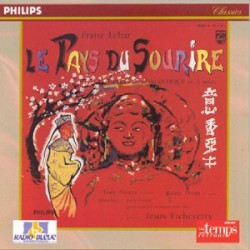 Le Pays du sourire (Extraits)1993
Tracklist not collected yet.
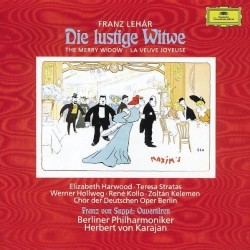 Die lustige Witwe / Suppé: Ouvertüren1992
Tracklist not collected yet.
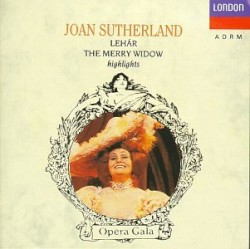 The Merry Widow: Highlights1991
Tracklist not collected yet.
 Die lustige Witwe1989
Tracklist not collected yet.
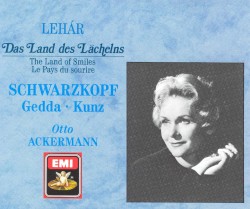 Das Land des Lächelns1988
Tracklist not collected yet.
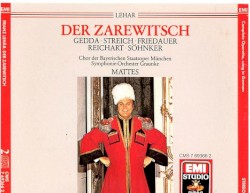 Der Zarewitsch1988
Tracklist not collected yet.
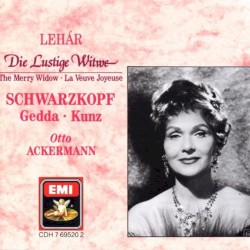 Die lustige Witwe1988
Tracklist not collected yet.
 Operettenfestival: Classic Collection, Volume 31988
Tracklist not collected yet.
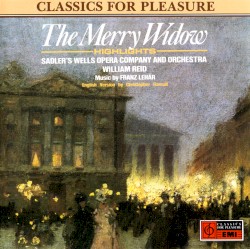 The Merry Widow (Highlights)1988
Tracklist not collected yet.
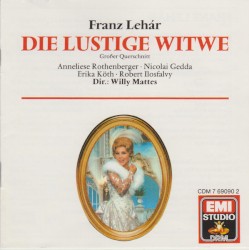 Die lustige Witwe (Großer Querschnitt)1987
Tracklist not collected yet.
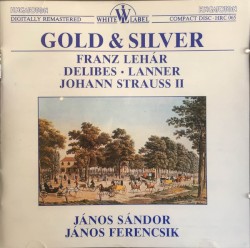 Gold & Silver1987
Tracklist not collected yet.
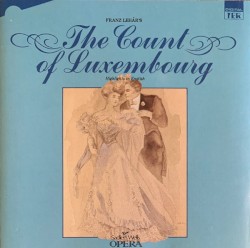 The Count of Luxembourg1985
Tracklist not collected yet.
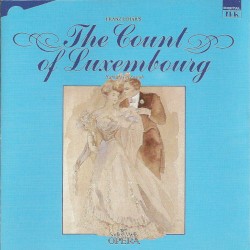 The Count of Luxembourg: Highlights in English1985
Tracklist not collected yet.
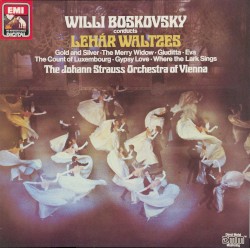 Willi Boskovsky Conducts Lehár Waltzes1983
Tracklist not collected yet.
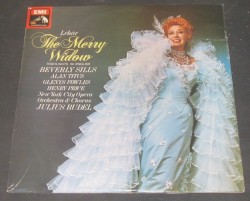 The Merry Widow - Highlights1978
Tracklist not collected yet.
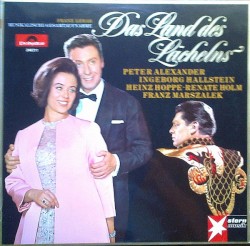 Das Land des Lächelns1968
Tracklist not collected yet.
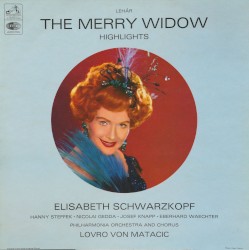 Die lustige Witwe1966
Tracklist not collected yet.
Gallery


Achievements
- Award
- Corvin Wreath
- Award
- Ring of Honour of the City of Vienna
- Award
- Goethe Medal for Art and Science
Similar artists


Archive
Passport
Identifiers & aliases
Also known as: F. Lehár, Lehar, レハール
Franz Lehár was an Austro-Hungarian composer. He is mainly known for his operettas, of which the most successful and best known is The Merry Widow.
All links
Opinions of fans — not verified facts.
…