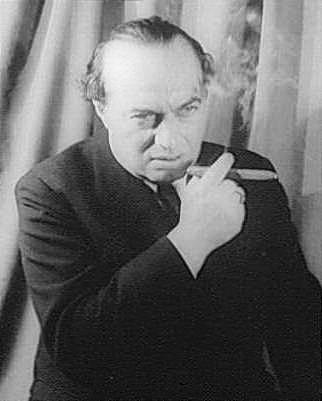
Franz Werfel is best known for his novel "The Forty Days of Musa Dagh," which addresses the Armenian genocide of 1915.
Born into a wealthy family in Prague, Werfel was influenced by both Jewish and Catholic traditions during his upbringing.
Werfel's literary career began with the publication of his first poetry collection, "Der Weltfreund," in 1911.
Biography
Early Life
Franz Viktor Werfel was born on September 10, 1890, in Prague, then part of the Kingdom of Bohemia within Austria-Hungary. He was the first of three children in a wealthy family; his father, Rudolf Werfel, was a manufacturer of gloves and leather goods, while his mother, Albine Kussi, was the daughter of a mill owner. Raised in a Jewish household, Werfel's early education was influenced by a Catholic governess, which sparked his interest in various religions, including Catholicism, Theosophy, and Islam.
Career
Werfel began his literary journey at a young age, publishing his first book of poems, "Der Weltfreund," in 1911. He became part of Prague's vibrant literary scene, befriending notable figures like Max Brod and Franz Kafka. His career flourished as he moved to Leipzig in 1912, where he worked as an editor and championed the works of other writers. During World War I, he served in the Austro-Hungarian Army, which deeply influenced his writing. His most famous works include "The Forty Days of Musa Dagh," a poignant novel about the Armenian genocide, and "The Song of Bernadette," which was later adapted into a Hollywood film.
Legacy
Werfel's contributions to literature earned him numerous accolades, including the Franz-Grillparzer-Preis and the Austrian Cross of Honour for Science and Art. His legacy is commemorated through various honors, such as the naming of Werfelstrasse in Vienna and posthumous awards recognizing his impact on Armenian culture. He passed away on August 26, 1945, leaving behind a rich literary heritage that continues to resonate today.
Collected from open sources (4) · facts link to sources · AI-processed
Discography
 Die vierzig Tage des Musa Dagh2015
- 1.Titel015:17
- 2.Titel025:20
- 3.Titel035:48
- 4.Titel044:33
- 5.Titel054:00
- 6.Titel066:01
- 7.Titel075:47
- 8.Titel084:52
- 9.Titel095:04
- 10.Titel104:44
- 11.Titel114:08
- 12.Titel123:05
- 13.Titel016:35
- 14.Titel024:26
- 15.Titel035:17
- 16.Titel046:11
- 17.Titel055:51
- 18.Titel066:01
- 19.Titel074:10
- 20.Titel085:24
- 21.Titel095:50
- 22.Titel107:58
- 23.Titel014:21
- 24.Titel025:53
- 25.Titel036:45
- 26.Titel045:54
- 27.Titel054:57
- 28.Titel065:04
- 29.Titel074:37
- 30.Titel084:44
- 31.Titel095:24
- 32.Titel104:49
- 33.Titel114:22
Gallery


Achievements
- Award
- Franz-Grillparzer-Preis
Archive
Passport
Identifiers & aliases
Franz Viktor Werfel was a Czech novelist, playwright, and poet whose career spanned World War I, the Interwar period, and World War II. He is primarily known as the author of The Forty Days of Musa Dagh, a novel based on events that took place during the Armenian genocide of 1915, and The Song of Bernadette (1941), a novel about the life and visions of the French Catholic saint Bernadette Soubirous, which was made into a Hollywood film of the same name.
All links
Opinions of fans — not verified facts.
…