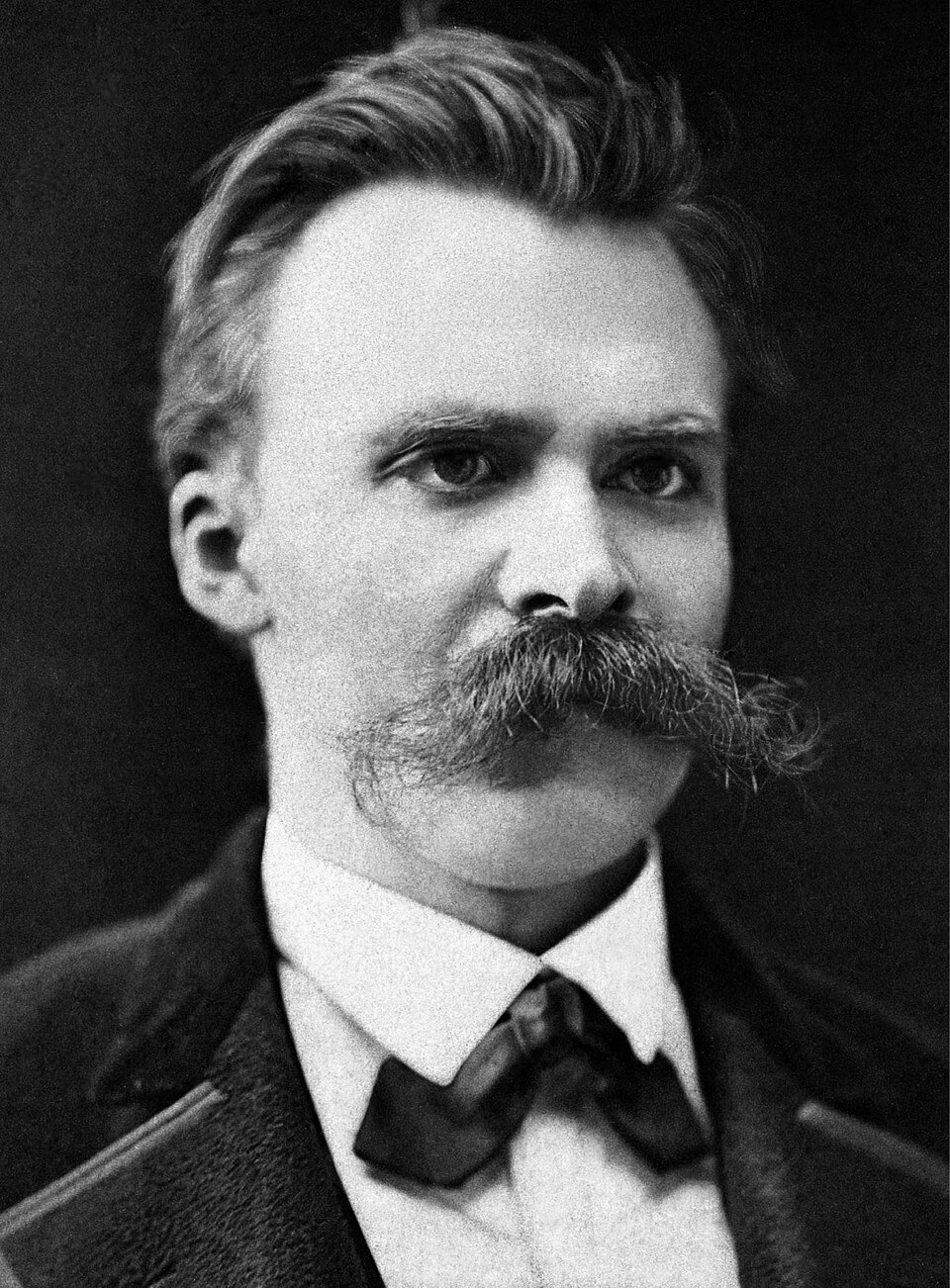
Friedrich Nietzsche was a German philosopher and writer who lived from 1844 to 1900.
Nietzsche was born on October 15, 1844, and began his academic career as a classical philologist.
He passed away on August 25, 1900, after suffering from severe health issues for much of his life.
Biography
Early Life
Friedrich Wilhelm Nietzsche was born on October 15, 1844, in Röcken, near Leipzig, in the Prussian Province of Saxony. He was named after King Friedrich Wilhelm IV of Prussia, who celebrated his birthday on the same day. Nietzsche's family had a strong academic background; his father was a Lutheran pastor and his grandfather a theologian. After the death of his father when Nietzsche was just four years old, the family moved to Naumburg, where they lived with his maternal grandmother. Nietzsche's early education included attending a boys' school and a private institution, where he formed friendships that would influence his later life.
Career
Nietzsche began his academic career as a classical philologist and was appointed Professor of Classical Philology at the University of Basel at the young age of 24. However, his health issues plagued him throughout his life, leading to his resignation in 1879. Following this, he became an independent writer, producing significant works while living in various European countries, including Switzerland and Italy. His philosophical writings, such as "Thus Spoke Zarathustra" and "Beyond Good and Evil," explored themes of individualism and the nature of existence, drawing from a rich background in Greek philosophy and the works of thinkers like Arthur Schopenhauer and Richard Wagner.
Legacy
Nietzsche's works did not gain widespread recognition during his lifetime, but posthumously, they sparked considerable interest and debate. His ideas influenced various movements, including existentialism and anarchism, and he became known for his calls for greater individualism. Despite the controversies surrounding his philosophy, Nietzsche's legacy endures, with his works continuing to inspire scholars and readers alike, reflecting his profound impact on modern thought.
Collected from open sources (4) · facts link to sources · AI-processed
Discography
 Wagner's Nightmare2024
- 1.Concert-Phantasie No. 1 for Viola Alta and Piano, Op. 35 (Arr. Orsen)8:21
- 2.Romance Oublieé for Viola Alta and Piano, S. 527 (Regular Viola)4:55
- 3.Lied an den Abendstern, WWV 70 (Arr. Ritter/Orsen, Viola Alta)4:54
- 4.Preisleid from Der Meistersinger, WWV 96 (Arr. Seybold/Orsen/Colombat)4:35
- 5.Aus Der Jugendzeit (Arr. Orsen)2:56
- 6.Es Winkt Und Neigt Sich (Arr. Orsen)1:48
- 7.Sports et Divertissement (Arr. Orsen/Colombat)3:57
- 8.Viola Sonata in C Minor, MWV Q14: I. Allegro7:36
- 9.Viola Sonata in C Minor, MWV Q14: II. Scherzo7:58
- 10.Viola Sonata in C Minor, MWV Q14: III. Thema Mit Variationen15:32
- 11.Träume, From Wesendonck Lieder WWV 91 (Arr. Primrose)4:43
- 12.Romance Oublieé for Viola Alta and Piano, S. 527 (Alternate Take on Viola Alta)5:53
 Ainsi parlait Zarathoustra, vol. 12018
- 1.Lorsque zarathoustra eut atteint sa trentième année (Début de la première partie)2:21
- 2.Zarathoustra descendit seul des montagnes2:20
- 3.Non, répondit zarathoustra2:12
- 4.Lorsque zarathoustra arriva dans la ville2:52
- 5.Mais vous aussi mes frères3:10
- 6.Zarathoustra, cependant regardait le peuple2:33
- 7.J'aime celui dont l'âme se dépense2:04
- 8.Quand zarathoustra eut dit ces mots2:52
- 9.Nous avons inventé le bonheur3:11
- 10.Mais, alors, il advint quelque chose3:38
- 11.Cependant le soir tombait1:44
- 12.Quand zarathoustra eut dit cela à son cœur2:14
- 13.La faim s'empare de moi comme un brigand2:28
- 14.Zarathoustra dormit longtemps4:15
- 15.Zarathoustra, avait dit cela à son cœur1:55
- 16.De tout ce qui est écrit2:03
- 17.Qui de vous peut en même temps rire2:31
- 18.Je vais vous dire trois métamorphoses2:53
- 19.Des valeurs de mille années brillent2:39
- 20.Zarathoustra, s'était aperçu qu'un jeune homme4:11
- 21.Et lorsqu'ils eurent marché côte à côte3:23
- 22.Fuis mon ami dans ta solitude3:45
- 23.Innombrables sont ces petits3:32
- 24.Veux-tu mom frère aller dans l'isolement ?3:39
- 25.Tu obliges beaucoup de gens3:06
- 26.Les figues tombent des arbres3:42
- 27.Tout ce qui est immuable3:29
- 28.Vous appelez volonté de vérité3:24
- 29.Voici ce que j'entendis en troisième lieu3:22
- 30.Et toi aussi, toi qui cherche la connaissance2:42
- 31.Il y a une île dans la mer3:04
- 32.C'est pour approfondir ce secret3:29
- 33.Eglise, repondis-je3:20
- 34.J'ai volé trop loin dans l'avenir3:36
- 35.Oui, comment pourriez-vous croire ?3:18
- 36.Il était minuit3:08
- 37.Sur ta propre tête et au-delà3:06
- 38.Ce témoignage est écrit dans leurs rochers2:54
- 39.En traversant ainsi sans hâte4:06
- 40.Au nom de tous ce que tu as de clair4:07
- 41.Et de nouveau des mois et des années passèrent3:12
- 42.Cependant lorsque zarathoustra fut arrivé au sommet3:49
- 43.Et en vérité je suis reconnaissant3:20
- 44.Le lendemain zarathoustra était de nouveau assis3:15
- 45.Fatal proclamateur3:06
- 46.Ainis soupira le devin2:43
- 47.Mais à peine le mendiant volontaire3:16
- 48.Eh quoi ! Faut-il donc que je sois3:16
- 49.Un bon vent2:47
- 50.On vantait à zarathoustra3:23
- 51.J'aime mieux recevoir une petite société3:36
- 52.Et je vis une grande tristesse3:37
- 53.C'est là-haut que je gardais les cercueils3:22
- 54.N'est tu pas toi mme le cercueil ?3:02
- 55.Que m'est-il arrivé mes amis ?4:06
- 56.Alors, l'autre repris sans voix4:05
- 57.Et zarathoustra se remit a courir3:05
- 58.Elle s'allonge longuement3:30
- 59.Comment le monde ne vient-il pas de s'accomplir ? (Fin de la première partie)2:59
 Complete Piano Music2017
- 1.Heldenklage, NWV 22:34
- 2.Ungarischer Marsch, NWV 52:33
- 3.Édes titok3:12
- 4.So lach doch mal, NWV 91:50
- 5.Da geht ein Bach, NWV 10b1:59
- 6.In Mondschein auf der Puszta, NWV 111:44
- 7.Ermanarich, Symphonische Dichtung10:45
- 8.Unserer Altvordern eingedenk, NWV 13: I. Mazurka1:34
- 9.Unserer Altvordern eingedenk, NWV 13: II. Aus der Czarda2:01
- 10.Das zerbrochene Ringlein5:39
- 11.Albumblatt3:49
- 12.Das Fragment an sich, NWV 354:52
- 13.Hymnus an die Freundschaft, NWV 42: I. Vorspiel5:05
- 14.Hymnus an die Freundschaft, NWV 42: II. Hymnus erste Strophe1:41
- 15.Hymnus an die Freundschaft, NWV 42: III. Erstes Zwischenspiel6:34
- 16.Hymnus an die Freundschaft, NWV 42: IV. Hymnus zweite Strophe1:33
- 17.Hymnus an die Freundschaft, NWV 42: V. Zweites Zwischenspiel5’105:11
- 18.Hymnus an die Freundschaft, NWV 42: VI. Seht Fest1:27
- 19.Hymnus an die Freundschaft, NWV 42: VII. Hymnus dritte Strophe2:49
 Beyond Good and Evil: Prelude to a Philosophy of the Future2009
- 1.Preface5:08
- 2.Chapter 1: Prejudices of Philosophers59:32
- 3.Chapter 2: The Free Spirit53:30
- 4.Chapter 3: The Religious Mood43:14
- 5.Chapter 4: Apothegms and Interludes24:08
- 6.Chapter 5: The Natural History of Morals56:26
- 7.Chapter 6: We Scholars47:45
- 8.Chapter 7: Our Virtues63:00
- 9.Chapter 8: Peoples and Countries58:02
- 10.Chapter 9: What is Noble?78:18
- 11.Closing Credits1:01
 Ainsi parlait Zarathoustra2008
- 1.Ainsi parlait Zarathoustra19:58
- 2.Ici finit le premier discours de Zarathoustra15:42
- 3.Des trois métamorphoses5:52
- 4.Des chaires de la vertu6:42
- 5.Des hallucinés des arrières-mondes8:09
- 6.Des contempteurs du corps4:39
- 7.Des joies et des passions3:56
- 8.Du pâle criminel4:59
- 9.17 Lire et écrire4:03
- 10.De l'arbre sur la montagne5:48
- 11.Des prédicateurs de la mort3:44
- 12.De la guerre et des guerriers3:50
- 13.De la nouvelle idole5:13
- 14.Des mouches de la place publique6:22
- 15.De la chasteté2:35
- 16.De l'ami4:07
- 17.Mille et un buts4:55
- 18.De l'amour du prochain3:16
- 19.Des voies du créateur5:26
- 20.La Vieille et la Jeune Femme4:33
- 21.La Morsure de la vipère3:33
- 22.De l'enfant et du mariage4:13
- 23.De la mort volontaire5:24
- 24.De la vertu qui donne11:00
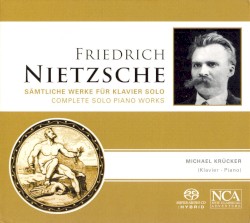 Sämtliche Werke für Klavier Solo2008
- 1.Einleitung1:35
- 2.Ermanarich. Symphonische Dichtung7:10
- 3.Das zerbrochene Ringlein3:57
- 4.Im Mondschein auf der Puszta1:24
- 5.Unserer Altvordern eingedenk (Zwei polnische Tänze): I. Mazurka1:09
- 6.Unserer Altvordern eingedenk (Zwei polnische Tänze): II. Aus der Czarda2:23
- 7.Heldenklage1:59
- 8.So lach doch mal1:11
- 9.Da geht ein Bach2:11
- 10.Sturmmarsch0:59
- 11.Hymnus an die Freundschaft19:52
- 12.Edes titok. Rhapsodisch2:05
- 13.Sonatine, op. 2: I. Andante1:28
- 14.Sonatine, op. 2: II. Presto0:22
- 15.Das „Fragment an sich“3:23
- 16.Sonate D-Dur: I. Allegro1:34
- 17.Sonate D-Dur: II. Andante4:00
- 18.Marcia0:32
- 19.Klavierskizze0:44
- 20.Sonate G-Dur1:53
- 21.Maestoso adagio4:25
- 22.Vivace2:28
- 23.Ungarischer Marsch1:29
- 24.Albumblatt1:50
- 25.Allegro2:52
- 26.Skizze (zu Byrons „Foscari“?)1:45
- 27.Fugenfragmente3:15
- 28.Schluss eines Klavierstücks1:02
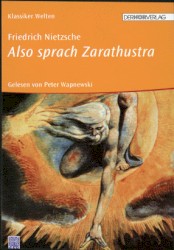 Also sprach Zarathustra2000
- 1.Also sprach Zarathustra, Seite 0154:58
- 2.Also sprach Zarathustra, Seite 0254:59
- 3.Also sprach Zarathustra, Seite 0348:33
- 4.Also sprach Zarathustra, Seite 0450:59
- 5.Also sprach Zarathustra, Seite 0550:59
- 6.Also sprach Zarathustra, Seite 0650:59
- 7.Also sprach Zarathustra, Seite 0745:19
- 8.Also sprach Zarathustra, Seite 0845:59
- 9.Also sprach Zarathustra, Seite 0945:58
- 10.Also sprach Zarathustra, Seite 1045:58
- 11.Also sprach Zarathustra, Seite 1149:59
- 12.Also sprach Zarathustra, Seite 1249:59
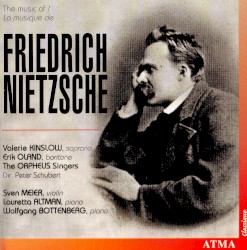 The Music of Friedrich Nietzsche1998
- 1.Allegro2:35
- 2.Hoch tut euch auf2:21
- 3.Einleitung2:08
- 4.Phantasie1:51
- 5.Miserere6:18
- 6.Einleitung1:33
- 7.Einleitung1:40
- 8.Hüter, ist die Nacht bald hin?1:17
- 9.Presto0:39
- 10.Mein Platz vor der Tür1:49
- 11.Heldenklage1:56
- 12.Klavierstück2:09
- 13.Ungarischer Marsch1:42
- 14.Zigeunertanz2:55
- 15.Édes titok (Still und ergeben)2:07
- 16.Aus der Jugendzeit2:52
- 17.So lach doch mal1:48
- 18.Da geht ein Bach1:37
- 19.Da geht ein Bach1:30
- 20.Im Mondscein auf der Puszta1:18
- 21.Marzurka1:01
- 22.Aus der Czarda1:32
- 23.Das zerbrochene Ringlein3:54
- 24.Albumblatt2:53
- 25.Wie sich Rebenranken schwingen1:09
- 26.Eine Sylvesternacht11:09
- 27.Beschwörung3:15
- 28.Nachspiel1:54
- 29.Ständchen1:36
- 30.Unendlich2:10
- 31.Verwelkt1:16
- 32.Ungewitter1:52
- 33.Gern und gerner1:20
- 34.Das Kind an die verloschene Kerze2:10
- 35.Es winkt und neigt sich1:54
- 36.Die junge Fischerin3:48
- 37.O weint um sie2:54
- 38.Herbstlich sonnige Tage2:35
- 39.Ade! Ich muss nun gehen1:03
- 40.Das "Fragment an sich"2:11
- 41.Kirchengeschichtliches Responsorium2:39
- 42.Monodie à deux (Lob der Barmherzigkeit)4:17
- 43.Gebet an das Leben2:21
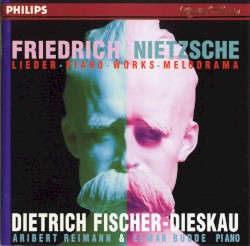 Lieder / Piano Works / Melodrama1996
- 1.Mein Platz vor der Tür1:44
- 2.Aus der Jugendzeit2:45
- 3.Da geht ein Bach1:28
- 4.Das zerbrochene Ringlein3:46
- 5.Wie sich Rebenranken schwingen1:15
- 6.Beschwörung2:47
- 7.Nachklang einer Sylvesternacht15:02
- 8.Nachspiel2:02
- 9.Ständchen1:55
- 10.Unendlich2:22
- 11.Verwelkt1:17
- 12.Ungewitter2:02
- 13.Gern und gerner1:08
- 14.Das Kind an die erloschene Kerze1:51
- 15.Es winkt und neigt sich1:44
- 16.Junge Fischerin3:16
- 17.Gebet an das Leben2:08
- 18.Manfred-Meditation12:29
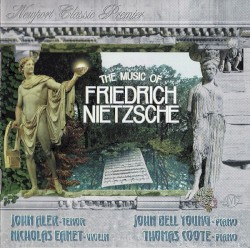 The Music of Friedrich Nietzsche1993
- 1."Eine Sylvesternacht"13:34
- 2.Ständchen1:58
- 3.Ungewitter1:59
- 4.Es winkt und neigt sich1:45
- 5.Da geht ein Bach1:13
- 6.Aus der Jugendzeit2:34
- 7.Mein Platz vor der Tür1:31
- 8.Das Kind an die erloschene Kerze1:59
- 9.Junge Fischerin3:17
- 10.Beschwörung3:59
- 11.Unendlich2:31
- 12.Gern und Gerner1:01
- 13.Verwelkt1:16
- 14.Wie sich Rebenranken schwingen1:01
- 15.Nachspiel1:46
- 16.Kirchengeschichtliches Responsorium2:24
- 17.Gebet an das Leben1:56
- 18.Manfred-Meditation (after Byron)11:32
 Songs1992
- 1.Gern und gerner 'Der Gang war schwer'1:13
- 2.Es winkt und neight sich1:43
- 3.Lied Nr. 5 Verwelkt 'Du warst je meine einzige'1:09
- 4.Lied Nr. 6 Nachspiel 'Ich möchte lassen diese glanzumspielte Welt'1:51
- 5.Das zerbrochene Ringlein 'Melodram'4:01
- 6.Die Vätergruft 'Es schritt wohl über die Heide'5:02
- 7.Wandrers Nachtlied II 'Über allen Gipfeln ist Ruh'3:26
- 8.Gesang des Harfners 'Wer nie sein Brot mit Tränen aß'2:27
- 9.Die drei Zigeuner 'Drei Zigeuner fand ich'6:21
- 10.Drei Gedichte von Michelangelo: 'Wohl denk ich oft, an mein vergang'nes Lebeu'2:04
- 11.Drei Gedichte von Michelangelo: 'Alles endet, was entstehet'3:49
- 12.Drei Gedichte von Michelangelo: 'Fühlt meine Seele das ersehnte Licht von Gott'3:47
- 13.Poèmes d'amour: 'Ne suis que grain de sable'0:53
- 14.Poèmes d'amour: 'Suis chauve de naissance'0:43
- 15.Poèmes d'amour: 'Ta parure est secrète'0:52
- 16.Petites mélodies: Elégie1:02
- 17.Petites mélodies: Danseuse0:44
- 18.Petites mélodies: Chanson0:42
- 19.Petites mélodies: Adieu0:55
- 20.Chansons Gaillardes: La maîtresse volage0:38
- 21.Chansons Gaillardes: Chanson à boire2:05
- 22.Chansons Gaillardes: Madrigal0:34
- 23.Chansons Gaillardes: Invocation aux parques1:28
- 24.Chansons Gaillardes: Couplets bachiques1:23
- 25.Chansons Gaillardes: L'offrande0:44
- 26.Chansons Gaillardes: La belle jeunesse1:31
- 27.Chansons Gaillardes: Sérénade1:48
 Piano Works and Fantasy for Violin and Piano
- 1.Im Mondschein auf der Puszta1:11
- 2.Das zerbrochene Ringlein2:27
- 3.So lach doch mal1:04
- 4.Das 'Fragment an sich'2:12
- 5.Hymnus an die Freundschaft17:37
- 6.Die Einleitung1:16
- 7.Skizze zu Byron's 'Foscari'1:27
- 8.Ungarischer Marsch1:28
- 9.Die Heldenklange1:27
- 10.Da geht ein Bach1:46
- 11.Ermanarich (Symphonische Dichtung)6:28
- 12.Edes Titok2:11
- 13.Nachtklang einer Sylvesternacht (for Violin and Piano)13:45
 Beyond Good and Evil: Penguin Classics2020
Tracklist not collected yet.
 Der Antichrist2018
Tracklist not collected yet.
 Die fröhliche Wissenschaft2012
Tracklist not collected yet.
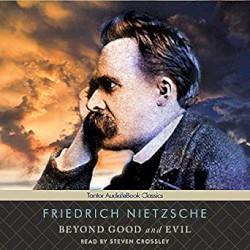 Beyond Good and Evil2011
Tracklist not collected yet.
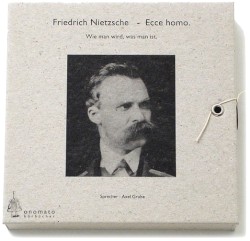 Ecce Homo. Wie man wird, was man ist.2003
Tracklist not collected yet.
 Ecce Homo
Tracklist not collected yet.
Influenced by
Archive
Passport
Identifiers & aliases
Also known as: Friedrich Wilhelm Nietzsche
Friedrich Wilhelm Nietzsche was a German philosopher and writer who started his career as a classical philologist and turned to philosophy early in his academic career. In 1869, at age 24, he was appointed Professor of Classical Philology at the University of Basel. Plagued by health problems for most of his life, he resigned from the university in 1879. He afterward lived as an independent writer, spending much of his life in relative solitude and financial insecurity while moving between Switzerland, Italy, and southern France in search of climates that might alleviate his condition, and in the following decade, he completed much of his core writing. In 1889, aged 44, he suffered a neurological collapse, and thereafter a complete loss of his mental faculties, with paralysis and vascular dementia; he lived out his remaining 11 years, first under the care of his mother, and later his sister, until his death. His works and his philosophy have fostered not only extensive scholarship but also much popular interest.
All links
Metrics in detail
Opinions of fans — not verified facts.
…