
Gabriel Fauré was a prominent French composer, organist, pianist, and teacher active from 1845 to 1924.
He was awarded the prestigious Grand Cross of the Legion of Honour for his contributions to music.
Fauré's musical style is often associated with the Romantic and classical music genres.
Biography
Early Life
Gabriel Urbain Fauré was born on May 12, 1845, in Pamiers, France. He grew up in a musical environment, which greatly influenced his early development as a composer and musician. Fauré studied at the École Niedermeyer in Paris, where he honed his skills in composition and organ performance, eventually becoming an accomplished organist.
Career
Fauré emerged as one of the foremost French composers of his generation, known for his unique style that blended elements of Romantic and classical music. His notable works include the "Pavane," "Requiem," and various nocturnes for piano. Throughout his career, he was recognized for his contributions to music, receiving numerous accolades, including the Grand Cross of the Legion of Honour. Fauré's influence extended to many 20th-century composers, and he is celebrated for his ability to evolve his musical style, particularly in his later years, where he embraced more complex harmonies and melodies.
Legacy
Fauré's legacy is marked by his significant impact on French music and his role as a teacher and mentor to younger composers. His works remain a staple in the classical repertoire, and he is remembered not only for his compositions but also for his contributions to music education. Fauré passed away on November 4, 1924, leaving behind a rich musical heritage that continues to inspire musicians today.
Collected from open sources (4) · facts link to sources · AI-processed
Discography
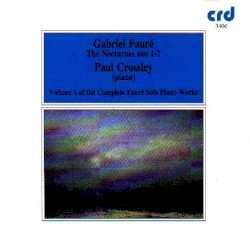 Complete Solo Piano Works, Volume 1: The Nocturnes nos. 1-71983
- 1.Nocturne no. 1 in E-flat minor, op. 337:04
- 2.Nocturne no. 2 in B major, op. 335:56
- 3.Nocturne no. 3 in A-flat major, op. 334:47
- 4.Nocturne no. 4 in E-flat major, op. 367:35
- 5.Nocturne no. 5 in B-flat major, op. 378:50
- 6.Nocturne no. 6 in D-flat major, op. 639:06
- 7.Nocturne no. 7 in C-sharp minor, op. 749:08
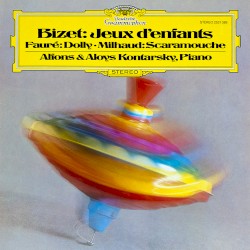 Jeux D'enfants - Dolly - Scaramouche1983
- 1.Jeux d'enfants, op. 22: I. L'escarpolette2:52
- 2.Jeux d'enfants, op. 22: II. La toupie0:57
- 3.Jeux d'enfants, op. 22: III. La poupée2:49
- 4.Jeux d'enfants, op. 22: IV. Les chevaux de bois1:18
- 5.Jeux d'enfants, op. 22: V. Le volant1:14
- 6.Jeux d'enfants, op. 22: VI. Trompette et tambour2:07
- 7.Jeux d'enfants, op. 22: VII. Les bulles de savon1:22
- 8.Jeux d'enfants, op. 22: VIII. Les quatre coins2:07
- 9.Jeux d'enfants, op. 22: IX. Colin-maillard1:58
- 10.Jeux d'enfants, op. 22: X. Saute-mouton1:21
- 11.Jeux d'enfants, op. 22: XI. Petit mari, petite femme3:00
- 12.Jeux d'enfants, op. 22: XII. Le bal1:39
- 13.Scaramouche, op. 165b: I. Vif (for two pianos)2:35
- 14.Scaramouche, op. 165b: II. Modéré (for two pianos)3:44
- 15.Scaramouche, op. 165b: III. Brazileira (Mouvement de samba) (for two pianos)2:25
- 16.Dolly Suite, op. 56: I. Berceuse2:30
- 17.Dolly Suite, op. 56: II. Mi-a-ou1:45
- 18.Dolly Suite, op. 56: III. Le jardin de Dolly3:06
- 19.Dolly Suite, op. 56: IV. Kitty Valse2:21
- 20.Dolly Suite, op. 56: V. Tendresse3:48
- 21.Dolly Suite, op. 56: VI. Le pas espagnol1:54
 Mélodies1983
- 1.Les Berceaux, Op. 23 No. 13:40
- 2.Le Papillon et la Fleur, Op. 1 No. 12:17
- 3.Lydia, Op. 4 No. 23:40
- 4.Rêve d'amour, Op. 5 No. 22:24
- 5.La Fée aux chansons, Op. 27 No. 21:49
- 6.Au bord de l'eau, Op. 8 No. 12:03
- 7.Notre amour, Op. 23 No. 21:58
- 8.Les Roses d'Ispahan, Op. 39 No. 43:35
- 9.Dans les ruines d'une abbaye, Op. 2 No. 12:12
- 10.Après un rêve, Op. 7 No. 13:50
- 11.Clair de lune, Op. 46 No. 23:16
- 12.Mandoline, Op. 58 No. 12:02
- 13.En sourdine, Op. 58 No. 24:02
- 14.L'Aurore, Op. Posth.1:39
- 15.Arpège, Op. 76 No. 22:44
- 16.Prison, Op. 83 No. 13:00
- 17.Dans la forêt de septembre, Op. 85 No. 14:09
- 18.Au cimetière, Op. 51 No. 25:34
 L'œuvre d'orchestre, Vol. II: Ballade / Fantaise / Élégie / Berceuse / Les Djinns / Caligula / Prélude de Pénélope1982
- 1.Ballade en fa dièse majeur, op. 1913:50
- 2.Élégie en ut mineur, op. 247:34
- 3.Berceuse en ré majeur, op. 164:06
- 4.Fantasie en sol majeur, op. 11114:54
- 5.Les Djinns, op. 124:01
- 6.Caligula, op. 52: 1. Fanfares, marche et chœur "Nous sommes les heures guerrières"7:05
- 7.Caligula, op. 52: 2. Chœur "L'hiver s'enfuit"2:29
- 8.Caligula, op. 52: 3. Air de danse2:13
- 9.Caligula, op. 52: 4. Mélodrame et Chœur "De roses merveilles"2:27
- 10.Caligula, op. 52: 5. Mélodrame et Chœur "César a fermé la paupière"3:22
- 11.Prélude de Pénélope8:10
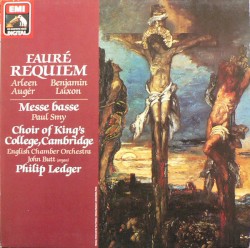 Requiem / Messe Basse1982
- 1.Requiem, op. 48: I. Introit and Kyrie5:35
- 2.Requiem, op. 48: II. Offertoire8:18
- 3.Requiem, op. 48: III. Sanctus2:52
- 4.Requiem, op. 48: IV. Pie Jesu3:12
- 5.Requiem, op. 48: V. Agnus Dei5:26
- 6.Requiem, op. 48: VI. Libera me4:19
- 7.Requiem, op. 48: VII. In paradisium3:18
- 8.Messe Basse: Kyrie eleison1:58
- 9.Messe Basse: Sanctus1:55
- 10.Messe Basse: Benedictus2:10
- 11.Messe Basse: Agnus Dei2:36
 Impromptus & Préludes1982
- 1.Impromptu no. 1 in E-flat major, op. 253:41
- 2.Impromptu no. 2 in F minor, op. 314:06
- 3.Impromptu no. 3 in A-flat major, op. 344:44
- 4.Impromptu no. 4 in D-flat major, op. 915:28
- 5.Impromptu no. 5 in F-sharp minor, op. 1022:13
- 6.Prélude No. 1 en Ré bémol majeur, Op. 1033:35
- 7.Prélude No. 2 en Ut dièse mineur, Op. 1032:13
- 8.Prélude No. 3 en Sol mineur, Op. 1033:50
- 9.Prélude No. 4 en Fa majeur, Op. 1031:44
- 10.Prélude No. 5 en Ré mineur, Op. 1032:52
- 11.Prélude No. 6 en Mi bémol mineur, Op. 1032:54
- 12.Prélude No. 7 en La majeur, Op. 1032:41
- 13.Prélude No. 8 en Ut mineur, Op. 1031:11
- 14.Prélude No. 9 en Mi mineur, Op. 1032:54
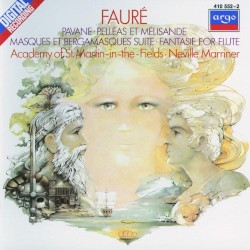 Pavane / Pelleas et Melisande / Masques et bergamasques Suite / Fantasie for Flute1982
- 1.Suite “Pelléas et Mélisande”, op. 80: I. Prélude. Quasi adagio5:52
- 2.Suite “Pelléas et Mélisande”, op. 80: II. Andantino quasi allegretto2:41
- 3.Suite “Pelléas et Mélisande”, op. 80: III. Sicilienne: Allegretto molto moderato3:51
- 4.Suite “Pelléas et Mélisande”, op. 80: IV. Molto adagio4:12
- 5.Pavane, op. 505:40
- 6.Fantaisie pour flûte, op. 795:29
- 7.Suite “Masques et bergamasques”, op. 112: I. Ouverture. Allegro molto vivo3:40
- 8.Suite “Masques et bergamasques”, op. 112: II. Menuet. Tempo di minuetto. Allegretto2:34
- 9.Suite “Masques et bergamasques”, op. 112: III. Gavotte. Allegro vivo3:05
- 10.Suite “Masques et bergamasques”, op. 112: IV. Pastorale. Andantino tranquillo4:06
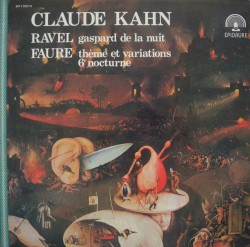 Ravel: Gaspard de la nuit / Fauré: Thème et variations - 6ᵉ Nocturne1980
- 1.Gaspard de la nuit: Ondine6:35
- 2.Gaspard de la nuit: Le Gibet6:05
- 3.Gaspard de la nuit: Scarbo9:16
- 4.Thème et variations14:45
- 5.6ᵉ Nocturne9:00
 La Bonne Chanson / Chansons de Bilitis / Ariettes oubliées1980
- 1.Ariettes oubliées: 1. C’est l’extase langoureuse
- 2.Ariettes oubliées: 2. Il pleure dans mon cœur
- 3.Ariettes oubliées: 3. L’Ombre des arbres
- 4.Ariettes oubliées: 4. Paysages belges : Cheveaux de bois
- 5.Ariettes oubliées: 5. Aquarelles : Green
- 6.Ariettes oubliées: 6. Aquarelles : Spleen
- 7.Chansons de Bilitis. 1. La Flûte de Pan
- 8.Chansons de Bilitis. 2. La Chevelure
- 9.Chansons de Bilitis. 3. Le Tombeau des naïades
- 10.La Bonne Chanson: 1. Une sainte en son auréole
- 11.La Bonne Chanson: 2. Puisque l’aube grandit
- 12.La Bonne Chanson: 3. La lune blanche luit dans les bois
- 13.La Bonne Chanson: 4. J’allais par des chemins perfides
- 14.La Bonne Chanson: 5. J’ai presque peur, en verité
- 15.La Bonne Chanson: 6. Avant que tu ne t’en ailles
- 16.La Bonne Chanson: 7. Donc, ce sera par un clair jour d’été
- 17.La Bonne Chanson: 8. N’est‐ce pas ?
- 18.La Bonne Chanson: 9. L’hiver a cessé
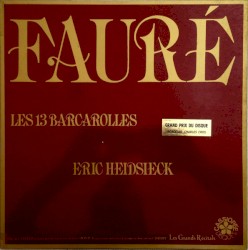 Les 13 Barcarolles1979
- 1.Les 13 Barcarolles : 3 en sol bémol / 5 en fa dièse mineur / 8 en ré bémol / 6 en mi bémol / 4 en la bémol / 1 en la mineur / 9 en la mineur31:30
- 2.Les 13 Barcarolles : 10 en la mineur / 7 en ré mineur / 2 en sol majeur / 11 en sol mineur / 12 en mi bémol / 13 en ut majeur21:30
 Requiem / Cantique de Jean Racine1978
- 1.Requiem, op. 48: I. Introit and Kyrie
- 2.Requiem, op. 48: II. Offertory
- 3.Requiem, op. 48: III. Sanctus
- 4.Requiem, op. 48: IV. Pie Jesu
- 5.Requiem, op. 48: V. Agnus Dei
- 6.Requiem, op. 48: VI. Libera me
- 7.Requiem, op. 48: VII. In paradisum
- 8.Cantique de Jean Racine, op. 11
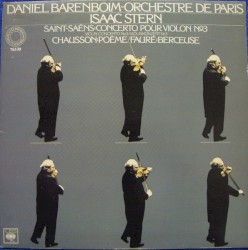 Saint-Saëns: Violin Concerto no. 3 / Chausson: Poème for Violin and Orchestra / Fauré: Berceuse, op. 161977
- 1.Konzert für Violine und Orchester no. 3 H-moll, op. 61: I. Allegro non troppo9:18
- 2.Konzert für Violine und Orchester no. 3 H-moll, op. 61: II. Andantino quasi allegretto9:08
- 3.Konzert für Violine und Orchester no. 3 H-moll, op. 61: III. Molto moderato e maestoso10:55
- 4.Poème, op. 2517:45
- 5.Berceuse, op. 163:25
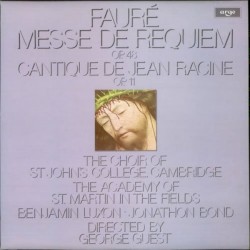 Messe de Requiem op. 48 / Cantique de Jean Racine op. 111976
Tracklist not collected yet.
 13 Nocturnes / Thème et variations1975
Tracklist not collected yet.
 Requiem / Pavane1975
Tracklist not collected yet.
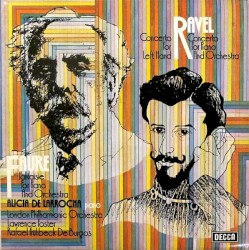 Ravel: Piano Concertos / Fauré: Fantaisie1974
Tracklist not collected yet.
 Les 13 Barcarolles1974
Tracklist not collected yet.
 Requiem1972
Tracklist not collected yet.
 The Impressionists1971
Tracklist not collected yet.
 Requiem1964
Tracklist not collected yet.
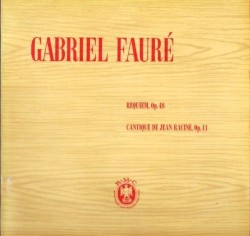 Requiem / Cantique de Jean Racine1964
Tracklist not collected yet.
 Mendelssohn: Piano Trio No.1 in D Minor, Op. 49 & Fauré: Piano Trio in D Minor, Op. 1201963
Tracklist not collected yet.
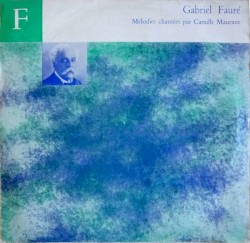 Mélodies chantées par Camille Maurane1960
Tracklist not collected yet.
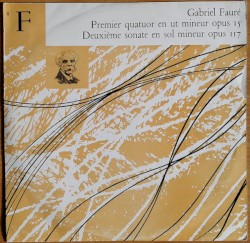 Premier Quatuor en ut mineur, Opus 15 / Deuxième sonate en sol mineur, Opus 1171956
Tracklist not collected yet.
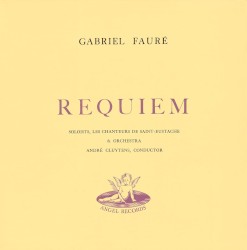 Requiem1950
Tracklist not collected yet.
Gallery


Achievements
- Award
- Grand Cross of the Legion of Honour
- Award
- Knight of the Legion of Honour
- Award
- Officer of the Legion of Honour
- Award
- Commander of the Legion of Honour
- Award
- Grand Officer of the Legion of Honour
Influenced by
Similar artists



Archive
Passport
Identifiers & aliases
Also known as: Faure, Faure, Gabriel (1845-1924), Fauri, Fauré, G. Fauré, Gabriel Faure
Gabriel Urbain Fauré was a French composer, organist, pianist and teacher. He was one of the foremost French composers of his generation, and his musical style influenced many 20th-century composers. Among his best-known works are his Pavane, Requiem, Sicilienne, nocturnes for piano and the songs "Après un rêve" and "Clair de lune". Although his best-known and most accessible compositions are generally his earlier ones, Fauré composed many of his most highly regarded works in his later years, in a more harmonically and melodically complex style.
All links
Opinions of fans — not verified facts.
…