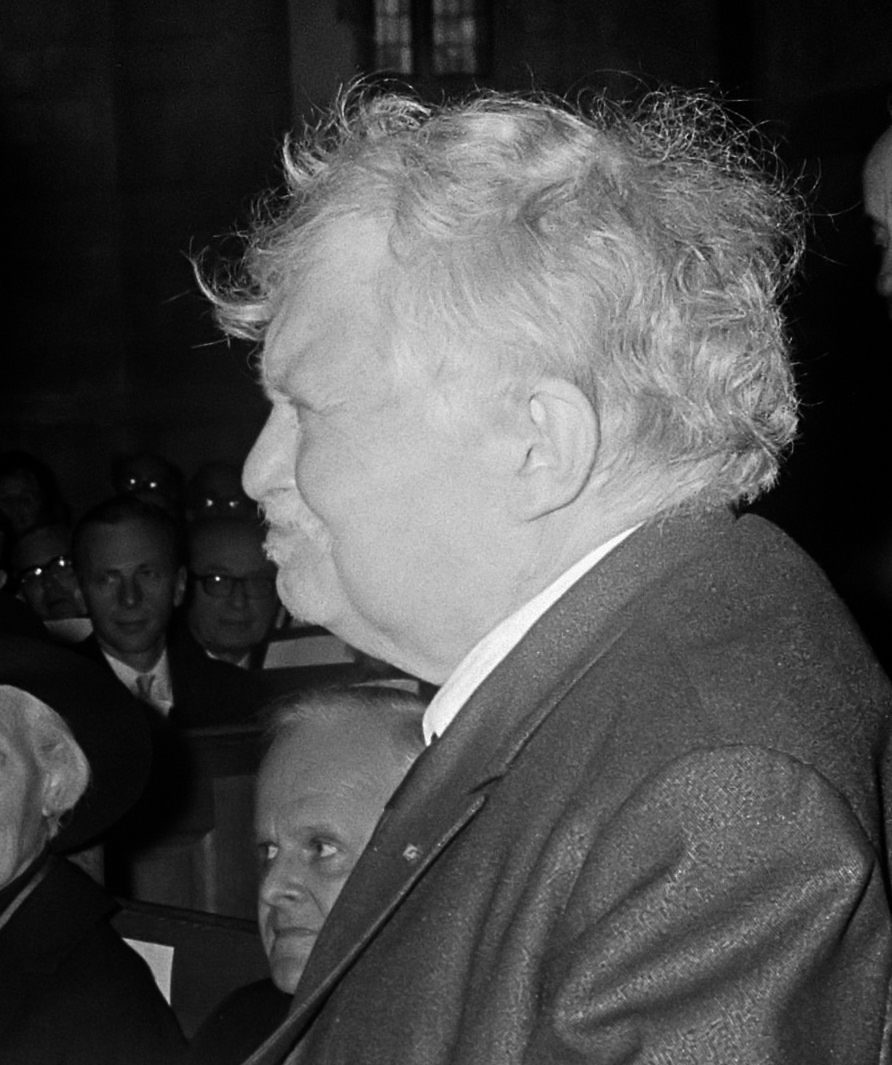
Gabriel Marcel was a leading Christian existentialist known for his philosophical and dramatic works.
He authored over a dozen books and at least thirty plays, focusing on the individual's struggle in a modern society.
Marcel completed his agrégation in philosophy from the Sorbonne at just 20 years old, showcasing his academic brilliance.
Biography
Early Life
Gabriel Honoré Marcel was born on December 7, 1889, in Paris, France. He faced personal tragedy early in life with the death of his mother, Laure Meyer, who was Jewish. Raised by his father, Henry Marcel, and his aunt, he excelled academically, completing his DES thesis and obtaining the agrégation in philosophy from the Sorbonne at the young age of 20. During World War I, Marcel served as the head of the Information Service for the Red Cross, helping to communicate news of injured soldiers to their families.
Career
Marcel's career was multifaceted; he was not only a philosopher but also a playwright and music critic. He authored over a dozen books and at least thirty plays, focusing on the struggles of modern individuals in a technologically dehumanizing society. Although he is often regarded as the first French existentialist, he preferred to define his philosophy as the "philosophy of existence" or neo-Socrateanism, distancing himself from contemporaries like Jean-Paul Sartre. His notable works include "Being and Having" (1933) and "The Mystery of Being" (1951), which reflect his deep engagement with existential themes.
Legacy
Marcel's influence extended beyond his writings; he hosted a weekly philosophy discussion group that shaped the thoughts of younger philosophers such as Jean Wahl and Emmanuel Levinas. Despite his significant contributions to philosophy and drama, he felt that his reputation was largely based on his philosophical works rather than his plays, which he hoped would reach a broader audience. His ideas also impacted figures like Karol Wojtyla, who later became Pope John Paul II, particularly in the distinction between "being" and "having" in the context of technological change. Gabriel Marcel passed away on October 8, 1973, in Paris, leaving behind a rich legacy in philosophy and literature.
Collected from open sources (4) · facts link to sources · AI-processed
Gallery


Achievements
- Award
- Erasmus Prize
- Award
- Peace Prize of the German Publishers' and Booksellers' Association
- Award
- Grand prix de littérature de l'Académie française
- Award
- Prix Brieux
- Award
- Grand prix national des Lettres
- Award
- Knight of the Legion of Honour
- Award
- Grand Prix littéraire de la Ville de Paris
Influenced by
Archive
Passport
Identifiers & aliases
French philosopher, playwright, music critic and leading Christian existentialist (1889-1973)
Gabriel Honoré Marcel was a French philosopher, playwright, music critic and leading Christian existentialist. The author of over a dozen books and at least thirty plays, Marcel's work focused on the modern individual's struggle in a technologically dehumanizing society. Though often regarded as the first French existentialist, he dissociated himself from figures such as Jean-Paul Sartre, preferring the term philosophy of existence or neo-Socrateanism to define his own thought. The Mystery of Being is a well-known two-volume work authored by Marcel.
All links
Opinions of fans — not verified facts.
…