
Giovanni Battista Sammartini was an influential Italian composer born in Milan.
He began his musical career in 1700 and became a prominent figure in church music.
Sammartini passed away on January 15, 1775, leaving behind a rich musical legacy.
Biography
Early Life
Giovanni Battista Sammartini was born in Milan, Italy, to French emigrant and oboist Alexis Saint-Martin and Girolama de Federici. As the seventh of eight children, he received musical instruction from his father and began composing music in 1725, with his first works being a set of vocal pieces that are now lost. By 1728, he had secured the prestigious position of maestro di cappella at Sant'Ambrogio, a role he maintained until his death in 1775.
Career
Sammartini quickly gained fame as a church composer, creating music for state occasions and the nobility. His influence extended to notable composers such as Johann Christian Bach, Mozart, and Gluck, the latter of whom was his student from 1737 to 1741. He is particularly recognized for his contributions to the concert symphony, moving away from the brief opera-overture style and introducing thematic development that would later influence composers like Haydn and Mozart. His works often reflect the galant style, embodying Enlightenment ideals and contributing significantly to the Classical style.
Legacy
Despite his prominence during his lifetime, Sammartini's music fell into obscurity after his death, only to be rediscovered in 1913 by researchers. His surviving works, many of which were published outside Milan, highlight his role in the evolution of classical music, marking him as a pivotal figure in the transition to the Classical era. His legacy is characterized by a blend of innovation and tradition, leaving a lasting impact on the music that followed.
Collected from open sources (4) · facts link to sources · AI-processed
Discography
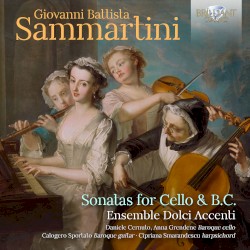 Sonatas for Cello & B.C.2023
Tracklist not collected yet.
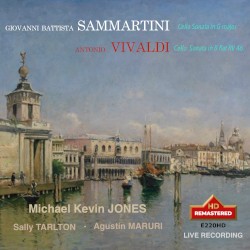 Sammartini: Cello Sonata in G major / Vivaldi: Cello Sonata in B-flat, RV 462023
Tracklist not collected yet.
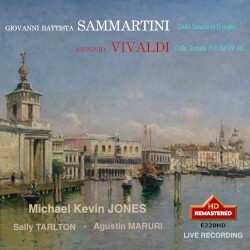 Italian Baroque Cello Sonatas (Remastered 2023)2023
Tracklist not collected yet.
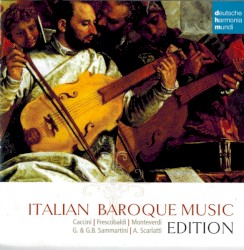 Italian Baroque Music Edition2011
Tracklist not collected yet.
 The Late Symphonies, Volume 22010
Tracklist not collected yet.
 The Late Symphonies, Volume 12008
Tracklist not collected yet.
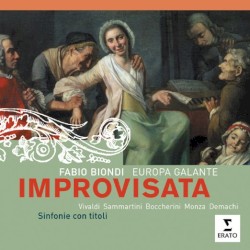 Improvisata: Sinfonie con titoli2007
Tracklist not collected yet.
 Six Symphonies2005
Tracklist not collected yet.
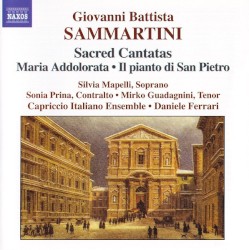 Sacred Cantatas: Maria Addolorata / Il Pianto di San Pietro)2005
Tracklist not collected yet.
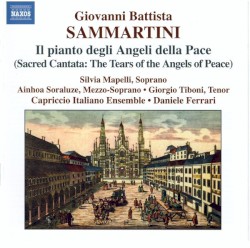 Il pianto degli angeli della pace2004
Tracklist not collected yet.
 Il pianto delle pie Donne / Pianto di Maddalena al Seprolcro2001
Tracklist not collected yet.
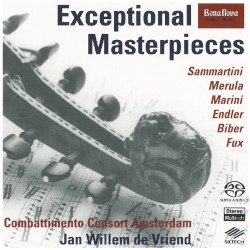 Exceptional Masterpieces2001
Tracklist not collected yet.
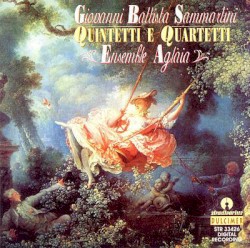 Quintetti e Quarteti (Ensemble Aglaia feat. violin: Cinzia Barbagelata, violin: Simona Gilardi, violin: Chiara Del Turco, alto: Francesco Lattuada, cello: Jorge Alberto Guerrero)1997
Tracklist not collected yet.
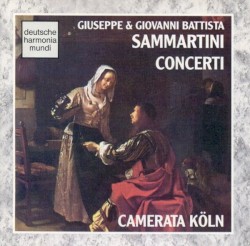 Concerti1995
Tracklist not collected yet.
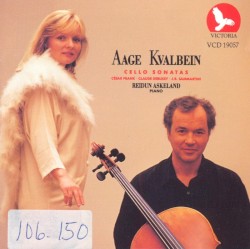 Cello Sonatas1991
Tracklist not collected yet.
 Concerti & Sinfonie1986
Tracklist not collected yet.
 Concertos and Symphonies for Violin and String Orchestra
Tracklist not collected yet.
 Miserere, Te Deum, Dixit & Gloria2005
Tracklist not collected yet.
Gallery

Similar artists


Archive
Passport
Identifiers & aliases
Giovanni Battista Sammartini was an Italian composer, violinist, organist, choirmaster and teacher. He counted Gluck among his students, and was highly regarded by younger composers including Johann Christian Bach. It has also been noted that many stylizations in Joseph Haydn's compositions are similar to those of Sammartini, although Haydn denied any such influence. Sammartini is especially associated with the formation of the concert symphony through both the shift from a brief opera-overture style and the introduction of a new seriousness and use of thematic development that prefigure Haydn and Mozart. Some of his works are described as galant, a style associated with Enlightenment ideals, while "the prevailing impression left by Sammartini's work... [is that] he contributed greatly to the development of a Classical style that achieved its moment of greatest clarity precisely when his long, active life was approaching its end".
All links
Opinions of fans — not verified facts.
…