
Gustav Mahler
Musician · Austria · 1860–1911
Gustav Mahler was an Austrian late-Romantic composer known for his profound and innovative symphonies.
Mahler was born in Austria and became one of the leading conductors of his generation.
Mahler's music gained wide popularity only after periods of relative neglect, particularly during the Nazi era.
Biography
Early Life
Gustav Mahler was born on July 7, 1860, in Kaliště, a small village in what is now the Czech Republic. He was the second son of Bernhard Mahler, a coachman turned innkeeper, and Marie Herrmann. The Mahler family, of Jewish descent, faced humble beginnings, with Gustav growing up in a household that experienced both the joys and tragedies of life; of the twelve children born to his parents, only six survived infancy. The family moved to Jihlava, where Mahler was exposed to a rich tapestry of music through local folk songs, military marches, and street melodies, which would later influence his compositions.
Career
Mahler's professional journey began in 1880 when he took his first conducting job at a small theatre in Bad Hall. His early career was marked by a series of appointments across various theatres, including the Royal Municipal Theatre in Olmütz, where he conducted operas and began to establish his reputation. Mahler's unique ability to blend the traditional with the modern made him a pivotal figure in the transition from 19th-century music to the modernism of the early 20th century. Despite facing periods of neglect during his lifetime, particularly during the Nazi era, Mahler's music experienced a resurgence after 1945, leading to his recognition as one of the most frequently performed composers of the 20th century.
Legacy
Gustav Mahler passed away on May 18, 1911, but his influence on classical music endures. His compositions, characterized by their emotional depth and innovative orchestration, have captivated audiences worldwide. Mahler's works, including symphonies and song cycles, continue to be celebrated for their profound exploration of the human experience, bridging the gap between the Romantic tradition and modern musical expression. His legacy is a testament to the enduring power of music to transcend time and cultural boundaries.
Collected from open sources (4) · facts link to sources · AI-processed
Discography
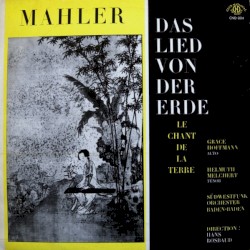 Gran Partita1960
- 1.Das Lied Von Der Erde (Le Chant de la Terre): 1. La Chanson à boire des gueux8:40
- 2.Das Lied Von Der Erde (Le Chant de la Terre): 2. Solitude en automne10:50
- 3.Das Lied Von Der Erde (Le Chant de la Terre): 3. De la jeunesse3:27
- 4.Das Lied Von Der Erde (Le Chant de la Terre): 4. De la beauté6:36
- 5.Das Lied Von Der Erde (Le Chant de la Terre): 5. L'Enivré du printemps4:32
- 6.Das Lied Von Der Erde (Le Chant de la Terre): 6. L'Adieu28:51
 Symphonie Nr. 5 / Te Deum1960
Tracklist not collected yet.
 Songs Of A Wayfarer / Kindertotenlieder1960
- 1.Songs of a Wayfarer: Wenn Mein Schatz Hochzeit Macht4:01
- 2.Songs of a Wayfarer: Ging Heut' Morgen Ubers Feld4:23
- 3.Songs of a Wayfarer: Ich Hab' Ein Gluhend Messer3:09
- 4.Songs of a Wayfarer: Die Zwei Blauen Augen5:42
- 5.Kindertotenlieder: Nun Will Die Sonn' So Hell Aufgeh'n5:17
- 6.Kindertotenlieder: Nun Seh' Ich Wohl, Warum So Dunkle Flammen4:58
- 7.Kindertotenlieder: Wenn Dein Mutterlein4:49
- 8.Kindertotenlieder: Oft Denk' Ich, Sie Sind Nur Ausgegangen3:09
- 9.Kindertotenlieder: In Diesem Wetter, in Diesem Braus6:30
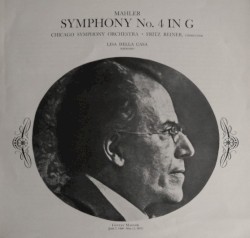 Symphony no. 41960
- 1.Symphony no. 4 in G: First Movement : Moderato non affrettare
- 2.Symphony no. 4 in G: Second Movement : Movimento con comodo; Senza fretta
- 3.Symphony no. 4 in G: Third Movement : Tranquillo
- 4.Symphony no. 4 in G: Fourth Movement : Molto piacevole
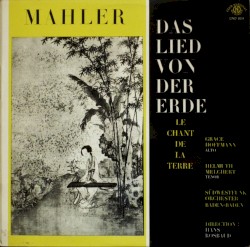 Das Lied von der Erde1960
- 1.Le Chant de la Terre: Chanson à boire des Gueux8:40
- 2.Le Chant de la Terre: Solitude en Automne10:50
- 3.Le Chant de la Terre: De la Jeunesse3:27
- 4.Le Chant de la Terre: De la Beauté6:36
- 5.Le Chant de la Terre: L'Enivré du Printemps4:32
- 6.Le Chant de la Terre: L'Adieu28:51
 Das klagende Lied1959
- 1.Das klagende Lied: Part One
- 2.Das klagende Lied: Part Two
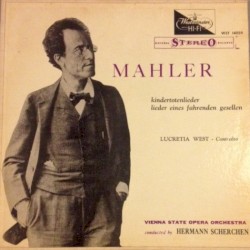 Kindertotenlieder, Lieder eines fahrenden Gesellen1959
- 1.Kindertotenlieder: Nun will die Sonn' so hell aufgeh'n
- 2.Kindertotenlieder: Nun seh' ich wohl, warum so dunkle Flammen
- 3.Kindertotenlieder: Wenn dein Mütterlein
- 4.Kindertotenlieder: Oft denk' ich, sie sind nur ausgegangen
- 5.Kindertotenlieder: In diesem Wetter
- 6.Lieder eines fahrenden Gesellen: Wenn mein Schatz Hochzeit macht
- 7.Lieder eines fahrenden Gesellen: Ging heut' Morgen über Feld
- 8.Lieder eines fahrenden Gesellen: Ich hab' ein glühend Messer
- 9.Lieder eines fahrenden Gesellen: Die zwei blauen Augen
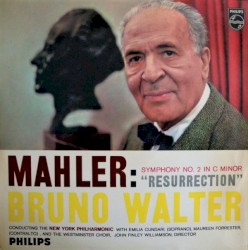 Symphony no. 2 in C minor “Resurrection”1958
- 1.Symphony no. 2 in C minor: I. Allegro Maestoso
- 2.Symphony no. 2 in C minor: II. Andante moderato
- 3.Symphony no. 2 in C minor: III. In ruhig fliessender Bewegung
- 4.Symphony no. 2 in C minor: IV. “Urlicht” Sehr feierlich, aber schlicht
- 5.Symphony no. 2 in C minor: V. Im Tempo des Scherzos, Wild herausfahrend (beginning)
- 6.Symphony no. 2 in C minor: V. Im Tempo des Scherzos, Wild herausfahrend (conclusion)
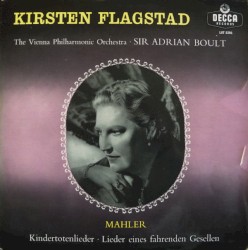 Kindertotenlieder / Lieder eines fahrenden Gesellen1958
- 1.Kindertotenlieder: No. 1. Nun will die Sonn' so hell aufgeh'n
- 2.Kindertotenlieder: No. 2. Nun seh' ich wohl, warum so dunkle Flammen
- 3.Kindertotenlieder: No. 3. Wenn dein Mütterlein
- 4.Kindertotenlieder: No. 4. Oft denk' ich, sie sind nur ausgegangen
- 5.Kindertotenlieder: No. 5. In diesem Wetter
- 6.Lieder eines fahrenden Gesellen: No. 1. Wenn mein Schatz Hochzeit macht
- 7.Lieder eines fahrenden Gesellen: No. 2. Ging heut' morgen übers Feld
- 8.Lieder eines fahrenden Gesellen: No. 3. Ich hab' ein glühend Messer
- 9.Lieder eines fahrenden Gesellen: No. 4. Die zwei blauen Augen
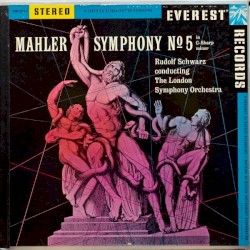 Symphony no. 5 in C‐sharp minor1958
- 1.Symphony no. 5 in C‐sharp minor, Part I: I. Trauermarsch (Funeral March)12:57
- 2.Symphony no. 5 in C‐sharp minor, Part I: II. Stürmisch bewegt; mit großer Vehemenz (Stormily Agitated; With Great Vehemence)14:09
- 3.Symphony no. 5 in C‐sharp minor, Part II: III. Scherzo: Kräftig, nicht zu schnell (Vigorously, Not Too Fast)18:18
- 4.Symphony no. 5 in C‐sharp minor, Part III: IV. Adagietto: Sehr langsam (Very Slowly)7:35
- 5.Symphony no. 5 in C‐sharp minor, Part III: V. Rondo Finale: Allegro16:50
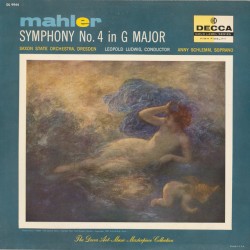 Symphony No. 4 in G Major1957
Tracklist not collected yet.
 Le Chant de la Terre / Lieder eines fahrenden Gesellen1957
- 1.Das Lied von der Erde: Das Trinklied vom Jammer der Erde8:34
- 2.Das Lied von der Erde: Der Einsame im Herbst9:20
- 3.Das Lied von der Erde: Von der Jugend3:01
- 4.Das Lied von der Erde: Von der Schönheit6:46
- 5.Das Lied von der Erde: Der Trunkene im Frühling4:10
- 6.Das Lied von der Erde: Der Abschied28:08
- 7.Lieder eines fahrenden Gesellen: Wenn mein Schatz Hochzeit macht3:45
- 8.Lieder eines fahrenden Gesellen: Ging heut’ Morgen über’s Feld3:50
- 9.Lieder eines fahrenden Gesellen: Ich hab’ ein glühend Messer2:50
- 10.Lieder eines fahrenden Gesellen: Die zwei blauen Augen5:05
 Three Rückert Lieder1956
Tracklist not collected yet.
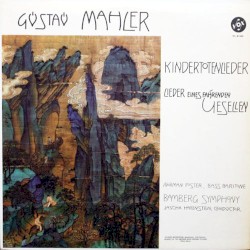 Kindertotenlieder / Lieder eines fahrenden Gesellen1955
Tracklist not collected yet.
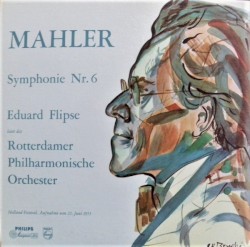 Symphonie Nr. 61955
Tracklist not collected yet.
 Symphonie Nr. 81954
Tracklist not collected yet.
 Symphony No. 1 in D Major1954
Tracklist not collected yet.
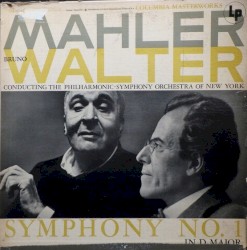 Symphony No. 1 In D Major1954
Tracklist not collected yet.
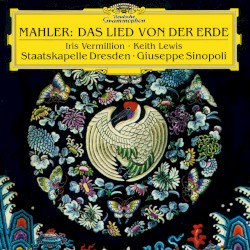 Das Lied von der Erde1952
Tracklist not collected yet.
 Symphony no. 3 in D‐minor / Fourteen Youth Songs1952
Tracklist not collected yet.
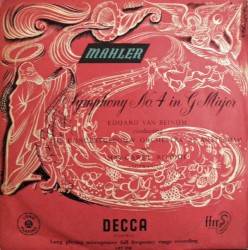 Symphony no. 4 in G major1952
Tracklist not collected yet.
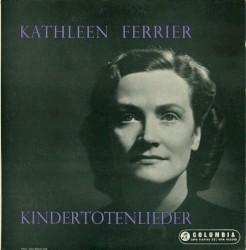 Kindertotenlieder1951
Tracklist not collected yet.
 Mahler: Symphony No. 12009
Tracklist not collected yet.
 Mahler: Adagio dalla Sinfonia n. 10 / Strauss: Eine Alpensinfonie1998
Tracklist not collected yet.
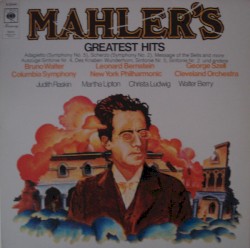 Greatest Hits1974
Tracklist not collected yet.
Gallery


Similar artists




Archive
Passport
Identifiers & aliases
Also known as: G. Mahler, G. Malher, Gustavs Mālers, Gutav Mahler, Mahler, Mahler, Gustav
Gustav Mahler was an Austro-Bohemian Romantic composer, and one of the leading conductors of his generation. As a composer he acted as a bridge between the 19th-century tradition and the modernism of the early 20th century. While in his lifetime his status as a conductor was established beyond question, his own music gained wide popularity only after periods of relative neglect, which included a ban on its performance in much of Europe during the Nazi era. After 1945 his compositions were rediscovered by a new generation of listeners; Mahler then became one of the most frequently performed and recorded of all composers, a position he has sustained into the 21st century.
All links
Opinions of fans — not verified facts.
…