
Johann Nepomuk Hummel was an influential Austrian composer and pianist who lived from 1778 to 1837.
Hummel was a child prodigy who studied under Mozart and was known for his transition from the Classical to the Romantic musical era.
He was awarded the prestigious title of Knight of the Legion of Honour for his contributions to music.
Biography
Early Life
Johann Nepomuk Hummel was born on November 14, 1778, in Pressburg, which is now Bratislava, Slovakia. He was an only child, named after the Czech patron saint John of Nepomuk. His father, Johannes Hummel, was a violinist and music teacher, who played a significant role in his early musical education. Hummel's family moved to Vienna in the late 1780s, where his father became the music director at the Theater auf der Wieden.
Hummel displayed prodigious talent from a young age, catching the attention of Wolfgang Amadeus Mozart, who offered him music lessons and housed him for two years. By the age of nine, Hummel made his concert debut at one of Mozart's performances. His father later took him on a European tour, where he studied under Muzio Clementi and gained acclaim for his performances in London.
Career
Hummel's career flourished as he transitioned from a child prodigy to a respected composer and pianist. He was heavily influenced by the classical giants of his time, including Mozart and Joseph Haydn. His compositions reflect the shift from the Classical to the Romantic era, and he became known for his innovative piano techniques. Hummel published a significant instructional book, "A Complete Theoretical and Practical Course of Instruction on the Art of Playing the Piano Forte," which introduced new styles of fingering and ornamentation.
His influence extended to later composers, including Frédéric Chopin, Franz Liszt, and Felix Mendelssohn, who were inspired by Hummel's works. Hummel's notable compositions include several piano concertos and chamber music, which remain part of the classical repertoire today.
Legacy
Hummel passed away on October 17, 1837, but his impact on music continued long after his death. His teaching methods and compositions shaped the development of piano music in the 19th century. Hummel's legacy is evident in the works of his students and those he influenced, marking him as a pivotal figure in the transition between musical eras. His contributions to the art of piano playing and composition have earned him a lasting place in the history of classical music.
Collected from open sources (4) · facts link to sources · AI-processed
Discography
 Flötentrios1993
Tracklist not collected yet.
 Concertos pour alto1993
Tracklist not collected yet.
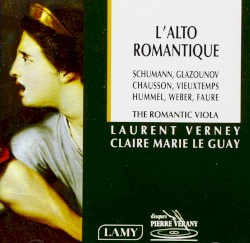 L'alto romantique1993
Tracklist not collected yet.
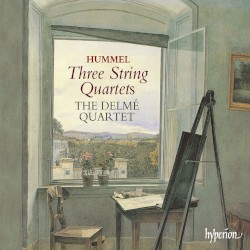 Three String Quartets, op. 301992
Tracklist not collected yet.
 Concertos pour trompette1992
Tracklist not collected yet.
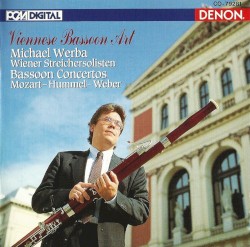 Viennese Bassoon Art: Bassoon Concertos1992
Tracklist not collected yet.
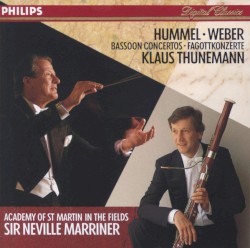 Bassoon Concertos1991
Tracklist not collected yet.
 Oboe Concertos1990
Tracklist not collected yet.
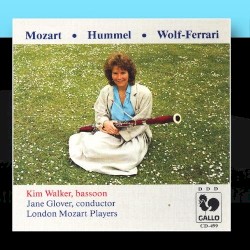 Bassoon Concertos1989
Tracklist not collected yet.
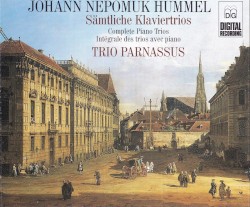 Complete Piano Trios1989
Tracklist not collected yet.
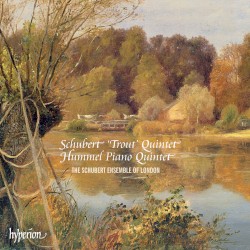 Schubert: Trout Quintet / Hummel: Quintet in E-flat, op. 871989
Tracklist not collected yet.
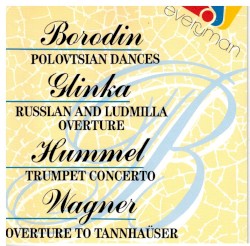 Borodin: Polovtsian Dances / Glinka: Russian and Ludmilla Overture / Hummel: Trumpet Concerto / Wagner: Overture to Tannhaüser1988
Tracklist not collected yet.
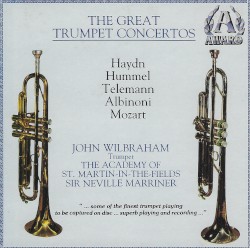 Trumpet Concerto1988
Tracklist not collected yet.
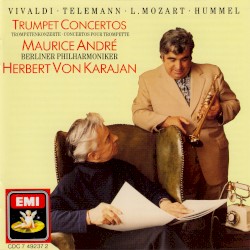 Trumpet Concertos1988
Tracklist not collected yet.
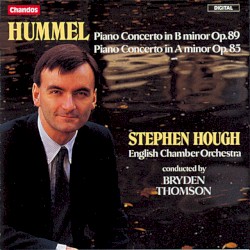 Piano Concerto in B minor, op. 89 / Piano Concerto in A minor, op. 851987
Tracklist not collected yet.
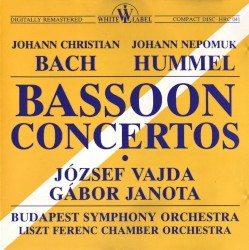 Bassoon Concertos1987
Tracklist not collected yet.
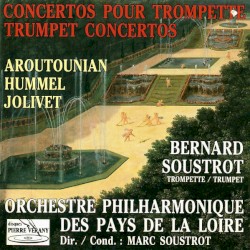 Concertos pour trompette1987
Tracklist not collected yet.
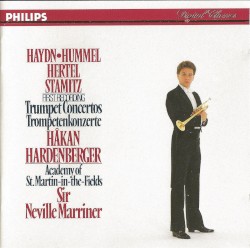 Trumpet Concertos1987
Tracklist not collected yet.
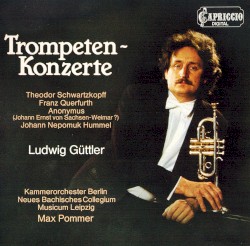 Trompetenkonzerte1984
Tracklist not collected yet.
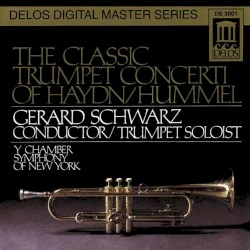 The Classic Trumpet Concerti of Haydn and Hummel1983
Tracklist not collected yet.
 Trumpet Concertos1983
Tracklist not collected yet.
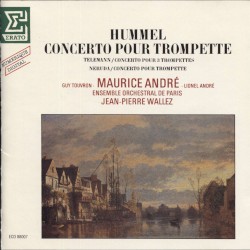 Concerto pour trompette1982
Tracklist not collected yet.
 Virtuoso Trumpet1978
Tracklist not collected yet.
 Messe = Mass Op. 80 / Graduale, Op. 88 / Offertorium, Op. 891996
Tracklist not collected yet.
 Haydn-Hummel: Concerti per tromba e orchestra
Tracklist not collected yet.
Gallery


Achievements
- Award
- Knight of the Legion of Honour
Similar artists



Archive
Passport
Identifiers & aliases
Also known as: Hummel, J. N. Hummel, Jan Nepomuk Hummel, Johann Nepomus Hummel
Johann Nepomuk Hummel was an Austrian composer and pianist. His music reflects the transition from the Classical to the Romantic musical era. He was among Wolfgang Amadeus Mozart and Antonio Salieri’s best students. He also studied under Joseph Haydn. Hummel significantly influenced later piano music of the nineteenth century, particularly in the works of Frédéric Chopin, Franz Liszt, and Felix Mendelssohn.
All links
Opinions of fans — not verified facts.
…