
John Blow was an influential English composer of the Baroque period.
He began his musical career in 1649, marking the start of a significant legacy in English music.
Blow served as the organist at Westminster Abbey starting in 1668, a prestigious position in his career.
Biography
Early Life and Education
John Blow was likely born in Collingham, Nottinghamshire, around February 23, 1649. He was baptized shortly after his birth, and his early musical talent was recognized when he became a chorister at the Chapel Royal. By a young age, he had already composed several anthems, showcasing his proficiency in music, including notable works like "Lord, Thou hast been our refuge" and the collaborative "I will always give thanks."
Career
Blow's professional journey began in 1668 when he became the organist at Westminster Abbey. His compositions gained attention, including a two-part setting of Robert Herrick's poem at the request of Charles II. By 1674, he was appointed a gentleman of the Chapel Royal and later became the Master of the Children of the Chapel Royal. His only surviving stage work, the masque "Venus and Adonis," was performed between 1680 and 1687. In 1687, he took on the role of choirmaster at St Paul's Cathedral, where many of his works were performed. His career culminated in 1700 when he was appointed Composer to the Chapel Royal.
Personal Life
In September 1673, Blow married Elizabeth Braddock, who tragically died in childbirth a decade later. Despite personal losses, including the deaths of two sons, he had three daughters who survived him. Blow passed away on October 1, 1708, at the age of 59, and was buried in Westminster Abbey.
Legacy
Blow's contributions to music are commemorated in various ways, including the naming of Collingham John Blow Primary School in Nottinghamshire after him. His influence extended into the 20th century, inspiring works like Arthur Bliss's "Meditations on a Theme by John Blow." The tercentenary of his death was marked by special broadcasts celebrating his music, highlighting his enduring legacy in the world of classical music.
Collected from open sources (4) · facts link to sources · AI-processed
Discography
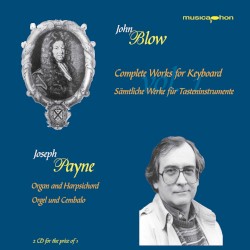 Complete Works for Keyboard, Vol. 12021
Tracklist not collected yet.
 Elegy2019
Tracklist not collected yet.
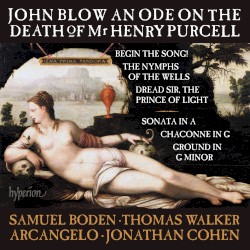 An Ode on the Death of Mr Henry Purcell2017
Tracklist not collected yet.
 Purcell, Locke, Blow, Gibbons2017
Tracklist not collected yet.
 Music for Brass Septet, Volume 22015
Tracklist not collected yet.
 Nine German Arias2011
Tracklist not collected yet.
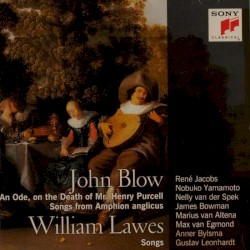 John Blow: An Ode, on the Death of Mr. Henry Purcell / Songs from Amphion anglicus / William Lawes: Songs2011
Tracklist not collected yet.
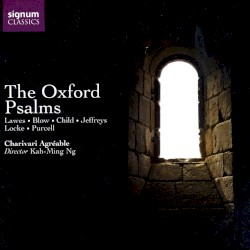 The Oxford Psalms2007
Tracklist not collected yet.
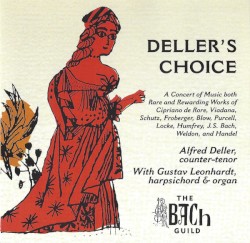 Deller's Choice: A Concert of Music both Rare and Rewarding2003
Tracklist not collected yet.
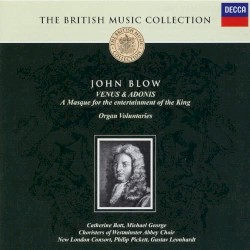 Venus & Adonis2003
Tracklist not collected yet.
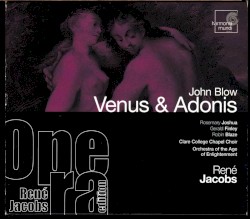 Venus & Adonis1999
Tracklist not collected yet.
 Purcell Ode / Songs from Amphion Anglicus (harpsichord & conductor: Gustav Leonhardt)1998
Tracklist not collected yet.
 Croft The Burial Service1997
Tracklist not collected yet.
 Odes to Saint Cecilia1995
Tracklist not collected yet.
 Fairest Work of Happy Nature: Songs and Keyboard Music by John Blow1993
Tracklist not collected yet.
 Awake My Lyre1993
Tracklist not collected yet.
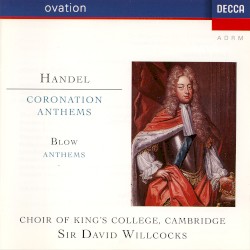 Handel: Coronations Anthem / Blow: Anthems1993
Tracklist not collected yet.
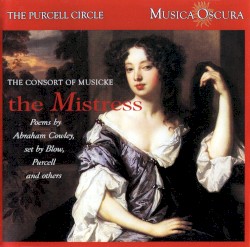 The Purcell Circle – the Mistress1993
Tracklist not collected yet.
 Homage to Queen Mary1991
Tracklist not collected yet.
 Countertenor Duets1988
Tracklist not collected yet.
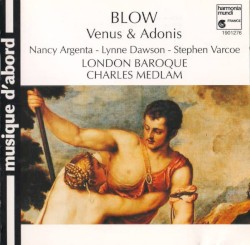 Venus & Adonis1988
Tracklist not collected yet.
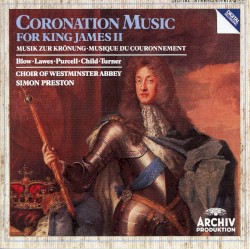 Coronation Music for King James II1987
Tracklist not collected yet.
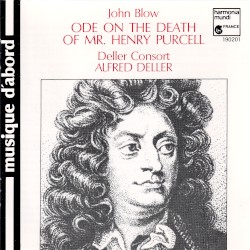 Ode on the Death of Mr. Henry Purcell1987
Tracklist not collected yet.
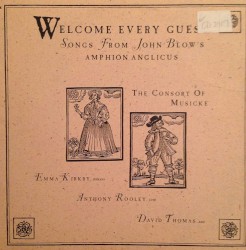 Welcome Every Guest - Songs From John Blow's Amphion Anglicus1987
Tracklist not collected yet.
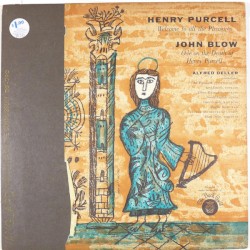 Welcome to All the Pleasures (Ode on St. Cecilia's Day 1683) / Ode on the Death of Henry Purcell1959
Tracklist not collected yet.
Gallery


Similar artists


Archive
Passport
Identifiers & aliases
John Blow was an English composer and organist of the Baroque period. Appointed organist of Westminster Abbey in late 1668, his pupils included William Croft, Jeremiah Clarke and Henry Purcell. In 1685 he was named a private musician to James II. His only stage composition, Venus and Adonis, is thought to have influenced Henry Purcell's later opera Dido and Aeneas. In 1687, he became choirmaster at St Paul's Cathedral, where many of his pieces were performed. In 1699 he was appointed to the newly created post of Composer to the Chapel Royal.
All links
Opinions of fans — not verified facts.
…