
John Dunstable was a prominent English Renaissance composer known for his significant contributions to early music.
He is believed to have begun his musical career around 1390.
Dunstable's career spanned over six decades, ending with his death on December 24, 1453.
Biography
Early Life
John Dunstable, an influential English composer, is believed to have been born around 1390, although the exact details of his early life remain largely unknown. His family likely adopted their surname from the town of Dunstable in Bedfordshire, and he is often referred to as 'Dunstaple' in historical sources. The earliest surviving works attributed to him date from around 1410 to 1420, suggesting he was active during the late medieval period.
Career
Dunstable was a central figure in the transition from medieval to Renaissance music, recognized for his contributions to the Contenance angloise style. This style, characterized by full triadic harmony and a preference for the interval of the third, marked a significant evolution in musical composition. His works, though few in number, had a profound impact on the music of continental Europe, influencing notable composers such as Du Fay and Binchois. Dunstable's music was celebrated for its innovative harmonies and lyrical qualities, establishing him as the leading English composer of his time.
Legacy
Dunstable's influence extended far beyond his lifetime, earning him recognition as a pivotal figure in early music history. His style was hailed as a new art form, with music theorist Tinctoris referring to him as the "wellspring and origin" of the Contenance angloise. This legacy is evident in the way his stylistic traits laid the groundwork for the Burgundian School and the broader developments in Renaissance music. Dunstable's works continue to be performed and studied, reflecting his lasting impact on the evolution of Western music.
Collected from open sources (4) · facts link to sources · AI-processed
Discography
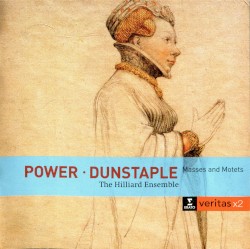 Masses and Motets2012
Tracklist not collected yet.
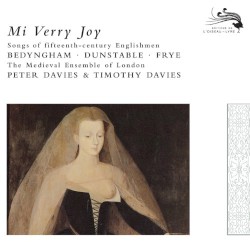 Mi verry joy: Songs of Fifteenth‐century Englishmen2008
Tracklist not collected yet.
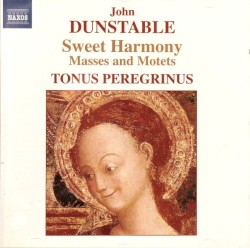 Sweet Harmony: Masses and Motets2005
Tracklist not collected yet.
 John Dunstable2001
Tracklist not collected yet.
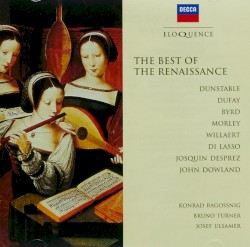 The Best of the Renaissance1999
Tracklist not collected yet.
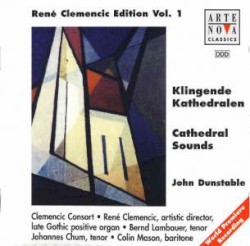 Klingende Kathedralen - Cathedral Sounds1996
Tracklist not collected yet.
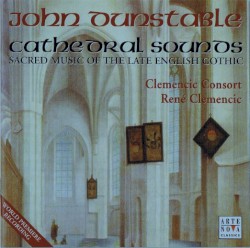 Sacred Music of the Late English Gothic (John Dunstable), Clemencic Consort1996
Tracklist not collected yet.
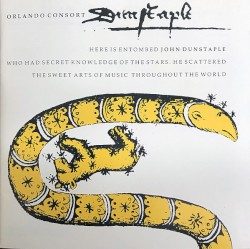 John Dunstaple: Musician to the Plantagenets1995
Tracklist not collected yet.
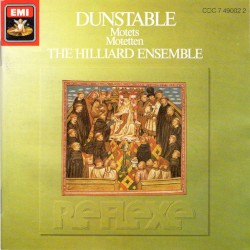 Motets1987
Tracklist not collected yet.
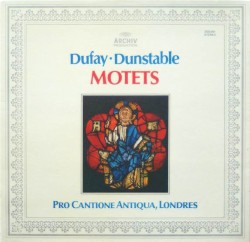 Motets1975
Tracklist not collected yet.
 Motets / 5 Chansons1956
Tracklist not collected yet.
 von Bingen: Lieder und Antiphonen / Dunstable: Motetten / Dufay: Magnificat octavi toni
Tracklist not collected yet.
Similar artists




Archive
Passport
Identifiers & aliases
Also known as: John Dunstaple
John Dunstaple was an English composer whose music helped inaugurate the transition from the medieval to the Renaissance periods. The central proponent of the Contenance angloise style, Dunstaple was the leading English composer of his time, and is often coupled with William Byrd and Henry Purcell as England's most important early music composers. His style would have an immense influence on the subsequent music of continental Europe, inspiring composers such as Du Fay, Binchois, Ockeghem and Busnois.
All links
Opinions of fans — not verified facts.
…