
Joseph Haydn was an influential Austrian composer of the Classical period, known for his significant contributions to chamber music.
Haydn is often referred to as the "Father of the Symphony" and the "Father of the String Quartet" due to his pivotal role in developing these musical forms.
He was honored as an honorary citizen of Vienna, recognizing his profound impact on the city's musical heritage.
Biography
Early Life
Joseph Haydn was born on March 31, 1732, in Rohrau, Austria, a village near the Hungarian border. His father, Mathias Haydn, was a wheelwright and a passionate folk musician, while his mother, Maria Koller, had worked as a cook in the local aristocrat's palace. Despite their lack of formal musical education, Haydn's parents recognized his musical talent early on. At the age of six, they sent him to live with his relative Johann Matthias Frankh, a choirmaster in Hainburg, to receive proper musical training. This marked the beginning of Haydn's journey into the world of music, although it was not without hardship, as he often faced hunger and humiliation in Frankh's household.
Career
Haydn's career flourished as he developed his skills in playing the harpsichord and violin, and he soon became a prominent figure in the classical music scene. He is celebrated for his pivotal role in the evolution of chamber music, particularly the string quartet and piano trio. His innovative contributions to musical forms earned him the titles of "Father of the Symphony" and "Father of the String Quartet." Throughout his life, he composed numerous works, including the famous "Surprise" Symphony and the "Clock" Symphony, which showcased his unique style and creativity. Haydn's influence extended beyond his compositions; he was also known for his engaging personality and sense of humor, which endeared him to both audiences and fellow musicians.
Legacy
Joseph Haydn passed away on May 31, 1809, leaving behind a rich legacy that shaped the future of classical music. He was honored as an honorary citizen of Vienna, reflecting his significant impact on the city and its cultural life. His works continue to be performed and celebrated worldwide, solidifying his status as one of the most important composers of the Classical period. Haydn's ability to blend innovation with tradition has ensured that his music remains relevant and cherished by generations of musicians and listeners alike.
Collected from open sources (4) · facts link to sources · AI-processed
Discography
 Lerchenquartett / Kaiserquartett2008
Tracklist not collected yet.
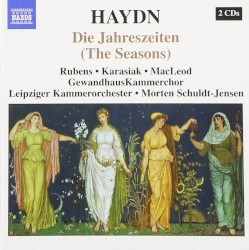 Die Jahreszeiten2006
Tracklist not collected yet.
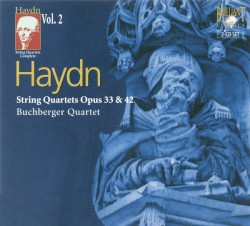 String Quartets op. 33 & 422006
Tracklist not collected yet.
 London symphonies the Seasons2006
Tracklist not collected yet.
 Haydn: Trios Nos 43-45 (Hob XV:27-29) pour pianoforte, violon & violoncelle2005
Tracklist not collected yet.
 Haydn: The 13 Part-Songs / Bach: Wachet auf, ruft uns die Stimme2002
Tracklist not collected yet.
 Great Haydn Symphonies - The Sturm and Drang Era2001
Tracklist not collected yet.
 String Quartets Op. 64 Nos. 1-32001
Tracklist not collected yet.
 "Erdödy" Quartets, op. 76, Vol. 21998
Tracklist not collected yet.
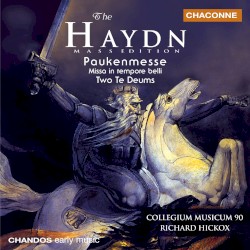 Paukenmesse / Missa in tempore belli / Two Te Deums1998
Tracklist not collected yet.
 Sonatas Nos.54, 55, 59, 60, 62 / Dezso Ranki1998
Tracklist not collected yet.
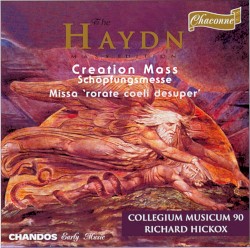 Creation Mass / Schöpfungsmesse / Missa “Rorate coeli desuper”1996
Tracklist not collected yet.
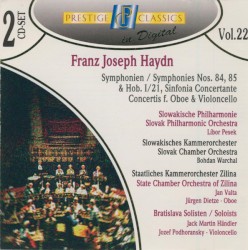 Sinfonia Concertante, Oboe & Cello Concert1995
Tracklist not collected yet.
 Symphony No. 82 "L'ours" / Symphony No. 841995
Tracklist not collected yet.
 Symphonien No. 92, 95, 961994
Tracklist not collected yet.
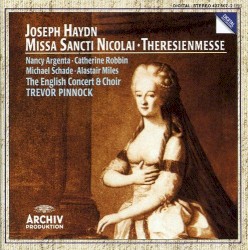 Mass in B‐flat major Hob. XXII:12 “Theresienmesse”; Mass in G major Hob XXII:6 “Sancti Nicolai”1993
Tracklist not collected yet.
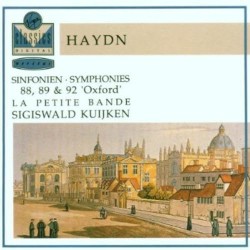 Sinfonien - Symphonies 88, 89, 92 'Oxford'1992
Tracklist not collected yet.
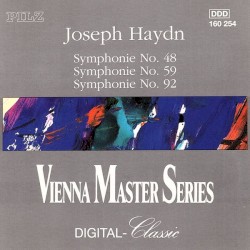 Symphonies No. 48, No. 59, No. 921991
Tracklist not collected yet.
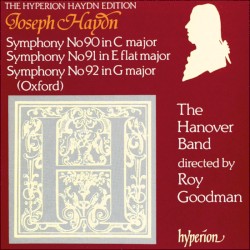 Symphony no. 90 in C major / Symphony no. 91 in E-flat major / Symphony no. 92 in G major (Oxford)1991
Tracklist not collected yet.
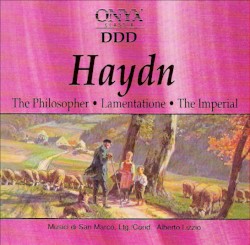 The Philosopher/ Lamentatione / The Imperial1990
Tracklist not collected yet.
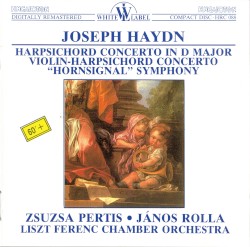 Harpsichord Concerto in D Major / Violin–Harpsichord Concerto / “Hornsignal” Symphony1988
Tracklist not collected yet.
 String Quartets - Volume 1 Op.20 No.2, Op.50 No.1, Op.76 No.21988
Tracklist not collected yet.
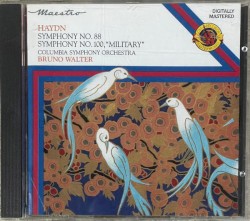 Symphony No. 88 / Symphony No. 100, "Military"1988
Tracklist not collected yet.
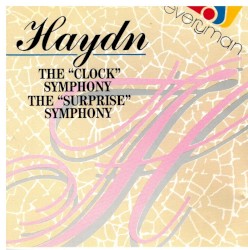 The “Clock” Symphony / The “Surprise” Symphony1988
Tracklist not collected yet.
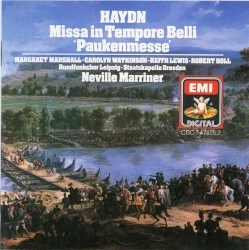 Paukenmesse1986
Tracklist not collected yet.
Gallery


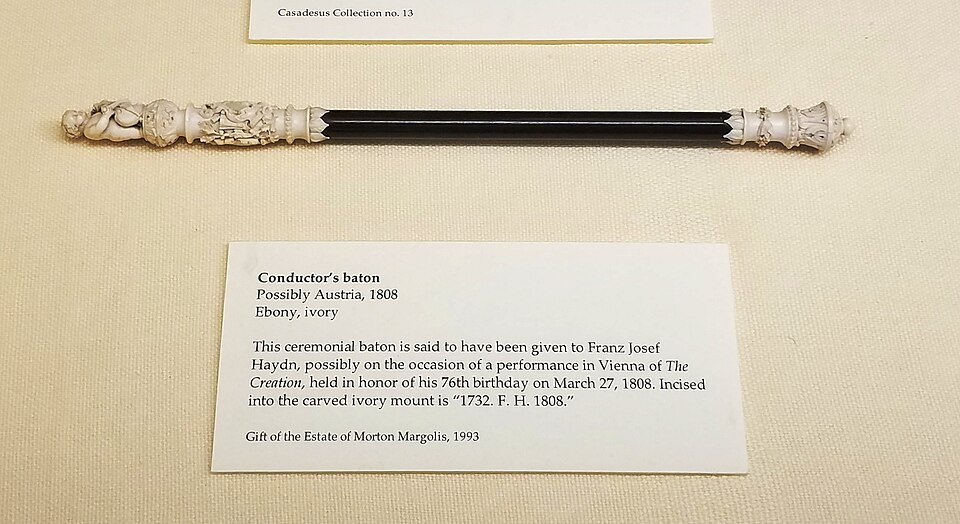
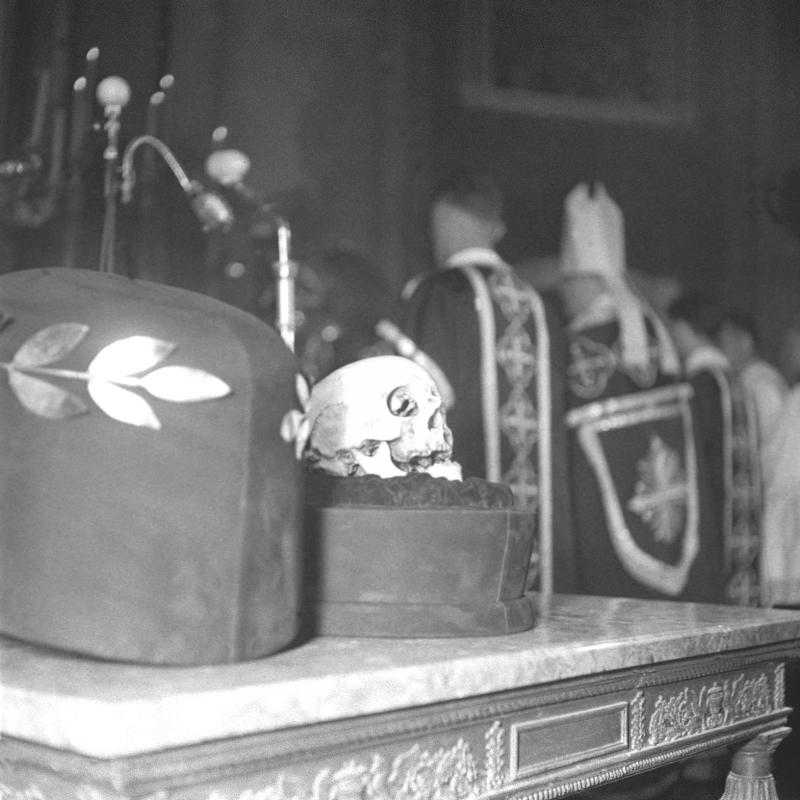

Achievements
- Award
- honorary citizen of Vienna
Influenced by
Similar artists



Archive
Passport
Identifiers & aliases
Also known as: F. J. Haydn, Franz Haydn, Franz Josef Haydn, Franz Josepf Haydn, Franz Joseph Haydn, Franz-Joseph Haydn
Franz Joseph Haydn was an Austrian composer of the Classical period. He was pivotal in the evolution of chamber music forms like the string quartet and piano trio. His contributions to musical form have led him to be called "Father of the Symphony", "Father of the String quartet" and "Father of Sonata form".
All links
Opinions of fans — not verified facts.
…