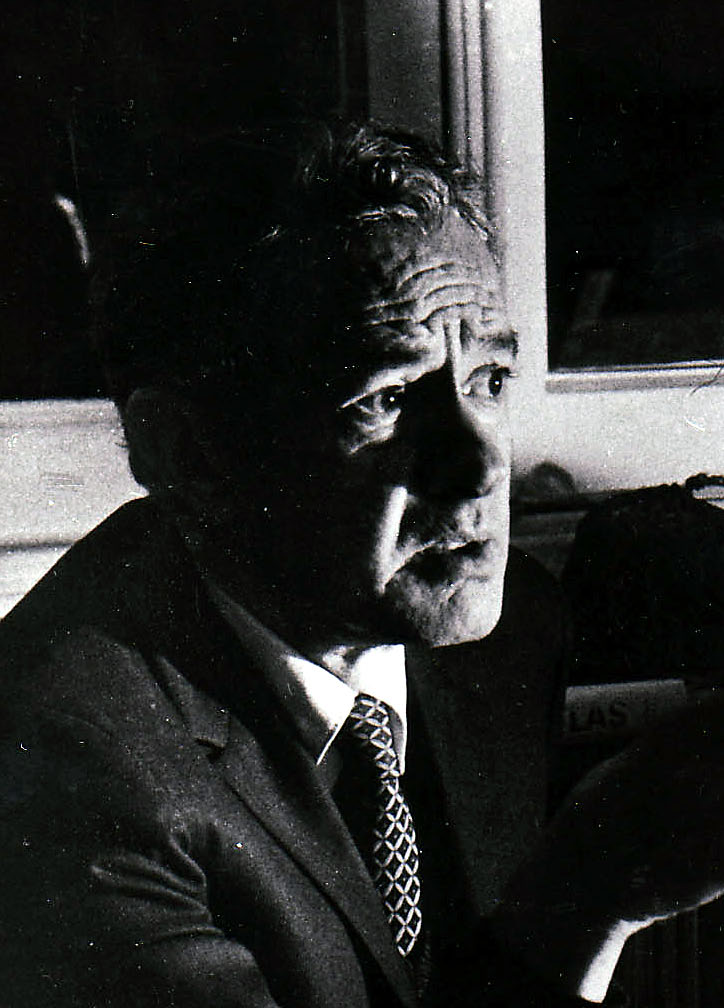
Juan Rulfo was not only a writer but also a screenwriter and photographer, showcasing his diverse artistic talents.
He received numerous prestigious awards, including the Princess of Asturias Literary Prize, highlighting his contributions to literature.
Rulfo was awarded a Guggenheim Fellowship, which allowed him to focus on his writing and artistic endeavors.
Biography
Early Life
Juan Nepomuceno Carlos Pérez Rulfo Vizcaíno, known as Juan Rulfo, was born on May 16, 1917, in Apulco, Jalisco, Mexico. His early life was marked by tragedy; after the death of his father in 1923 and his mother in 1927, he was raised by his grandmother in Guadalajara. Rulfo's family had been landowners, but their fortunes were devastated by the Mexican Revolution and the Cristero War. He attended school in Guadalajara, where he graduated as a bookkeeper, although he never pursued that profession. Rulfo's educational journey included a brief stint at a seminary and later, attempts to study law and literature at the Universidad Nacional Autónoma de México.
Career
Rulfo's literary career began in earnest while he was at university, where he was mentored by Efrén Hernández. In 1944, he co-founded the literary journal Pan and later worked as an immigration agent and a traveling sales agent, which allowed him to travel extensively across southern Mexico. His major works include the acclaimed short story collection "El Llano en llamas" (1953) and the novel "Pedro Páramo" (1955), both of which explore themes of rural life and the impact of the Mexican Revolution. Despite a limited body of work, Rulfo's writing has had a profound influence on Latin American literature, inspiring writers like Gabriel García Márquez.
Personal Life
Rulfo married Clara Angelina Aparicio Reyes in 1948, and they had four children together. His personal experiences and the cultural backdrop of Mexico deeply informed his writing, which often reflects the struggles and resilience of rural communities.
Legacy
Rulfo's impact on literature is significant; Gabriel García Márquez credited him with inspiring his own work, stating that discovering "Pedro Páramo" was pivotal for him. Rulfo's legacy continues through the Juan Rulfo Foundation, which preserves his photographic works and literary contributions, ensuring that his influence endures in the literary world.
Collected from open sources (4) · facts link to sources · AI-processed
Gallery



Achievements
- Award
- Xavier Villaurrutia Award
- Award
- National Prize for Arts and Sciences
- Award
- Alfaguara Prize
- Award
- Princess of Asturias Literary Prize
- Award
- Guggenheim Fellowship
Influenced by
Archive
Passport
Identifiers & aliases
Juan Nepomuceno Carlos Pérez Rulfo Vizcaíno, best known as Juan Rulfo, was a Mexican writer, screenwriter, and photographer. He is best known for two literary works, the 1955 novel Pedro Páramo, and the collection of short stories El Llano en llamas. In spite of Rulfo's slim literary production, he is considered one of the greatest Mexican and Latin American writers of the twentieth century who has influenced many subsequent writers including the Nobel laureate Gabriel García Márquez.
All links
Opinions of fans — not verified facts.
…