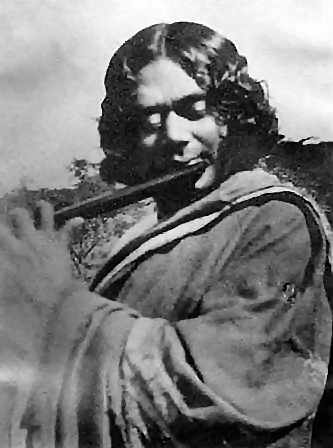
Kazi Nazrul Islam is revered as the national poet of Bangladesh, known for his powerful themes of equality and justice.
He was a prolific Bengali poet, short story writer, journalist, lyricist, and musician, producing a vast body of work that includes poetry, music, and novels.
Nazrul was born into a Taluqdar family and took on the role of caretaker of the local mosque at just 10 years old after his father's death.
Biography
Early Life
Kazi Nazrul Islam was born on May 24, 1899, in Churulia, a village in the Paschim Bardhaman district of Bengal, during the late British Raj. He was the second of four children in a Bengali Muslim Taluqdar family. His father, Kazi Faqeer Ahmed, served as the imam of the local mosque, while his mother, Zahida Khatun, nurtured his early education. Following his father's death in 1908, a young Nazrul took on the role of caretaker at the mosque to support his family. His early exposure to folk theatre and literature ignited his passion for writing, leading him to compose folk plays and songs.
Career
Nazrul's artistic journey took a significant turn when he joined the British Indian army in 1917. After leaving the army in 1920, he settled in Calcutta and became involved with the Bangiya Mussalman Sahitya Samiti, where he published his first novel, "Bandhan-hara." His poetry, characterized by themes of rebellion and social justice, earned him the title of "Bidrohī Kôbi" or "the Rebel Poet." Throughout his career, he produced a vast body of work, including over 2,600 songs, many of which were inspired by classical ragas and folk tunes. His contributions to music and literature were recognized with prestigious awards, including the Ekushey Padak and the Independence Award in Literature.
Legacy
Kazi Nazrul Islam's impact on Bengali culture is profound. He is celebrated as the national poet of Bangladesh, and his works continue to inspire generations. His commitment to social justice and religious pluralism is evident in his writings, where he advocated for unity among different faiths. Despite facing challenges, including imprisonment for his political activism, Nazrul's legacy as a pioneering figure in Bengali literature and music endures, making him a symbol of resistance against oppression and a champion of human rights.
Collected from open sources (4) · facts link to sources · AI-processed
Gallery



Achievements
- Award
- Ekushey Padak
- Award
- Independence Award in Literature
- Award
- Padma Bhushan
Archive
Passport
Identifiers & aliases
Also known as: কাজী নজরুল ইসলাম
Kazi Nazrul Islam was a Bengali poet, short story writer, journalist, lyricist, and musician. He was later honoured with the title of national poet of Bangladesh. Nazrul produced a large body of poetry, music, messages, novels, and stories with themes that included equality, justice, anti-imperialism, humanity, rebellion against oppression and religious devotion. Nazrul Islam's activism for political and social justice as well as writing a poem titled "Bidrohī", meaning "the rebel" in Bengali, earned him the title of "Bidrohī Kôbi". His compositions form the avant-garde music genre of Nazrul Gīti.
All links
Opinions of fans — not verified facts.
…