
Kurt Weill was a German-born American composer known for his influential works in musical theater and opera.
Weill won a Tony Award for Best Original Score, highlighting his impact on American musical theater.
He also received a Drama Desk Award for Outstanding Music, showcasing his talent and recognition in the industry.
Biography
Early Life
Kurt Julian Weill was born on March 2, 1900, in Dessau, Germany, into a religious Jewish family. He was the third of four children to Albert and Emma Weill, where his father served as a cantor. Weill's musical journey began early; at the age of twelve, he started taking piano lessons and composed his first piece, a Jewish wedding song, in 1913. He later studied under prominent figures such as Albert Bing and Engelbert Humperdinck, honing his skills in composition and conducting.
Musical Career
Weill's career took off in the 1920s, marked by his collaboration with playwright Bertolt Brecht. Together, they created the iconic "The Threepenny Opera," which features the famous ballad "Mack the Knife." Weill's music was characterized by its socially conscious themes, a concept he termed Gebrauchsmusik, or music for social purposes. After fleeing Nazi Germany in 1933, he settled in the United States, where he made significant contributions to American musical theater with works like "Lady in the Dark" and "Street Scene." Throughout his career, Weill received numerous accolades, including a Tony Award for Best Original Score and a Drama Desk Award for Outstanding Music.
Legacy
Kurt Weill's influence extends beyond his lifetime, with his music being performed in both popular and classical contexts. His works have been interpreted by a diverse array of artists, from Louis Armstrong to Ella Fitzgerald and David Bowie. Weill's legacy is celebrated through tribute albums and performances, ensuring that his innovative compositions continue to resonate with audiences today. He passed away on April 3, 1950, leaving behind a rich musical heritage that bridges genres and generations.
Collected from open sources (4) · facts link to sources · AI-processed
Discography
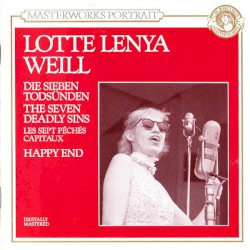 Seven Deadly Sins / Happy End1990
Tracklist not collected yet.
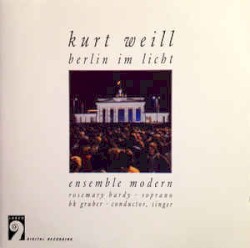 Berlin im Licht1990
Tracklist not collected yet.
 Der Lindberghflug / The Ballad of Magna Carta1990
Tracklist not collected yet.
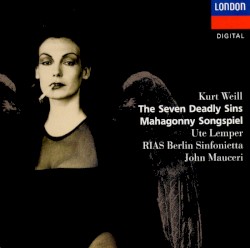 Die sieben Todsünden / Mahagonny Songspiel1990
Tracklist not collected yet.
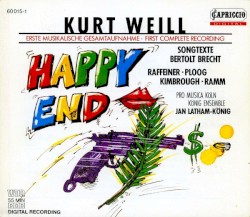 Happy End1990
Tracklist not collected yet.
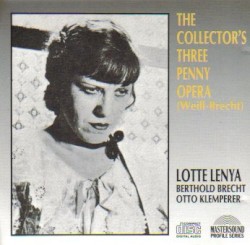 The Collector's Three Penny Opera (1929-1931 original cast)1990
Tracklist not collected yet.
 The Seven Deadly Sins / The Berlin Requiem1990
Tracklist not collected yet.
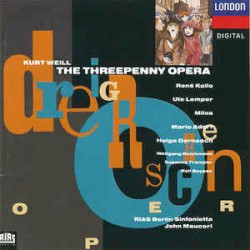 Die Dreigroschenoper1989
Tracklist not collected yet.
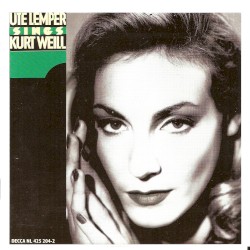 Ute Lemper Sings Kurt Weill1988
Tracklist not collected yet.
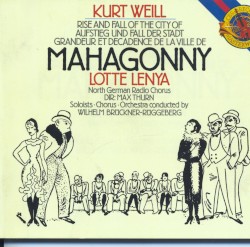 Aufstieg und Fall der Stadt Mahagonny1988
Tracklist not collected yet.
 Aufstieg und Fall der Stadt Mahagonny1988
Tracklist not collected yet.
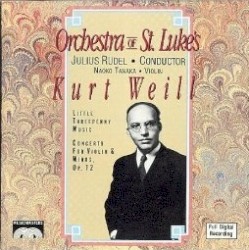 Concerto for Violin and Wind Orchestra, Op. 12 / Kleine Dreigroschenmusik1988
Tracklist not collected yet.
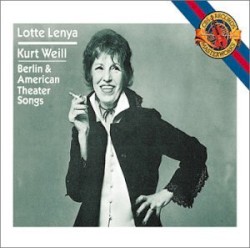 Kurt Weill: Berlin & American Theater Songs1988
Tracklist not collected yet.
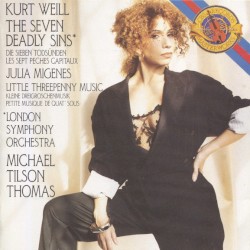 The Seven Deadly Sins / Little Threepenny Music1988
Tracklist not collected yet.
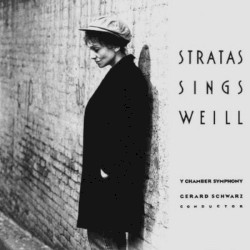 Stratas Sings Weill1986
Tracklist not collected yet.
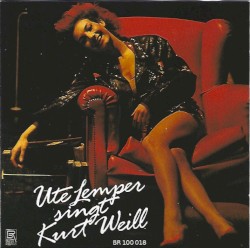 Ute Lemper singt Kurt Weill1986
Tracklist not collected yet.
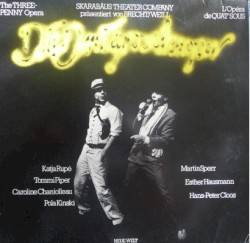 Die Dreigroschenoper1979
Tracklist not collected yet.
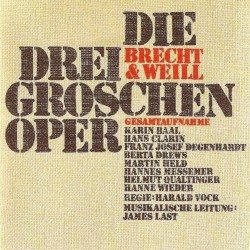 Die Dreigroschenoper: Songs & Szenen1968
Tracklist not collected yet.
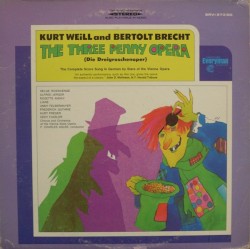 The Three Penny Opera (Die Dreigroschenoper)1968
Tracklist not collected yet.
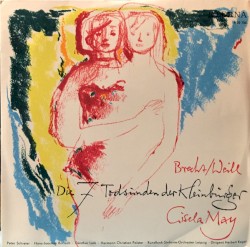 Die 7 Todsünden der Kleinbürger1967
Tracklist not collected yet.
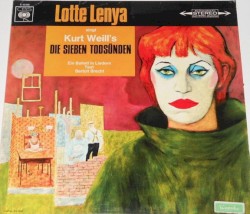 Die sieben Todsünden1966
Tracklist not collected yet.
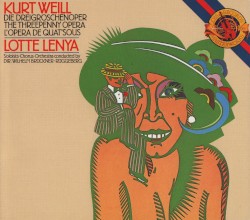 Die Dreigroschenoper (Sender Freies Berlin)1958
Tracklist not collected yet.
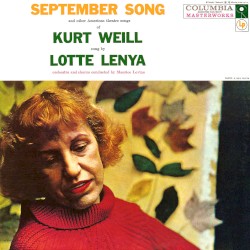 September Song and Other American Theatre Songs of Kurt Weill1958
Tracklist not collected yet.
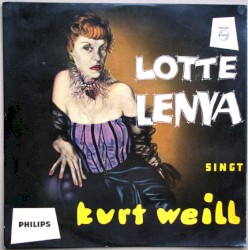 Lotte Lenya singt Kurt Weill1955
Tracklist not collected yet.
 Tryout1953
Tracklist not collected yet.
Gallery


Achievements
- Award
- Tony Award for Best Original Score
- Award
- Drama Desk Award for Outstanding Music
- Award
- National Medal of Science
Similar artists


Archive
Passport
Identifiers & aliases
Also known as: Kurt Julian Weill, Kurt Weill and Ira Gershwin, Kurts Veils, Threepenny Opera
Kurt Julian Weill was a German-born American composer active from the 1920s in his native country, and in his later years in the United States. He was a leading composer for the stage who was best known for his fruitful collaborations with Bertolt Brecht. With Brecht, he wrote his best-known work, The Threepenny Opera, which includes the ballad "Mack the Knife". Weill held the ideal of writing music that served a socially useful purpose, Gebrauchsmusik. He also wrote several works for the concert hall and a number of works on Jewish themes. He fled Nazi Germany in 1933, arriving in the United States two years later. Settling in New York, he made a substantial contribution to American musical theater through works such as Lady in the Dark and Street Scene.
All links
Opinions of fans — not verified facts.
…