
Mário de Andrade was a multifaceted Brazilian artist, known as a poet, novelist, musicologist, and photographer.
He wrote one of the first influential collections of modern Brazilian poetry, titled "Paulicéia Desvairada," published in 1922.
Andrade was a piano prodigy who studied at the Music and Drama Conservatory of São Paulo before turning to writing.
Biography
Early Life
Mário Raul de Morais Andrade was born on October 9, 1893, in São Paulo, Brazil, where he spent most of his life. A piano prodigy from a young age, he studied at the Music and Drama Conservatory of São Paulo. Despite his formal education in music, Andrade pursued independent studies in history, art, and poetry, influenced by French Symbolist poets like Rimbaud. The sudden death of his younger brother in 1913 led him to leave the conservatory temporarily, and upon his return, he faced challenges with his piano playing due to trembling hands. Nevertheless, he graduated and began to focus on music theory and singing, while also seriously pursuing writing. In 1917, he published his first poetry collection, "Há uma Gota de Sangue em Cada Poema," under the pseudonym Mário Sobral, which hinted at his emerging sense of Brazilian identity.
Career
Andrade's career flourished as he became a prominent figure in Brazilian literature and musicology. He wrote one of the first influential collections of modern Brazilian poetry, "Paulicéia Desvairada," in 1922, and became a national authority on music history. His work in ethnomusicology was groundbreaking; he documented rural folk music and made extensive recordings that included context and related folklore. His techniques predated similar efforts by others, such as Alan Lomax, and he coined the term "popularesque" to describe urban imitations of Brazilian folk music. Throughout his career, Andrade received several prestigious awards, including the Legion of Honour and the Prêmio Jabuti.
Legacy
Mário de Andrade's influence extends beyond his lifetime, shaping modern Brazilian literature and music. He served as the Chair of History of Music and Aesthetics at the Conservatory, where he continued to teach and research until his death on February 25, 1945. His contributions to ethnomusicology and his advocacy for Brazilian cultural identity have left a lasting impact on the arts in Brazil, making him a pivotal figure in the country's cultural history.
Collected from open sources (4) · facts link to sources · AI-processed
Discography
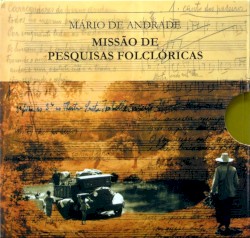 Mário de Andrade - Missão de pesquisas folclóricas - Música tradicional do norte e nordeste 19382006
Tracklist not collected yet.
Gallery


Achievements
- Award
- Legion of Honour
- Award
- Order of Cultural Merit (Brazil)
- Award
- Prêmio Jabuti
Archive
Passport
Identifiers & aliases
Mário Raul de Morais Andrade was a Brazilian poet, novelist, musicologist, art historian and critic, and photographer. He wrote one of the first and most influential collections of modern Brazilian poetry, Paulicéia Desvairada, published in 1922. He has had considerable influence on modern Brazilian literature, and as a scholar and essayist—he was a pioneer of the field of ethnomusicology—his influence has reached far beyond Brazil.
All links
Opinions of fans — not verified facts.
…