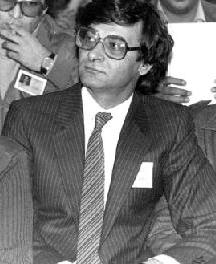
Mahmoud Darwish is widely regarded as the national poet of Palestine, known for his poignant reflections on exile and identity.
He published his first book of poetry at just 19 years old, marking the beginning of a prolific literary career that spanned decades.
Darwish believed in the possibility of peace between Palestinians and Israelis, despite his criticism of both sides.
Biography
Early Life
Mahmoud Darwish was born on March 13, 1941, in al-Birwa, a village in the Western Galilee, to a family of land-owning Arab Palestinians. His early education was influenced by his grandfather, as his mother was illiterate. The 1948 Arab-Israeli War forced his family to flee to Lebanon, where they lived in Jezzine and Damour before returning to Israel. Settling in Deir al-Asad, Darwish faced the complexities of identity as an Arab Palestinian in Israel, where he was granted residency status but not full citizenship. He was married twice, first to writer Rana Kabbani and later to Egyptian translator Hayat Heeni, but had no children.
Career
Darwish's literary journey began at the age of 19 with the publication of his first poetry collection, "Asafir bila ajniha" (Wingless Birds). He became a prominent voice for Palestinian identity, with his poem "Bitaqat huwiyya" (Identity Card) resonating widely after its public reading in 1965. Over his lifetime, he published more than 30 volumes of poetry and eight prose books, becoming a key figure in Palestinian literature. His works, often reflecting themes of exile and homeland, have been translated into 20 languages, earning him numerous prestigious awards, including the Prince Claus Award and the Lenin Peace Prize.
Views and Legacy
Darwish was a vocal advocate for peace and reconciliation, expressing a belief in the possibility of coexistence between Palestinians and Israelis. He opposed the Oslo Accords but maintained hope for a profound change in consciousness among Israelis. His legacy as the national poet of Palestine is profound; he is celebrated as a symbol of Palestinian resilience and identity. The Mahmoud Darwish Foundation, established posthumously, continues to honor his contributions to literature and culture through the annual Mahmoud Darwish Award for Creativity.
Collected from open sources (4) · facts link to sources · AI-processed
Discography
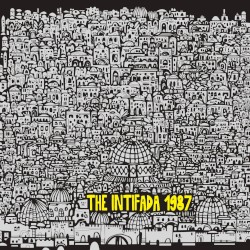 The Intifada 19872021
- 1.Intifada4:34
- 2.I'm from Jerusalem5:23
- 3.My Land My People4:42
- 4.Palestinian2:51
- 5.The Graves1:56
- 6.Homeland4:41
- 7.Forty Years4:27
- 8.Uprising3:27
- 9.When We Meet Again4:34
- 10.Palestinian Land4:28
- 11.Childhood Dream3:42
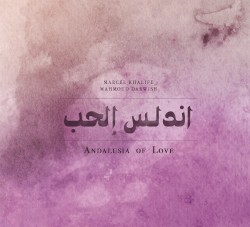 (Andalusia of Love) أندلس الحُب2016
- 1.Ouverture5:30
- 2.Ouhibouki6:40
- 3.Ana Li Habibi4:04
- 4.Taratil2:00
- 5.Nassiti5:15
- 6.Maraya1:08
- 7.Ya Habibi2:52
- 8.Achtahiki5:59
- 9.Faracha2:18
- 10.Nahla4:22
- 11.Araki4:24
- 12.Yadaik3:07
- 13.Andalus al Hob3:34
- 14.Achikain5:35
 Al Manara2015
- 1.Les Bougainvilliers / Belladi Askara (Live)6:20
- 2.Baghdad (Live)7:25
- 3.Nous Aimons La Vie Autant Que Poosible (Live)8:18
- 4.Andalous (Live)9:15
- 5.Bahar (Live)8:09
- 6.Al Manara / Le Grand Voyage (Live)11:33
- 7.Rahil / Ramallah (Live)14:03
- 8.Sodfa / Comme Une Course (Live)8:53
 Récital Mahmoud Darwich2009
Tracklist not collected yet.
Gallery


Achievements
- Award
- Prince Claus Award
- Award
- Lenin Peace Prize
- Award
- Lannan Cultural Freedom Prize
- Award
- Commandeur des Arts et des Lettres
- Award
- Golden Wreath
- Award
- Lotus Prize for Literature
- Award
- International Nazim Hikmet Poetry Award
Influenced by
Archive
Passport
Identifiers & aliases
Mahmoud Darwish was a Palestinian author and poet. He wrote the Palestinian Declaration of Independence, which formally established the State of Palestine in November 1988, and is widely regarded as the country's national poet. His poetry and other literature, for which he won numerous awards internationally, was published in Arabic, while he also spoke English, French, and Hebrew.
All links
Opinions of fans — not verified facts.
…