
Martin Luther was a seminal figure of the Protestant Reformation, known for his theological beliefs that form the basis of Lutheranism.
Born in 1483, Luther was baptized the day after his birth on the feast day of Martin of Tours.
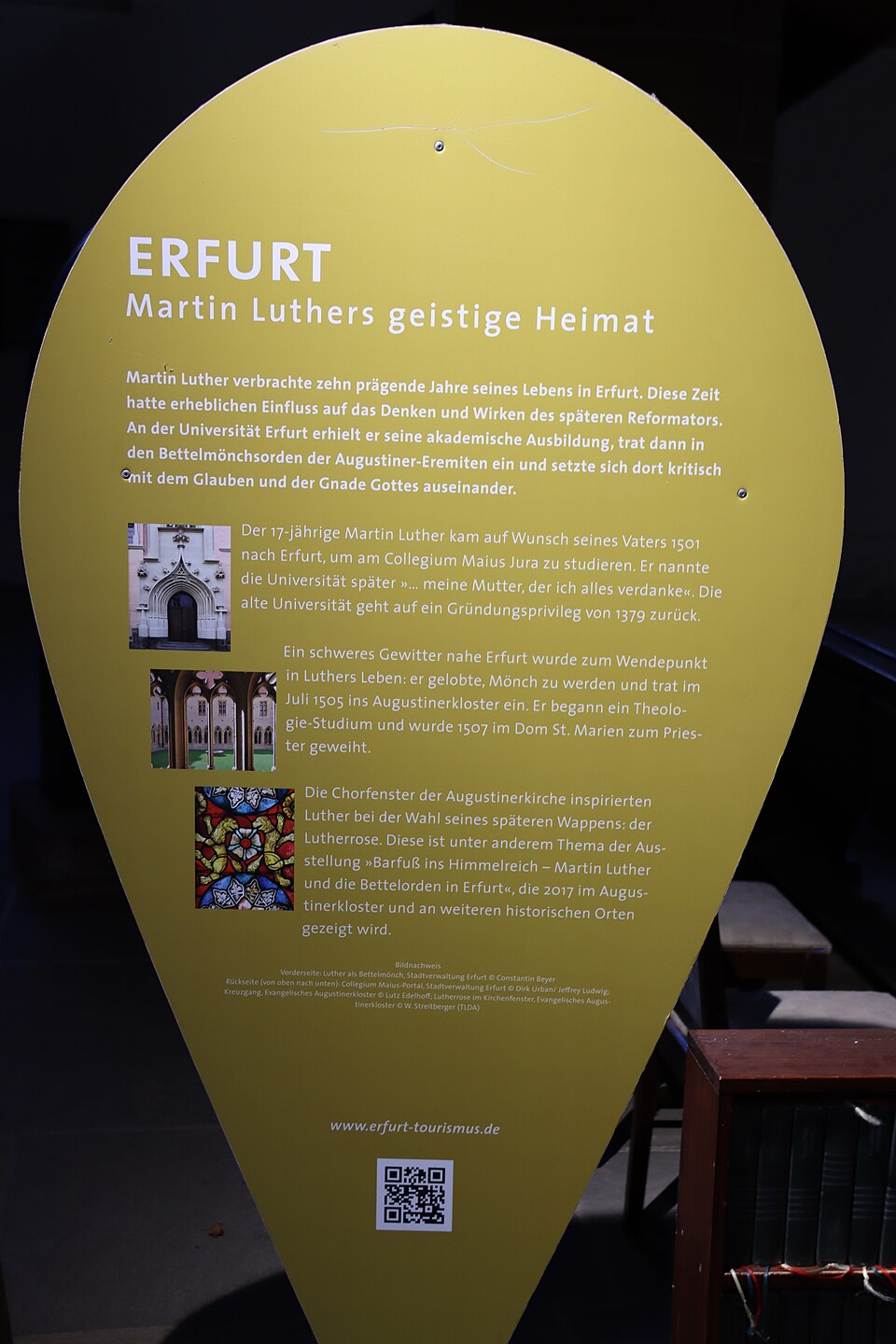
Luther entered St. Augustine's Monastery in 1505 after a life-changing vow made during a thunderstorm.
Biography
Early Life
Martin Luther was born on November 10, 1483, in Eisleben, County of Mansfeld, in the Holy Roman Empire. He was the son of Hans Luder and Margarethe Lindemann, and he was baptized the following day on the feast day of Martin of Tours. Luther's family moved to Mansfeld in 1484, where his father worked as a leaseholder of copper mines and served as a town councillor. He had several siblings and was particularly close to his brother Jakob. Luther's education began in Latin schools, and he later attended the University of Erfurt, where he earned his master's degree in 1505.
Monastic and Academic Career
In 1505, after a life-altering experience during a thunderstorm, Luther vowed to become a monk and entered St. Augustine's Monastery in Erfurt. He dedicated himself to the Augustinian order, engaging in rigorous spiritual practices. However, he experienced deep spiritual despair during this time, feeling disconnected from Christ. From 1510 to 1520, Luther lectured on the Psalms and other biblical texts, leading him to question the Church's teachings and ultimately to develop his doctrine of justification by faith alone.
The Reformation and Legacy
Luther's theological beliefs became the foundation of Lutheranism and sparked the Protestant Reformation. He is recognized as one of the most influential figures in Western history, with his writings and teachings reshaping Christianity. His legacy is complex; while he contributed significantly to religious reform, his anti-Jewish rhetoric has been criticized for its role in the development of antisemitism in Germany. Luther passed away on February 18, 1546, leaving behind a profound impact on both religion and society.
Collected from open sources (4) · facts link to sources · AI-processed
Discography
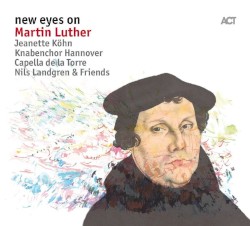 New Eyes on Martin Luther2016
- 1.Da Pacem Domine0:30
- 2.Verleih uns Frieden I1:04
- 3.Verleih uns Frieden II0:51
- 4.Gott heilger Geist, Herre Gott1:59
- 5.Aliot Nouvelle2:51
- 6.Verleith uns Frieden III3:11
- 7.Christ lag in Todesbanden2:53
- 8.Wir gläuben all an einen Gott3:05
- 9.Aus tiefer Not schrei ich zu Dir2:43
- 10.L’Innamorato1:44
- 11.An hellen Tagen2:53
- 12.Tanzen und Springen2:32
- 13.In Dir ist Freude3:59
- 14.Jesu bleibet meine Freude4:39
- 15.Passamezzo5:34
- 16.Innsbruck, ich muss Dich lassen5:09
- 17.Nun ruhen alle Wälder3:25
- 18.Kein schöner Land in dieser Zeit2:40
- 19.Ostinato2:41
- 20.Die Gedanken sind frei4:38
- 21.Eine feste Burg ist unser Gott3:54
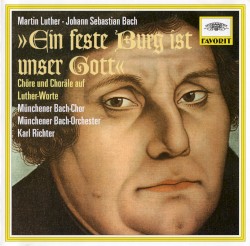 »Ein feste Burg ist unser Gott«: Chöre und Choräle auf Luther-Worte1996
- 1.Kantate »Ein feste Burg ist unser Gott« BWV 80: 1. Chor: Ein feste Burg ist unser Gott5:54
- 2.Kantate »Ein feste Burg ist unser Gott« BWV 80: 5. Choral: Und wenn die Welt voll Teufel wär4:07
- 3.Kantate »Ein feste Burg ist unser Gott« BWV 80: 8. Choral: Das Wort sie sollen lassen stahn1:28
- 4.Kantate »Aus tiefer Not schrei ich zu dir« BWV 38: 1. Chor: Aus tiefer Not schrei ich zu dir3:45
- 5.Kantate »Aus tiefer Not schrei ich zu dir« BWV 38: 6. Choral: Ob bei uns ist der Sünden viel1:17
- 6.Kantate »Erhalt uns Herr bei deinem Wort« BWV 126: 1. Chor: Erhalt uns Herr bei deinem Wort2:46
- 7.Kantate »Erhalt uns Herr bei deinem Wort« BWV 126: 6. Choral: Verleih uns Frieden gnädiglich1:45
- 8.Kantate »Nun komm, der Heiden Heiland« BWV 61: 1. Chor: Nun komm, der Heiden Heiland3:57
- 9.Kantate »Christum wir sollen loben schon« BWV 121: 1. Chor: Christum wir sollen loben schon2:31
- 10.Kantate »Christum wir sollen loben schon« BWV 121: 6. Choral: Lob, Ehr und Dank sei dir gesagt1:05
- 11.Kantate »Die Himmel erzählen die Ehre Gottes« BWV 76: 7. Choral: Es woll uns Gott gnädig sein2:31
- 12.Kantate »Die Himmel erzählen die Ehre Gottes« BWV 76: 14. Choral: Es danke, Gott, und lobe dich2:31
- 13.Kantate »Christ lag in Todesbanden« BWV 4: 1. Sinfonia1:37
- 14.Kantate »Christ lag in Todesbanden« BWV 4: 2. Versus 1 (Chor): Christ lag in Todesbanden4:24
- 15.Kantate »Christ lag in Todesbanden« BWV 4: 3. Versus 2 (Chor: Sopran, Alt): Den Tod niemand bezwingen kunnt3:59
- 16.Kantate »Christ lag in Todesbanden« BWV 4: 4. Versus 3 (Chor: Tenor): Jesus Christus, Gottes Sohn1:57
- 17.Kantate »Christ lag in Todesbanden« BWV 4: 5. Versus 4 (Chor): Es war ein wunderlicher Krieg2:13
- 18.Kantate »Christ lag in Todesbanden« BWV 4: 6. Versus 5 (Baß): Hier ist das rechte Osterlamm4:35
- 19.Kantate »Christ lag in Todesbanden« BWV 4: 7. Versus 6 (Chor: Sopran, Tenor): So feiern wir das hohe Fest2:01
- 20.Kantate »Christ lag in Todesbanden« BWV 4: 8. Versus 7 (Chor): Wir essen und wir leben wohl1:19
 Deutsche Liedmesse / Choräle
- 1.German Hymn Mass: Kyrie1:43
- 2.German Hymn Mass: Gloria4:02
- 3.German Hymn Mass: Credo6:11
- 4.German Hymn Mass: Sanctus3:49
- 5.German Hymn Mass: Agnus Dei1:05
- 6.German Hymn Mass: Te Deum laudamus11:33
- 7.German Hymn Mass: Da pacem1:30
- 8.Ein feste Burg ist unser Gott4:07
- 9.Erhalt uns, Herr, bei deinem Wort1:52
- 10.Gelobet seist du, Jesu Christ2:09
- 11.Christ lag in Todesbanden2:26
- 12.Es woll uns Gott genädig sein2:51
- 13.Nun freut euch, lieben Christen6:52
- 14.Vater unser im Himmelreich6:46
Gallery



Influenced by
Archive
Passport
Identifiers & aliases
Also known as: M. Luters
Martin Luther was a German priest, theologian, author, hymnwriter, professor, and former Augustinian friar. Luther was the seminal figure of the Protestant Reformation, and his theological beliefs form the basis of Lutheranism. He is considered one of the most influential figures in Western and Christian history.
All links
Metrics in detail
Opinions of fans — not verified facts.
…