Milton Babbitt
Milton Babbitt was an influential American composer known for his work in serial and electronic music.
Babbitt was a multifaceted artist, recognized not only as a composer but also as a music theorist and mathematician.
He received a Pulitzer Prize Special Citation in 1982 for his distinguished contributions to music.
Biography
Early Life
Milton Byron Babbitt was born on May 10, 1916, in the United States. He grew up to become a prominent figure in the world of music, known for his innovative contributions as a composer, music theorist, mathematician, and educator. His early exposure to music laid the foundation for a career that would significantly influence contemporary classical music.
Career
Babbitt's career spanned several decades, during which he became renowned for his serial and electronic music. His compositional style was heavily influenced by Arnold Schoenberg's twelve-tone technique, leading him to develop a unique system based on permutations of the total chromatic. Throughout his life, he produced a vast array of works, including notable albums such as "Philomel," "Piano Works," and "Columbia-Princeton Electronic Music Center." His contributions to music were recognized with numerous accolades, including a Pulitzer Prize Special Citation in 1982 for his life's work.
Legacy
Milton Babbitt passed away on January 29, 2011, leaving behind a rich legacy in the realm of classical music. He received several prestigious awards throughout his career, including a Guggenheim Fellowship, a MacArthur Fellowship, and induction into the American Classical Music Hall of Fame. Babbitt's influence continues to resonate in contemporary music, inspiring future generations of composers and musicians.
Collected from open sources (3) · facts link to sources · AI-processed
Discography
 The Flow of Music: Piano Works of Carter & Babbitt2018
Tracklist not collected yet.
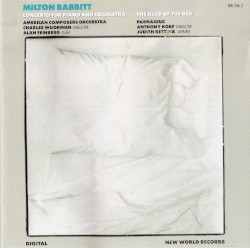 Concerto For Piano and Orchestra / The Head of the Bed2010
Tracklist not collected yet.
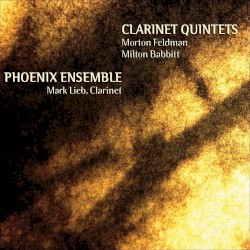 Clarinet Quintets2009
Tracklist not collected yet.
 Soli e Duettini2006
Tracklist not collected yet.
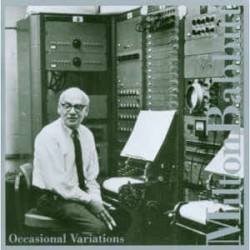 Occasional Variations2003
Tracklist not collected yet.
 Quatrains / Soli e duettini / Manifold Music / My Ends Are My Beginnings / Swan Song no. 12003
Tracklist not collected yet.
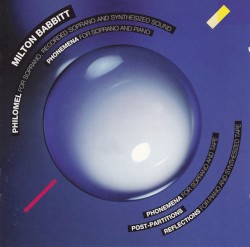 Philomel1995
Tracklist not collected yet.
 Carter: Variations for Orchestra / Schuller: Spectra / Babbitt: Correspondences / Cage: Atlas Eclipticalis1994
Tracklist not collected yet.
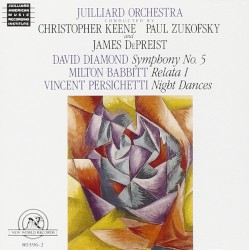 Diamond: Symphony no. 5 / Babbitt: Relata 1 / Persichetti: Night Dances1992
Tracklist not collected yet.
 Sessions: String Quartet no. 2 / Wolpe: String Quartet / Babbitt: String Quartet no. 41990
Tracklist not collected yet.
 An Elizabethan Sextette / Minute Waltz (or) ¾ ± ⅛ / Partitions / It Takes Twelve to Tango / Playing for Time / About Time / Groupwise / Vision and Prayer1988
Tracklist not collected yet.
 Piano Works1986
Tracklist not collected yet.
 Babbitt: Quartet no. 3 / Wuorinen: String Quartet1972
Tracklist not collected yet.
 New Electronic Music From Leaders of the Avant-Garde1967
Tracklist not collected yet.
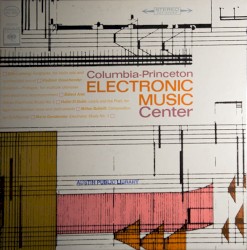 Columbia-Princeton Electronic Music Center1961
Tracklist not collected yet.
Label
- Record label
- Nonesuch Records
Achievements
- Award
- Fellow of the American Academy of Arts and Sciences
- Award
- Honorary Member of the International Society for Contemporary Music
- Award
- MacArthur Fellows Program
- Award
- Joseph H. Bearns Prize
- Award
- James Madison Medal
- Award
- Pulitzer Prize Special Citations and Awards
- Award
- Arts and Letters Award in Music
- Award
- Guggenheim Fellowship
Similar artists

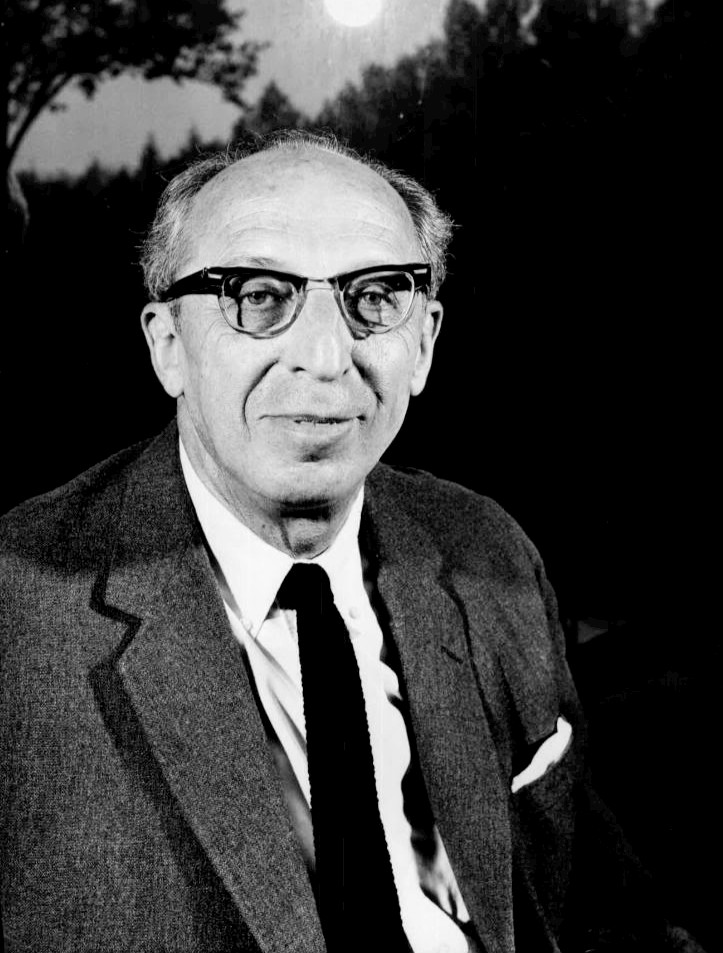


Archive
Passport
Identifiers & aliases
Milton Byron Babbitt was an American composer, music theorist, mathematician, and teacher. He was a Pulitzer Prize and MacArthur Fellowship recipient, recognized for his serial and electronic music. Babbitt's compositional approach was deeply inspired by Arnold Schoenberg's twelve-tone technique. He built a compositional system based on permutations of the total chromatic.
All links
Opinions of fans — not verified facts.
…