
Morton Feldman
Musician · US · 1926–1987
Collected from open sources (4) · facts link to sources
Discography
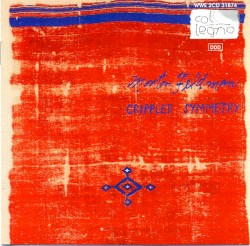 Crippled Symmetry1994
Tracklist not collected yet.
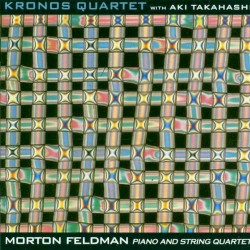 Piano and String Quartet1993
Tracklist not collected yet.
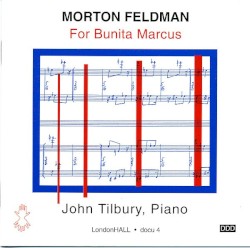 For Bunita Marcus1993
Tracklist not collected yet.
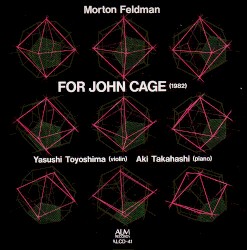 For John Cage1993
Tracklist not collected yet.
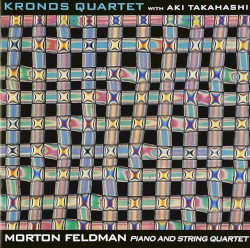 Piano and Strings Quartet1993
Tracklist not collected yet.
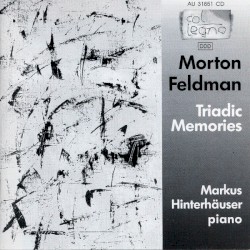 Triadic Memories1993
Tracklist not collected yet.
 For Christian Wolff1992
Tracklist not collected yet.
 For Philip Guston1992
Tracklist not collected yet.
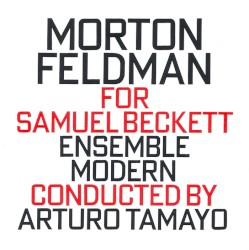 For Samuel Beckett1992
Tracklist not collected yet.
 For Samuel Beckett1991
Tracklist not collected yet.
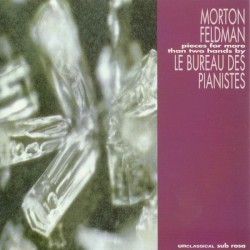 Pieces for More Than Two Hands1991
Tracklist not collected yet.
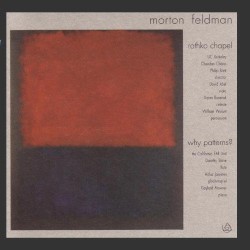 Rothko Chapel / Why Patterns?1991
Tracklist not collected yet.
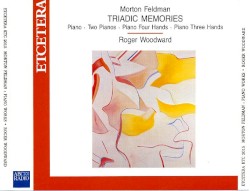 Triadic Memories1991
Tracklist not collected yet.
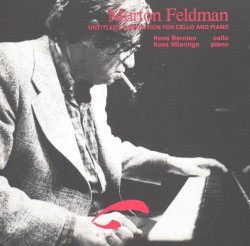 Untitled Composition for Cello and Piano1991
Tracklist not collected yet.
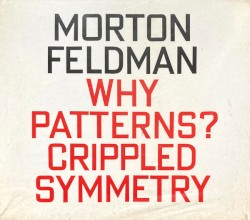 Why Patterns? / Crippled Symmetry1991
Tracklist not collected yet.
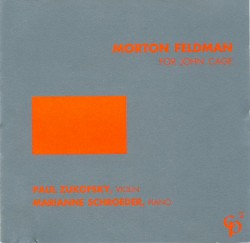 For John Cage1990
Tracklist not collected yet.
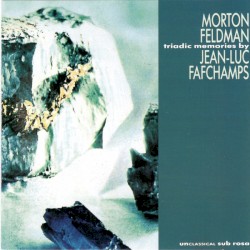 Triadic Memories1990
Tracklist not collected yet.
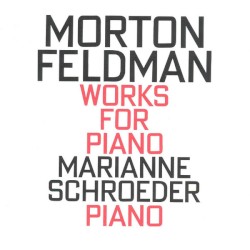 Works for Piano1990
Tracklist not collected yet.
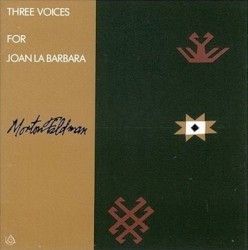 Three Voices (for Joan La Barbara)1989
Tracklist not collected yet.
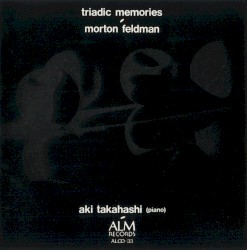 Triadic Memories1989
Tracklist not collected yet.
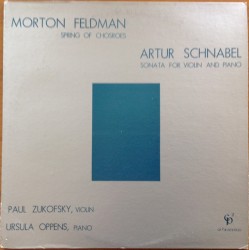 Feldman: Spring of Chosroes / Schnabel: Sonata for Violin and Piano1981
Tracklist not collected yet.
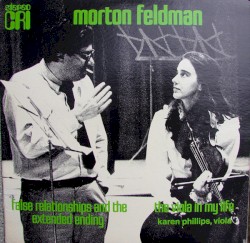 The Viola in My Life / False Relationships and the Extended Ending1971
Tracklist not collected yet.
 Complete Works for Multiple Pianos2026
Tracklist not collected yet.
 Trios2026
Tracklist not collected yet.
 calques2022
Tracklist not collected yet.
Gallery


Achievements
- Award
- Guggenheim Fellowship
- Award
- Arts and Letters Award in Music
Influenced by
Similar artists


Archive
Passport
Identifiers & aliases
Morton Feldman was an American composer. A major figure in 20th-century classical music, Feldman was an important exponent of indeterminacy in music, a development associated with the experimental New York School of composers also including John Cage, Christian Wolff, and Earle Brown. Feldman's works are characterized by notational innovations that he developed to create his characteristic sound: rhythms that seem to be free and floating, pitch shadings that seem softly unfocused, a generally quiet and slowly evolving music, and recurring asymmetric patterns. His later works, after 1977, also explore extremes of duration.
All links
Opinions of fans — not verified facts.
…