
Pérotin was a composer associated with the Notre Dame school of polyphony in Paris, known for developing three and four-part harmonies.
Described as the first modern composer in the Western tradition, Pérotin transformed improvisatory techniques into structured musical forms.
Pérotin's career spanned from around 1160 to 1230, during which he significantly influenced the ars antiqua musical style.
Biography
Early Life
Pérotin, a French composer, flourished around the turn of the 13th century, specifically from approximately 1160 to 1230. He is primarily associated with the Notre Dame school of polyphony in Paris, a pivotal center for the development of medieval music. Although little is known about his personal life, he is presumed to have been a significant figure in the evolution of Western music during the high medieval period.
Career
Pérotin is renowned for his contributions to the ars antiqua musical style, building upon the polyphonic practices established by his predecessor, Léonin. He is credited with the innovative introduction of three and four-part harmonies, which marked a radical transformation in the compositional techniques of the time. His work is characterized by a distinct musical architecture, moving away from the improvisatory methods that dominated earlier compositions. Pérotin's influence extended beyond his era, as he has been described as the first modern composer in the Western tradition.
Legacy
The impact of Pérotin's music is profound, influencing not only his contemporaries but also modern composers, including minimalist artists like Steve Reich. His ability to create structured musical forms has left a lasting legacy, ensuring that his works remain relevant in the study and performance of medieval music today. Pérotin's compositions, such as those found in albums like "The School of Notre Dame" and "Sacred Music from Notre-Dame Cathedral," continue to be celebrated for their artistic depth and historical significance.
Collected from open sources (4) · facts link to sources · AI-processed
Discography
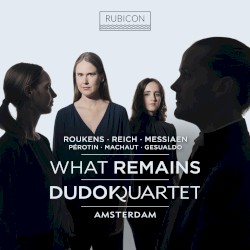 What Remains2023
Tracklist not collected yet.
 Thy Kiss of a Divine Nature: The Contemporary Perotin2006
Tracklist not collected yet.
 La Fête des Fous2005
Tracklist not collected yet.
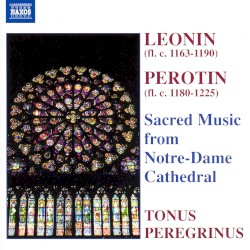 Sacred Music from Notre-Dame Cathedral2005
Tracklist not collected yet.
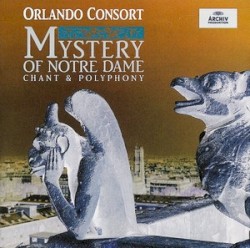 The School of Notre Dame1997
Tracklist not collected yet.
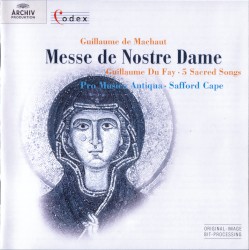 Organum Duplum / Organum Quadruplum / Messe de Nostre Dame / 5 Sacred Songs1996
Tracklist not collected yet.
 Musik Des Mittelalters: Gregorianischer Choral / Musik Der Gotik1993
Tracklist not collected yet.
 Perotin1989
Tracklist not collected yet.
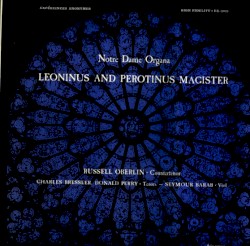 Music of the Middle Ages, vol. II1958
Tracklist not collected yet.
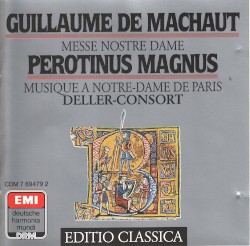 Guillaume de Machaut: Messe Nostre Dame / Perotinus Magnus: Musique a Notre-Dame de Parius
Tracklist not collected yet.
Archive
Passport
Identifiers & aliases
Also known as: Magister Perotinus, Perotin, Perotinus, Perotinus Magnus
Pérotin was a composer associated with the Notre Dame school of polyphony in Paris and the broader ars antiqua musical style of high medieval music. He is credited with developing the polyphonic practices of his predecessor Léonin, with the introduction of three and four-part harmonies.
All links
Opinions of fans — not verified facts.
…