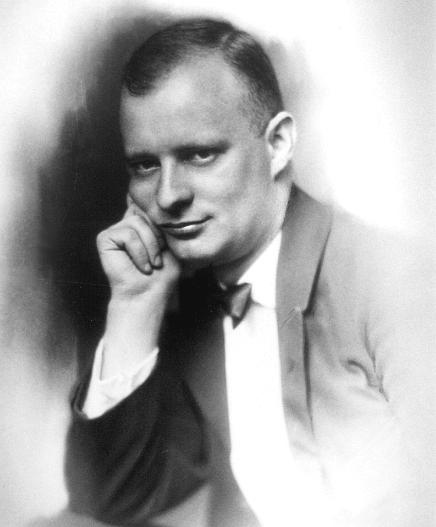
Paul Hindemith was a prominent German composer, active from 1895 to 1963.
Hindemith was a major advocate of the Neue Sachlichkeit style of music in the 1920s, influencing contemporary classical music.
He founded the Amar Quartet in 1921, which toured extensively in Europe, emphasizing contemporary music.
Biography
Early Life
Paul Hindemith was born on November 16, 1895, in Hanau, Germany, near Frankfurt. He was the eldest child of Robert Hindemith, a painter and decorator, and Marie Warnecke. Hindemith began his musical journey by learning the violin as a child and later attended Frankfurt's Dr. Hoch's Konservatorium. There, he studied under notable instructors, including Adolf Rebner for violin and Arnold Mendelssohn for conducting and composition. His early career involved playing in dance bands and musical-comedy groups, which helped him support himself financially.
Career
Hindemith's professional career took off when he became the deputy leader of the Frankfurt Opera Orchestra in 1914, later rising to concertmaster in 1916. His experiences during World War I, including conscription into the Imperial German Army, shaped his artistic perspective. After the war, he founded the Amar Quartet in 1921, focusing on contemporary music and touring extensively across Europe. Hindemith became a prominent figure in the Neue Sachlichkeit (New Objectivity) movement in the 1920s, producing significant works such as "Kammermusik" and the song cycle "Das Marienleben". His notable compositions include the opera "Mathis der Maler" and the symphony of the same name, as well as the "Symphonic Metamorphosis" and the oratorio "When Lilacs Last in the Dooryard Bloom'd".
Later Years and Legacy
In the face of increasing difficulties with the Nazi regime, Hindemith and his wife emigrated to Switzerland and later to the United States. He continued to compose, conduct, and record his music, leaving a lasting impact on the world of classical music. Hindemith received numerous accolades throughout his life, including the Pour le Mérite for Sciences and Arts and honorary doctorates from prestigious institutions such as the University of Oxford. His contributions to music were recognized posthumously, with an asteroid named after him in 1973, ensuring his legacy endures in the annals of music history.
Collected from open sources (4) · facts link to sources · AI-processed
Discography
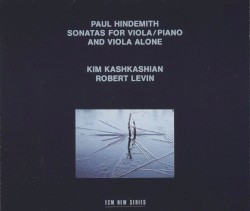 Sonatas for Viola/Piano and Viola Alone1988
- 1.Sonate für Viola solo, op. 31 Nr. 4: I. Äußerst lebhaft3:18
- 2.Sonate für Viola solo, op. 31 Nr. 4: II. Lied – Ruhig, mit wenig Ausdruck4:12
- 3.Sonate für Viola solo, op. 31 Nr. 4: III. Thema mit Variationen: Schnelle Viertel – Langsam – Ziemlich lebhaft10:45
- 4.Sonate für Viola solo, op. 25 Nr. 1: I. Breit – II. Sehr frisch und straff3:47
- 5.Sonate für Viola solo, op. 25 Nr. 1: III. Sehr langsam5:54
- 6.Sonate für Viola solo, op. 25 Nr. 1: IV. Rasendes Zeitmaß. Wild. Tonschönheit ist Nebensache1:32
- 7.Sonate für Viola solo, op. 25 Nr. 1: V. Langsam, mit viel Ausdruck5:18
- 8.Sonate für Viola solo (1937): I. Lebhafte Halbe4:02
- 9.Sonate für Viola solo (1937): II. Langsame Viertel – Lebhaft (pizzicato)7:21
- 10.Sonate für Viola solo (1937): III. Mäßig schnelle Viertel4:40
- 11.Sonate für Viola solo, op. 11 Nr. 5: I. Lebhaft, aber nicht geeilt3:02
- 12.Sonate für Viola solo, op. 11 Nr. 5: II. Mäßig schnell, mit viel Wärme vorgetragen4:17
- 13.Sonate für Viola solo, op. 11 Nr. 5: III. Scherzo3:33
- 14.Sonate für Viola solo, op. 11 Nr. 5: IV. In Form und Zeitmaß einer Passacaglia11:00
- 15.Sonate für Viola und Piano, op. 11 Nr. 4: I. Phantasie3:08
- 16.Sonate für Viola und Piano, op. 11 Nr. 4: II. Thema mit Variationen4:03
- 17.Sonate für Viola und Piano, op. 11 Nr. 4: III. Finale mit Variationen10:16
- 18.Sonate für Viola und Piano, op. 25 Nr. 4: I. Sehr lebhaft, markiert und kraftvoll4:58
- 19.Sonate für Viola und Piano, op. 25 Nr. 4: II. Sehr langsame Viertel4:01
- 20.Sonate für Viola und Piano, op. 25 Nr. 4: III. Finale, lebhafte Viertel5:28
- 21.Sonate für Viola und Piano (1939): I. Breit, mit Kraft7:10
- 22.Sonate für Viola und Piano (1939): II. Sehr lebhaft4:41
- 23.Sonate für Viola und Piano (1939): III. Phantasie3:58
- 24.Sonate für Viola und Piano (1939): IV. Finale7:26
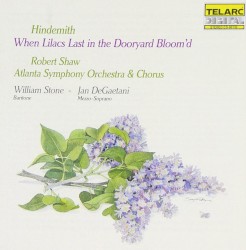 When Lilacs Last in the Dooryard Bloom’d1987
- 1.When Lilacs Last in the Dooryard Bloom’d: Prelude4:01
- 2.When Lilacs Last in the Dooryard Bloom’d: I. When Lilacs Last in the Dooryard Bloom’d4:34
- 3.When Lilacs Last in the Dooryard Bloom’d: II. Arioso. In the Swamp2:22
- 4.When Lilacs Last in the Dooryard Bloom’d: III. March. Over the Breast of Spring6:16
- 5.When Lilacs Last in the Dooryard Bloom’d: IV. O Western Orb2:06
- 6.When Lilacs Last in the Dooryard Bloom’d: V. Arioso. Sing On, There in the Swamp1:51
- 7.When Lilacs Last in the Dooryard Bloom’d: VI. Song. O How Shall I Warble3:32
- 8.When Lilacs Last in the Dooryard Bloom’d: VII. Introduction and Fugue. Lo! Body and Soul5:23
- 9.When Lilacs Last in the Dooryard Bloom’d: VIII. Sing On! You Gray‐Brown Bird10:02
- 10.When Lilacs Last in the Dooryard Bloom’d: IX. Death Carol. Come, Lovely and Soothing Death7:30
- 11.When Lilacs Last in the Dooryard Bloom’d: X. To the Tally of My Soul6:27
- 12.When Lilacs Last in the Dooryard Bloom’d: XI. Finale. Passing the Visions8:24
 Toccaten1987
- 1.Toccata (Op. 42 Nr. 5: V)5:51
- 2.Toccata (Op. 25: IV)3:33
- 3.Toccata (Dix Pièces: Nr. 4)3:05
- 4.Allegro (Op. 70: IV)4:39
- 5.Toccata (Op. 5: III)7:31
- 6.Toccata (Op. 80: Nr. 11)3:22
- 7.Toccata (Op. 15: Nr. 8)2:29
- 8.Phantasie (Sonate I für Orgel)2:37
- 9.Toccata und Fuge7:54
- 10.Toccata "Ite, missa est"8:19
- 11.Toccata senza fuga per organo7:18
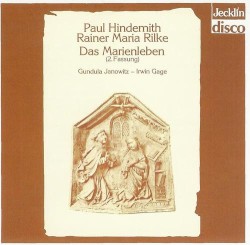 Das Marienleben1987
- 1.Das Marienleben, Op. 27 Nr. 1: Geburt Mariä3:33
- 2.Das Marienleben, Op. 27 Nr. 2: Die Darstellung Mariä im Tempel6:36
- 3.Das Marienleben, Op. 27 Nr. 3: Mariä Verkündigung4:39
- 4.Das Marienleben, Op. 27 Nr. 4: Mariä Heimsuchung2:41
- 5.Das Marienleben, Op. 27 Nr. 5: Argwohn Josephs1:53
- 6.Das Marienleben, Op. 27 Nr. 6: Verkündigung über den Hirten6:57
- 7.Das Marienleben, Op. 27 Nr. 7: Geburt Christi5:00
- 8.Das Marienleben, Op. 27 Nr. 8: Rast auf der Flucht in Ägypten3:59
- 9.Das Marienleben, Op. 27 Nr. 9: Von der Hochzeit zu Kana7:56
- 10.Das Marienleben, Op. 27 Nr. 10: Vor der Passion5:18
- 11.Das Marienleben, Op. 27 Nr. 11: Pietà3:05
- 12.Das Marienleben, Op. 27 Nr. 12: Stillung Mariä mit dem Auferstandenen2:38
- 13.Das Marienleben, Op. 27 Nr. 13: Vom Tode Mariä I7:47
- 14.Das Marienleben, Op. 27 Nr. 14: Vom Tode Mariä II (Thema mit Variationen)7:22
- 15.Das Marienleben, Op. 27 Nr. 15: Vom Tode Mariä III3:00
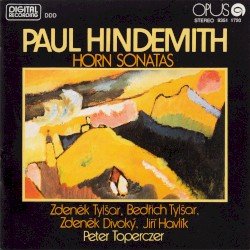 Horn Sonatas1987
- 1.Sonata für Horn und Klavier (1939): Mäßig bewegt5:45
- 2.Sonata für Horn und Klavier (1939): Ruhig bewegt5:02
- 3.Sonata für Horn und Klavier (1939): Lebhaft7:28
- 4.Sonata für Horn und Klavier (1943): Ruhig bewegt2:37
- 5.Sonata für Horn und Klavier (1943): Lebhaft3:48
- 6.Sonata für Horn und Klavier (1943): Sehr langsam2:10
- 7.Sonata für Horn und Klavier (1943): Lebhaft3:08
- 8.Sonata für vier Hörner (1952): Fugato2:09
- 9.Sonata für vier Hörner (1952): Lebhaft4:26
- 10.Sonata für vier Hörner (1952): Variationen8:59
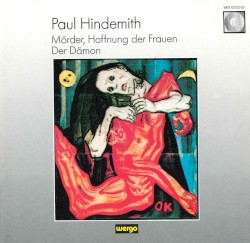 Mörder, Hoffnung der Frauen / Der Dämon1987
- 1.Mörder, Hoffnung der Frauen, Oper in einem Akt, op. 1224:08
- 2.Der Dämon, op. 28, Tanzpantomime in zwei Bildern: I. Tanz des Dämons1:18
- 3.Der Dämon, op. 28, Tanzpantomime in zwei Bildern: II. Tanz der Bunten Bänder2:59
- 4.Der Dämon, op. 28, Tanzpantomime in zwei Bildern: III. Tanz der Geängsteten Schwalben3:13
- 5.Der Dämon, op. 28, Tanzpantomime in zwei Bildern: IV. Tanz des Giftes0:43
- 6.Der Dämon, op. 28, Tanzpantomime in zwei Bildern: V. Tanz der Schmerzen2:50
- 7.Der Dämon, op. 28, Tanzpantomime in zwei Bildern: VI. Tanz des Dämons (Passacaglia)3:33
- 8.Der Dämon, op. 28, Tanzpantomime in zwei Bildern: VIIa. Tanz der Trauer und der Sehnsucht1:39
- 9.Der Dämon, op. 28, Tanzpantomime in zwei Bildern: VIIb. Einleitung zum zweiten Bild1:32
- 10.Der Dämon, op. 28, Tanzpantomime in zwei Bildern: VIII. Tanz des Kindes1:41
- 11.Der Dämon, op. 28, Tanzpantomime in zwei Bildern: IX. Tanz des Weiten Gewandes2:38
- 12.Der Dämon, op. 28, Tanzpantomime in zwei Bildern: X. Tanz der Ganz Erschlossenen3:55
- 13.Der Dämon, op. 28, Tanzpantomime in zwei Bildern: XI. Tanz der Roten Taserei1:42
- 14.Der Dämon, op. 28, Tanzpantomime in zwei Bildern: XII. Tanz der Brutalität0:42
- 15.Der Dämon, op. 28, Tanzpantomime in zwei Bildern: XIII. Tanz des Geschlagenen Tieres2:21
- 16.Der Dämon, op. 28, Tanzpantomime in zwei Bildern: XIV. (Finale)1:17
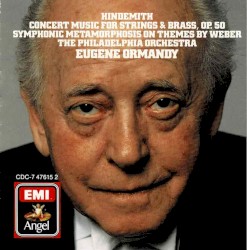 Concert Music for Strings & Brass, op. 50 / Symphonic Metamorphosis on Themes by Weber1986
- 1.Symphonic Metamorphosis on Themes by Carl Maria von Weber: I. Allegro4:09
- 2.Symphonic Metamorphosis on Themes by Carl Maria von Weber: II. Turandot, Scherzo (Moderate - Lively)7:54
- 3.Symphonic Metamorphosis on Themes by Carl Maria von Weber: III. Andantino4:03
- 4.Symphonic Metamorphosis on Themes by Carl Maria von Weber: IV. March4:50
- 5.Concert Music for Strings & Brass, op. 50: I. Mässig schnell, mit Kraft - Sehr breit, aber stets fliessend8:34
- 6.Concert Music for Strings & Brass, op. 50: II. Leghaft - Langsam - Im ersten Zeitmass (Lebhaft)8:21
 Organ Sonatas1986
- 1.Organ Sonata No. 1 (1937) - 1. Mässig schnell1:45
- 2.Organ Sonata No. 1 (1937) - 1b. Lebhaft5:43
- 3.Organ Sonata No. 1 (1937) - 2. Sehr langsam3:12
- 4.Organ Sonata No. 1 (1937) - 3. Phantasie3:02
- 5.Organ Sonata No. 1 (1937) - 3b. Ruhig Bewegt5:05
- 6.Organ Sonata No. 2 (1937) - 1. Lebhaft3:56
- 7.Organ Sonata No. 2 (1937) - 2. Ruhig bewegt4:08
- 8.Organ Sonata No. 2 (1937) - 3. Fuge3:05
- 9.Organ Sonata No. 3: über alte Volkslieder (1940) - 1. 'Ach Gott, wem soll ich's klagen'2:28
- 10.Organ Sonata No. 3: über alte Volkslieder (1940) - 1b. Langsam2:05
- 11.Organ Sonata No. 3: über alte Volkslieder (1940) - 2. 'Wach auf, mein Hort'4:17
- 12.Organ Sonata No. 3: über alte Volkslieder (1940) - 3. 'So wünsch ich dir'2:13
- 13.Spielstücke, Op. 18, No. 1 - 1. Schnell0:21
- 14.Spielstücke, Op. 18, No. 1 - 2. Schnell1:23
- 15.Spielstücke, Op. 18, No. 1 - 3. Gehend3:52
- 16.Spielstücke, Op. 18, No. 1 - 4. Flink1:16
- 17.Toccata francese3:50
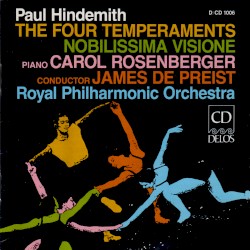 The Four Temperaments / Nobilissima visione1986
- 1.The Four Temperaments: Theme7:01
- 2.The Four Temperaments: Melancholy7:20
- 3.The Four Temperaments: Sanguine5:41
- 4.The Four Temperaments: Phlegmatic3:55
- 5.The Four Temperaments: Choleric5:52
- 6.Nobilissima visione: Introduction and Rondo7:13
- 7.Nobilissima visione: March and Pastorale8:34
- 8.Nobilissima visione: Passacaglia5:50
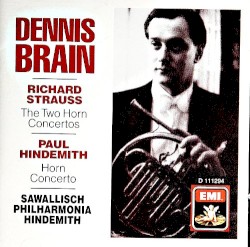 The Two Horn Concertos / Horn Concerto1986
- 1.Horn Concerto no. 1 in E-flat, op. 11: I. Allegro5:19
- 2.Horn Concerto no. 1 in E-flat, op. 11: II. Andante5:01
- 3.Horn Concerto no. 1 in E-flat, op. 11: III. Rondo (Allegro)5:04
- 4.Horn Concerto no. 2 in E-flat: I. Allegro7:51
- 5.Horn Concerto no. 2 in E-flat: II. Andante con moto5:19
- 6.Horn Concerto no. 2 in E-flat: III. Rondo (Allegro molto)5:16
- 7.Horn Concerto: I. Moderately fast3:22
- 8.Horn Concerto: II. Very fast1:56
- 9.Horn Concerto: III. Very slow - Moderately fast - Fast - Lively - Very slow9:39
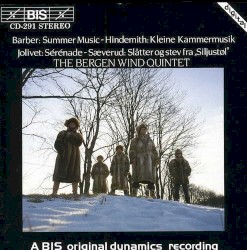 Barber: Summer Music / Hindemith: Kleine Kammermusk / Jolivet: Sérénade / Sæverud: Slåtter og stev fra „Siljustøl”1985
- 1.Summer Music for Wind Quintet, op. 3111:41
- 2.Slåtter og stev fra „Siljustøl”, op. 21a: I. Kristi-blodsdråper (Fucsia)1:36
- 3.Slåtter og stev fra „Siljustøl”, op. 21a: II. Dvergmålslått (Canzone dell'Eco)1:30
- 4.Slåtter og stev fra „Siljustøl”, op. 21a: III. Bå'nlåt (Ninnarella)2:03
- 5.Slåtter og stev fra „Siljustøl”, op. 21a: IV. Kvellingsull og Lokk (Voci ed ombre nel vespero d'estate)2:58
- 6.Slåtter og stev fra „Siljustøl”, op. 21a: V. Marcia Siljuana5:03
- 7.Sérénade pour quintette à vent avec hautbois principal: I. Cantilène4:20
- 8.Sérénade pour quintette à vent avec hautbois principal: II. Caprice3:19
- 9.Sérénade pour quintette à vent avec hautbois principal: III. Intermède4:04
- 10.Sérénade pour quintette à vent avec hautbois principal: IV. Marche burlesque5:07
- 11.Kleine Kammermusik für fünf Bläser, op. 24/2: I. Lustig. Mäßig schnelle Viertel2:56
- 12.Kleine Kammermusik für fünf Bläser, op. 24/2: II. Walzer. Durchweg sehr leise2:11
- 13.Kleine Kammermusik für fünf Bläser, op. 24/2: III. Ruhig und einfach4:51
- 14.Kleine Kammermusik für fünf Bläser, op. 24/2: IV. Schnelle Viertel0:52
- 15.Kleine Kammermusik für fünf Bläser, op. 24/2: V. Sehr lebhaft3:07
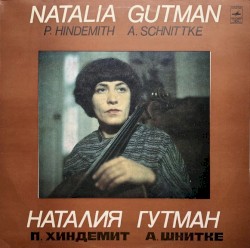 Hindemith: Three Pieces / Schnittke: Sonata for Cello and Piano1983
- 1.Three Pieces for Cello and Piano, op. 8: 1. Capriccio
- 2.Three Pieces for Cello and Piano, op. 8: 2. Fantasiestück
- 3.Three Pieces for Cello and Piano, op. 8: 3. Scherzo
- 4.Sonata for Cello and Piano: 1. Largo
- 5.Sonata for Cello and Piano: 2. Presto
- 6.Sonata for Cello and Piano: 3. Largo
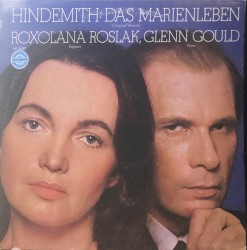 Das Marienleben1978
Tracklist not collected yet.
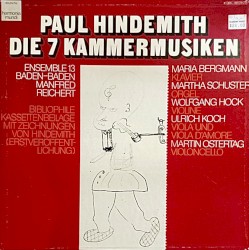 Die 7 Kammermusiken1978
Tracklist not collected yet.
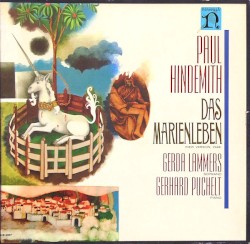 Das Marienleben1977
Tracklist not collected yet.
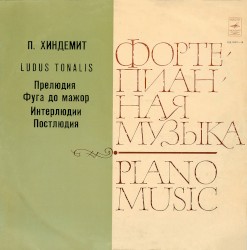 Ludus Tonalis1973
Tracklist not collected yet.
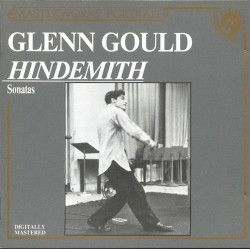 The Piano Sonatas Complete, nos. 1, 2, and 31973
Tracklist not collected yet.
 Joseph Haydn / Paul Hindemith / Jaan Rääts / Arvo Pärt1971
Tracklist not collected yet.
 Janáček: Sinfonietta / Hindemith: Symphonic Metamorphoses1969
Tracklist not collected yet.
 Two Twentieth Century Masterpieces: Violin Concertos1965
Tracklist not collected yet.
 Bruch: Scotish Fantasia, op.46 / Hindemith: Violin Concerto (1939)1962
Tracklist not collected yet.
 The Four Temperaments / Five Pieces / Funeral Music1956
Tracklist not collected yet.
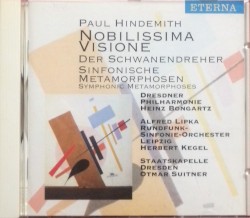 Nobilissima visione / Der Schwaendreher / Sinfonische Metamorphosen1994
Tracklist not collected yet.
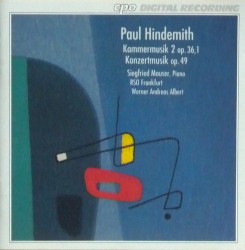 Kammermusik 2 - Konzertmusik op. 491993
Tracklist not collected yet.
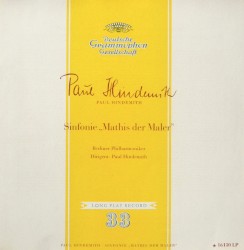 Sinfonie „Mathis der Maler“1956
Tracklist not collected yet.
Gallery


Achievements
- Award
- Pour le Mérite for Sciences and Arts order
- Award
- Bach Prize of the Free and Hanseatic City of Hamburg
- Award
- Balzan Prize
- Award
- Wihuri Sibelius Prize
- Award
- Goethe Plaque of the City of Frankfurt
- Award
- Berliner Kunstpreis
- Award
- Honorary doctor of the Free University of Berlin
- Award
- honorary doctorate of the Johann Wolfgang Goethe University Frankfurt
- Award
- Honorary doctor of the University of Oxford
- Award
- Pour le Mérite
- Award
- Honorary Member of the International Society for Contemporary Music
Groups
- Amar Quartettoriginal, viola · 1921–1929
Similar artists


Archive
Passport
Identifiers & aliases
Also known as: Chororgel; Paul Hindemith (1895-1963), Hindemith, Hindesmith, P.Hindemith
Paul Hindemith was a German and American composer, music theorist, teacher, violist, and conductor. He founded the Amar Quartet in 1921, touring extensively in Europe. As a composer, he became a major advocate of the Neue Sachlichkeit style of music in the 1920s, with compositions such as Kammermusik, including works with viola and viola d'amore as solo instruments in a neo-Bachian spirit. His other notable compositions include the song cycle Das Marienleben (1923), the oratorio Das Unaufhörliche (1931), Der Schwanendreher for viola and orchestra (1935), the opera Mathis der Maler (1938), and the symphony Mathis der Maler (1934), the Symphonic Metamorphosis of Themes by Carl Maria von Weber (1943), and the oratorio When Lilacs Last in the Dooryard Bloom'd (1946), a requiem based on Walt Whitman's poem. Hindemith and his wife emigrated to Switzerland and the United States ahead of World War II, after worsening difficulties with the Nazi German regime. In his later years, he conducted and recorded much of his own music.
All links
Opinions of fans — not verified facts.
…