
Paul Whiteman was an influential American jazz musician and bandleader from the US.
He was known as the 'King of Jazz' during his peak in the 1920s.
Whiteman led a large orchestra that often included up to 35 musicians, setting a standard for big bands.
Biography
Early Life
Paul Samuel Whiteman was born on March 28, 1890, in Denver, Colorado, into a musical family. His father, Wilburforce James Whiteman, was the supervisor of music for the Denver Public Schools, while his mother, Elfrida Dallison, was a former opera singer. Encouraged by his father to learn an instrument, Whiteman initially chose the viola over the violin. His diverse ancestry includes Scottish, Irish, English, and Dutch roots.
Career
Whiteman's musical journey began with the Denver Symphony Orchestra in 1907, followed by a position with the San Francisco Symphony in 1914. His career took a significant turn during World War I when he conducted a U.S. Navy band. After the war, he formed the Paul Whiteman Orchestra, which gained immense popularity after moving to New York City in 1920. Whiteman's orchestra was notable for its size, often comprising up to 35 musicians, and he became the highest-earning bandleader of the 1920s, controlling numerous ensembles and earning over $1 million annually. His innovative approach to music included blending jazz with orchestral elements, leading to iconic recordings such as "Rhapsody in Blue" with George Gershwin.
Personal Life
On August 18, 1931, Whiteman married actress Margaret Livingston, and the couple adopted four children. He lived at Walking Horse Farm in New Jersey from 1938 until 1959 before moving to New Hope, Pennsylvania. Whiteman passed away from a heart attack on December 29, 1967, at the age of 77, and is buried in Ewing, New Jersey.
Legacy
Whiteman's contributions to music have been recognized with numerous accolades, including two stars on the Hollywood Walk of Fame and inductions into the Grammy Hall of Fame for several of his recordings. His orchestra's 1928 rendition of "Ol' Man River" with Paul Robeson was inducted into the Grammy Hall of Fame in 2006, and he was inducted into the Big Band and Jazz Hall of Fame in 1993. Whiteman's influence on jazz and orchestral music continues to be celebrated today.
Collected from open sources (4) · facts link to sources · AI-processed
Discography
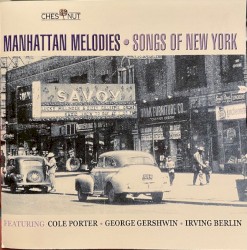 Manhattan Melodies Songs of New York2006
Tracklist not collected yet.
 Carnegie Hall Concert December 25, 19382005
Tracklist not collected yet.
 Sweet and Low Down: Vol. 3, Original 1925-1928 Recordings2002
Tracklist not collected yet.
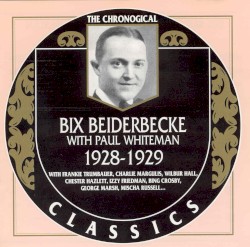 The Chronological Classics: Bix Beiderbecke with Paul Whiteman 1928-19292002
Tracklist not collected yet.
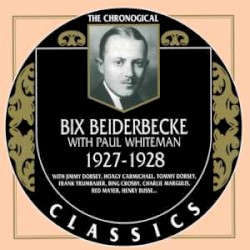 The Chronological Classics: Bix Beiderbecke with Paul Whiteman 1927-19282001
Tracklist not collected yet.
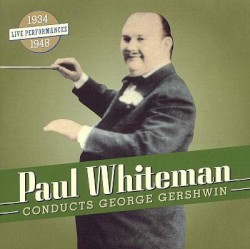 Paul Whiteman Conducts George Gershwin1999
Tracklist not collected yet.
 50 Greatest Hits1998
Tracklist not collected yet.
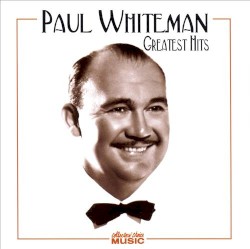 Greatest Hits1998
Tracklist not collected yet.
 16 Classic Performances1997
Tracklist not collected yet.
 The King Of Jazz - His Greatest Recordings 1920-19361996
Tracklist not collected yet.
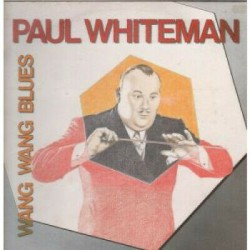 Wang Wang Blues1985
Tracklist not collected yet.
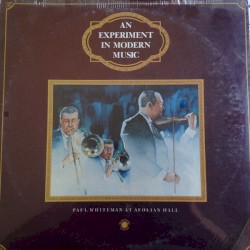 An Experiment in Modern Music: Paul Whiteman at Aeolian Hall1981
Tracklist not collected yet.
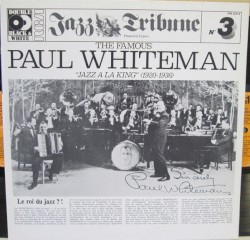 The Famous Paul Whiteman “Jazz A La King” (1920–1936)1979
Tracklist not collected yet.
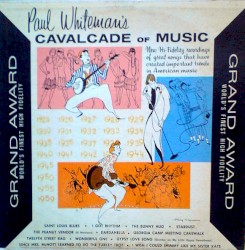 Cavalcade of Music1959
Tracklist not collected yet.
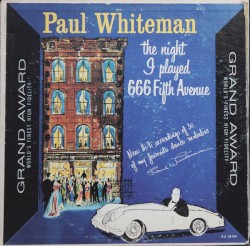 The Night I Played 666 Fifth Avenue1959
Tracklist not collected yet.
 50th Anniversary1956
Tracklist not collected yet.
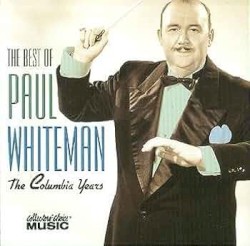 The Best of Paul Whiteman: The Columbia Years
Tracklist not collected yet.
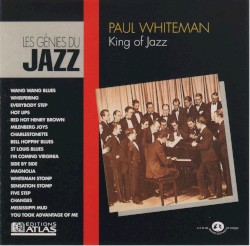 Les Génies du Jazz (Tome 1, No. 13): Paul Whiteman
Tracklist not collected yet.
Gallery


Label
- Record label
- Columbia Records
Achievements
- Award
- star on Hollywood Walk of Fame
Groups
- Paul Whiteman and His Orchestraeponymous, originalcurrent
- Paul Whiteman and His Orchestraviolin · 1920–1954
Similar artists


Archive
Passport
Identifiers & aliases
Paul Samuel Whiteman was an American jazz bandleader, composer, orchestral director, and violinist.
All links
Opinions of fans — not verified facts.
…