
Pierre de la Rue was a notable Franco-Flemish Renaissance composer.
He hailed from Belgium, contributing significantly to the music of the region.
His musical career began in 1452, marking the start of a significant era in Renaissance music.
Biography
Early Life and Background
Pierre de la Rue was a prominent Franco-Flemish composer and singer of the Renaissance, born around 1452 in what is now Belgium. His name is sometimes recorded as Piersson or variations of Pierchon, and he is often associated with various toponyms such as de Platea, de Robore, or de Vico. De la Rue was part of a generation that included notable contemporaries like Josquin des Prez, and he became a significant figure in the Habsburg-Burgundian musical chapel.
Career Highlights
Throughout his career, which spanned from 1452 until his death in 1518, de la Rue became known for his contributions to the polyphonic style that characterized music in the Netherlands during the late 15th and early 16th centuries. He is celebrated for his mastery of choral composition, with a repertoire that includes masses, motets, and requiems. Some of his notable works include the "Missa Pange Lingua" and the "Requiem Missa Pro Defunctis." His music reflects the intricate polyphonic textures and emotional depth that were hallmarks of the Renaissance.
Legacy
Pierre de la Rue's influence on the development of choral music is profound, as he ranks alongside other great composers of his time, such as Agricola and Obrecht. His works continue to be performed and studied, ensuring that his legacy endures in the canon of Western classical music. His contributions helped shape the sound of Renaissance music, making him a key figure in the history of choral composition.
Collected from open sources (4) · facts link to sources · AI-processed
Discography
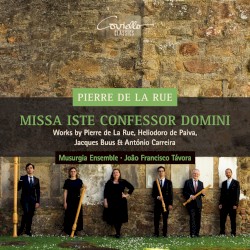 Missa Iste confessor domini2026
Tracklist not collected yet.
 Masses2018
Tracklist not collected yet.
 Masses2018
Tracklist not collected yet.
 Ockeghem: Requiem / De La Rue: Requiem2018
Tracklist not collected yet.
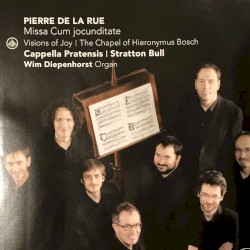 Missa Cum Jocunditate2016
Tracklist not collected yet.
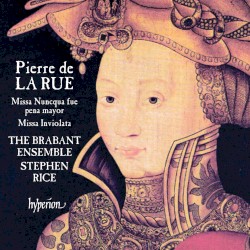 Missa Nuncqua fue pena mayor / Missa Inviolata2016
Tracklist not collected yet.
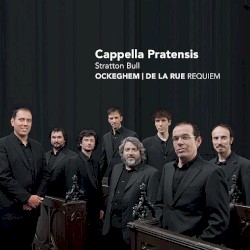 Ockeghem: Requiem / de la Rue: Requiem2012
Tracklist not collected yet.
 Pierre de la Rue 12010
Tracklist not collected yet.
 Bellum & Pax2008
Tracklist not collected yet.
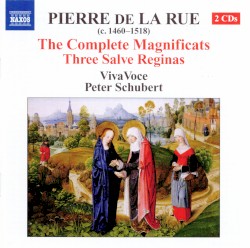 The Complete Magnificats / Three Salve Reginas2007
Tracklist not collected yet.
 Incessament2005
Tracklist not collected yet.
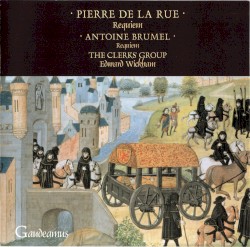 Pierre de La Rue: Requiem / Antoine Brumel: Requiem2005
Tracklist not collected yet.
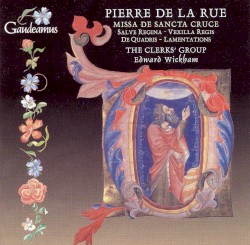 Pierre de La Rue: Missa de sancta cruce / Salve regina / Vexilla regis / De Quadris: Lamentations2003
Tracklist not collected yet.
 Missa de septem doloribus2002
Tracklist not collected yet.
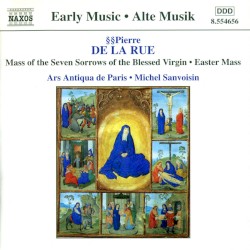 Mass of the Seven Sorrows of the Blessed Virgin / Easter Mass2000
Tracklist not collected yet.
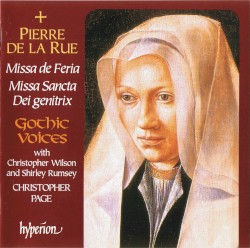 Missa de feria / Missa Sancta Dei genitrix1998
Tracklist not collected yet.
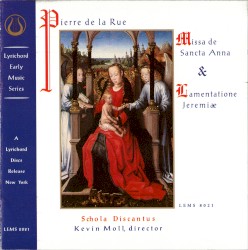 Missa de Sancta Anna / Lamentatione Jeremiæ1996
Tracklist not collected yet.
 De Vlaamse Polyfonie: Isaac, Obrecht, De La Rue1995
Tracklist not collected yet.
 de la Rue: Requiem / des Prez: Mass Hercules Dux Ferrariae / Deploration1994
Tracklist not collected yet.
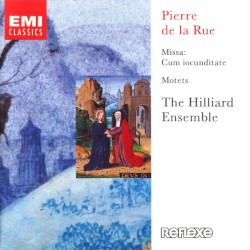 Missa Cum iocunditate / Motets1992
Tracklist not collected yet.
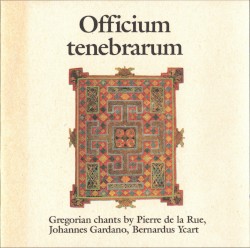 Officium tenebrarum. Gregorian Chants by Pierre de la Rue, Johannes Gardano, Bernardus Ycart1991
Tracklist not collected yet.
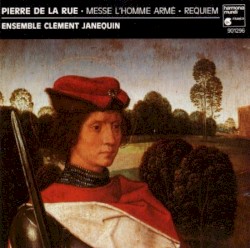 Missa L’homme armé / Requiem1989
Tracklist not collected yet.
 Requiem / Motets1986
Tracklist not collected yet.
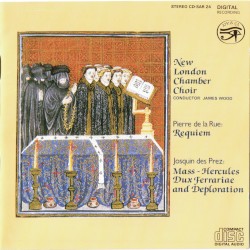 De la Rue: Requiem / Des Prez: Mass "Hercules Dux Ferrariae" / Deploration1986
Tracklist not collected yet.
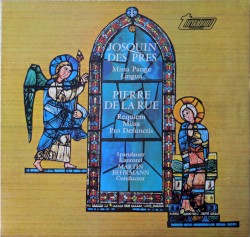 Missa Pange Lingua, Requiem Missa Pro Defunctis1971
Tracklist not collected yet.
Archive
Passport
Identifiers & aliases
Also known as: Petrus de Robore, Petrus de Vico, Pierchon de Vico, Pierchon de la Rue, Pierre de Platea, Pierre de Robore
Pierre de la Rue was a Franco-Flemish composer and singer of the Renaissance. His name also appears as Piersson or variants of Pierchon and his toponymic, when present, as various forms of de Platea, de Robore, or de Vico. A member of the same generation as Josquin des Prez, and a long associate of the Habsburg-Burgundian musical chapel, he ranks with Agricola, Brumel, Compère, Isaac, Obrecht, and Weerbeke as one of the most famous and influential composers in the Netherlands polyphonic style in the decades around 1500.
All links
Opinions of fans — not verified facts.
…