
Richard Strauss was a German composer and conductor known for his tone poems and operas, active from 1864 to 1949.
He was a leading figure of the late Romantic and early Modern era, blending traditional and modern musical elements.
Strauss began his musical studies at the age of four and composed his first piece by the age of six.
Biography
Early Life
Richard Georg Strauss was born on June 11, 1864, in Munich, Germany, into a musically inclined family. His father, Franz Strauss, was the principal horn player at the Court Opera and a professor at the Königliche Musikschule, while his mother, Josephine, was the daughter of a prosperous brewer. Strauss displayed prodigious talent from a young age, beginning his musical studies at just four years old. He studied piano with August Tombo and later received violin instruction from Benno Walter. By the age of six, he had already composed his first piece, and he continued to develop his skills under various teachers, including five years of compositional study with Friedrich Wilhelm Meyer.
Career
Strauss emerged as a prominent composer and conductor, known for his innovative tone poems and operas that bridged the late Romantic and early Modern eras. His works, such as "Also sprach Zarathustra" and "Ein Heldenleben," showcased his mastery of orchestration and harmonic complexity. Throughout his career, he received numerous accolades, including the Pour le Mérite for Sciences and Arts and honorary citizenship in both Munich and Vienna. His compositions not only captivated audiences but also influenced a generation of composers, including Béla Bartók and Arnold Schönberg, who recognized the modernist elements in his music.
Legacy
Richard Strauss's legacy is marked by his pioneering contributions to orchestration and his ability to blend traditional tonality with modern harmonic techniques. Initially viewed as a conservative composer, later evaluations have recognized him as a modernist who pushed the boundaries of musical expression. His works continue to be celebrated for their emotional depth and technical brilliance, ensuring his place as a central figure in the history of classical music. Strauss passed away on September 8, 1949, leaving behind a rich catalog of compositions that remain influential to this day.
Collected from open sources (4) · facts link to sources · AI-processed
Discography
 Till Eulenspiegel's Merry Pranks / Dance Of The Seven Veils / Tod Und Verklärung1961
- 1.Till Eulenspiegels lustige Streiche, op. 2814:57
- 2.Tanz der sieben Schleier (Salome)9:03
- 3.Tod und Verklärung, op. 2423:54
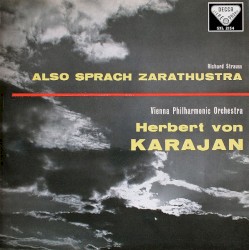 Also sprach Zarathustra1959
- 1.Also sprach Zarathustra, op. 30: Einleitung (Sonnenaufgang)1:48
- 2.Also sprach Zarathustra, op. 30: Von den Hinterweltlern3:35
- 3.Also sprach Zarathustra, op. 30: Von der großen Sehnsucht1:57
- 4.Also sprach Zarathustra, op. 30: Von den Freuden- und Leidenschaften1:54
- 5.Also sprach Zarathustra, op. 30: Das Grablied2:23
- 6.Also sprach Zarathustra, op. 30: Von der Wissenschaft4:19
- 7.Also sprach Zarathustra, op. 30: Der Genesende5:11
- 8.Also sprach Zarathustra, op. 30: Das Tanzlied7:42
- 9.Also sprach Zarathustra, op. 30: Das Nachtwandlerlied4:38
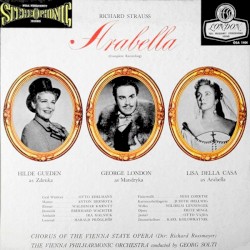 Arabella1958
Tracklist not collected yet.
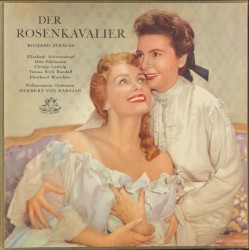 Der Rosenkavalier1957
- 1.Der Rosenkavalier: Act I (Part 1)
- 2.Der Rosenkavalier: Act I (Part 2)
- 3.Der Rosenkavalier: Act I (Conclusion)
- 4.Der Rosenkavalier: Act II (Part 1)
- 5.Der Rosenkavalier: Act II (Part 2)
- 6.Der Rosenkavalier: Act II (Conclusion)
- 7.Der Rosenkavalier: Act III (Part 1)
- 8.Der Rosenkavalier: Act III (Part 2)
- 9.Der Rosenkavalier: Act III (Conclusion)
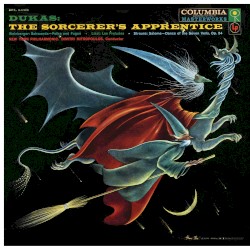 Dukas: The Sorcerer’s Apprentice / Weinberger: Schwanda / Liszt: Les Préludes / Strauss: Salome1957
- 1.The Sorcerer’s Apprentice9:46
- 2.Schwanda the Bagpiper7:41
- 3.Salome, op. 54: Dance of the 7 Veils8:52
- 4.Les Préludes, S. 97: Andante - Andante maestoso2:59
- 5.Les Préludes, S. 97: L’istesso tempo I1:10
- 6.Les Préludes, S. 97: L’istesso tempo II3:02
- 7.Les Préludes, S. 97: Allegro ma non troppo - Allegro tempestuoso3:05
- 8.Les Préludes, S. 97: Allegretto pastorale - Allegro marziale3:34
- 9.Les Préludes, S. 97: Allegro marziale animato - Andante maestoso2:48
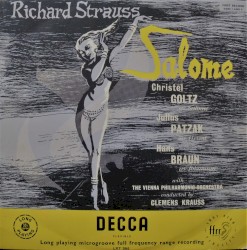 Salome1954
- 1.Salome: „Wie schön ist die Prinzessin Salome heute Nacht!”
- 2.Salome: „Nach mir wird Einer kommen”
- 3.Salome: „Ich will nicht bleiben”
- 4.Salome: „Siehe, der Herr ist gekommen”
- 5.Salome: „Jauchze nicht, du Land Palästina”
- 6.Salome: „Du wirst das für mich tun”
- 7.Salome: „Wo ist er, dessen Sündenbecher jetzt voll ist?”
- 8.Salome: „Man soll ihr geben, was sie verlangt!”
- 9.Salome: „Dein Leib ist grauenvoll”
- 10.Salome: „Wird dir nicht bange, Tochter der Herodias?”
- 11.Salome: „Wo ist Salome?”
- 12.Salome: „Eine Menge Menschen wird”
- 13.Salome: „Tanz für mich, Salome”
- 14.Salome: „Tanze nicht, meine Tochter!” (Dance of the Seven Veils)
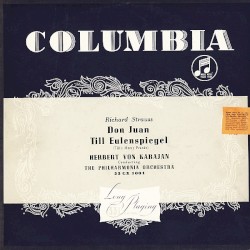 Don Juan / Till Eulenspiegel1952
- 1.Don Juan - Symphonic Poem Op. 20
- 2.Till Eulenspiegels Lustige Streiche (Till's Merry Pranks), Symphonic Poem Op. 28
 Chorwerke / Choral Works2013
Tracklist not collected yet.
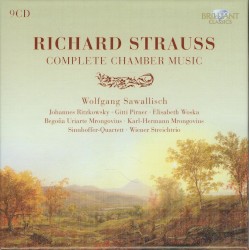 Complete Chamber Music2011
Tracklist not collected yet.
 Ein Heldenleben / Le Bourgeois Gentilhomme2006
Tracklist not collected yet.
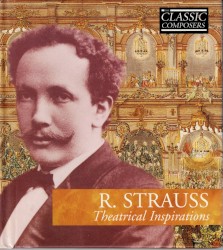 R. Strauss: Theatrical Inspirations2004
Tracklist not collected yet.
 Amor: Opera Scenes & Lieder2004
Tracklist not collected yet.
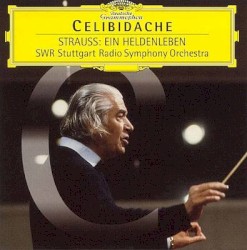 Ein Heldenleben1999
Tracklist not collected yet.
 Mahler: Adagio dalla Sinfonia n. 10 / Strauss: Eine Alpensinfonie1998
Tracklist not collected yet.
 Arabella1997
Tracklist not collected yet.
 Violin Concertos1996
Tracklist not collected yet.
 Zarathoustra1995
Tracklist not collected yet.
 R. Strauss conducts R. Strauss1990
Tracklist not collected yet.
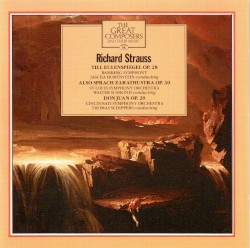 The Great Composers Series1990
Tracklist not collected yet.
 Ein Heldenleben/Don Juan1985
Tracklist not collected yet.
 Tod und Verklärung / Vier letzte Lieder1984
Tracklist not collected yet.
 Don Juan - Vier Letzte Lieder - Metamorfosi
Tracklist not collected yet.
 Ein Heldenleben, op. 40
Tracklist not collected yet.
 Metamorphosen / Duet-Concertino for Clarinet & Bassoon with String Orchestra and Harp / Prelude to Capriccio (New Stockholm Chamber Orchestra feat. conductor Esa Pekka Salonen)
Tracklist not collected yet.
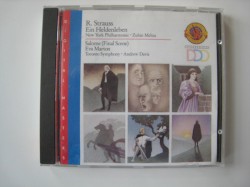 R. Strauss: Ein Heldenleben, Op. 40, Final Scene from Salome, Op. 54
Tracklist not collected yet.
Gallery


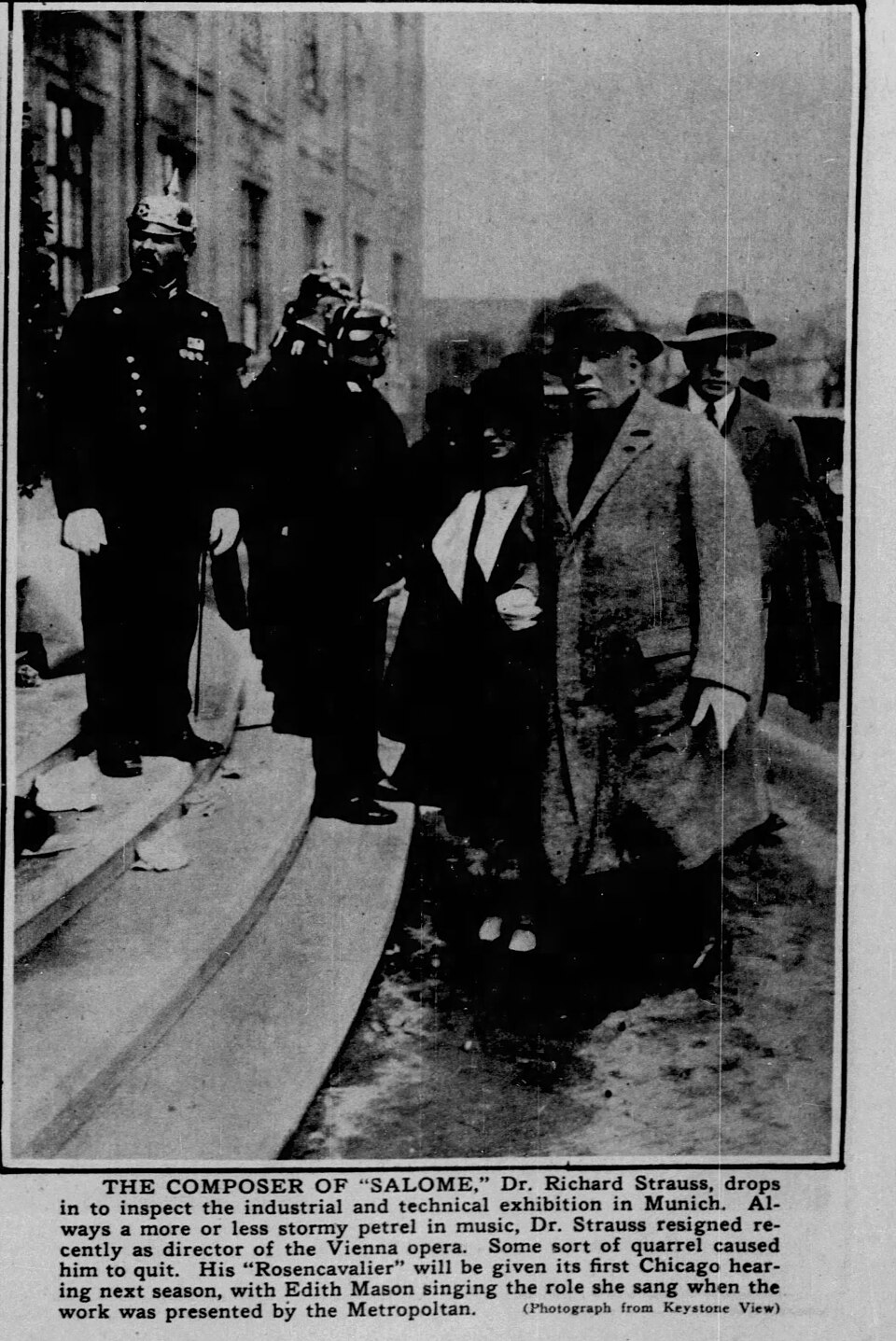


Achievements
- Award
- Pour le Mérite for Sciences and Arts order
- Award
- honorary citizen of Munich
- Award
- Bavarian Maximilian Order for Science and Art
- Award
- Royal Philharmonic Society Gold Medal
- Award
- honorary citizen of Vienna
- Award
- Order of the Redeemer
- Award
- Adlerschild des Deutschen Reiches
- Award
- Order of the Iron Crown (Austria)
- Award
- Order of the Dannebrog
- Award
- Commander of the Order of Orange-Nassau
- Award
- Order of the Oak Crown
- Award
- Order of Saint-Charles
- Award
- Officer of the Legion of Honour
- Award
- Knight of the Legion of Honour
- Award
- Order of Charles III
- Award
- Order of the Red Eagle
- Award
- Commander of the Order of the Crown
- Award
- Order of the White Falcon
- Award
- Order of the Saxe-Ernestine
- Award
- Albert Order
- Award
- German Olympic Decoration 1st Class
Similar artists


Archive
Passport
Identifiers & aliases
Also known as: R. Strauss, R.シュトラウス, Richard Georg Strauss, Richard Straus, リヒャルト・シュトラウス, 리하르트 슈트라우스
Richard Georg Strauss was a German composer and conductor known for his tone poems and operas. He was a leading figure of the late Romantic and early Modern era.
All links
Opinions of fans — not verified facts.
…