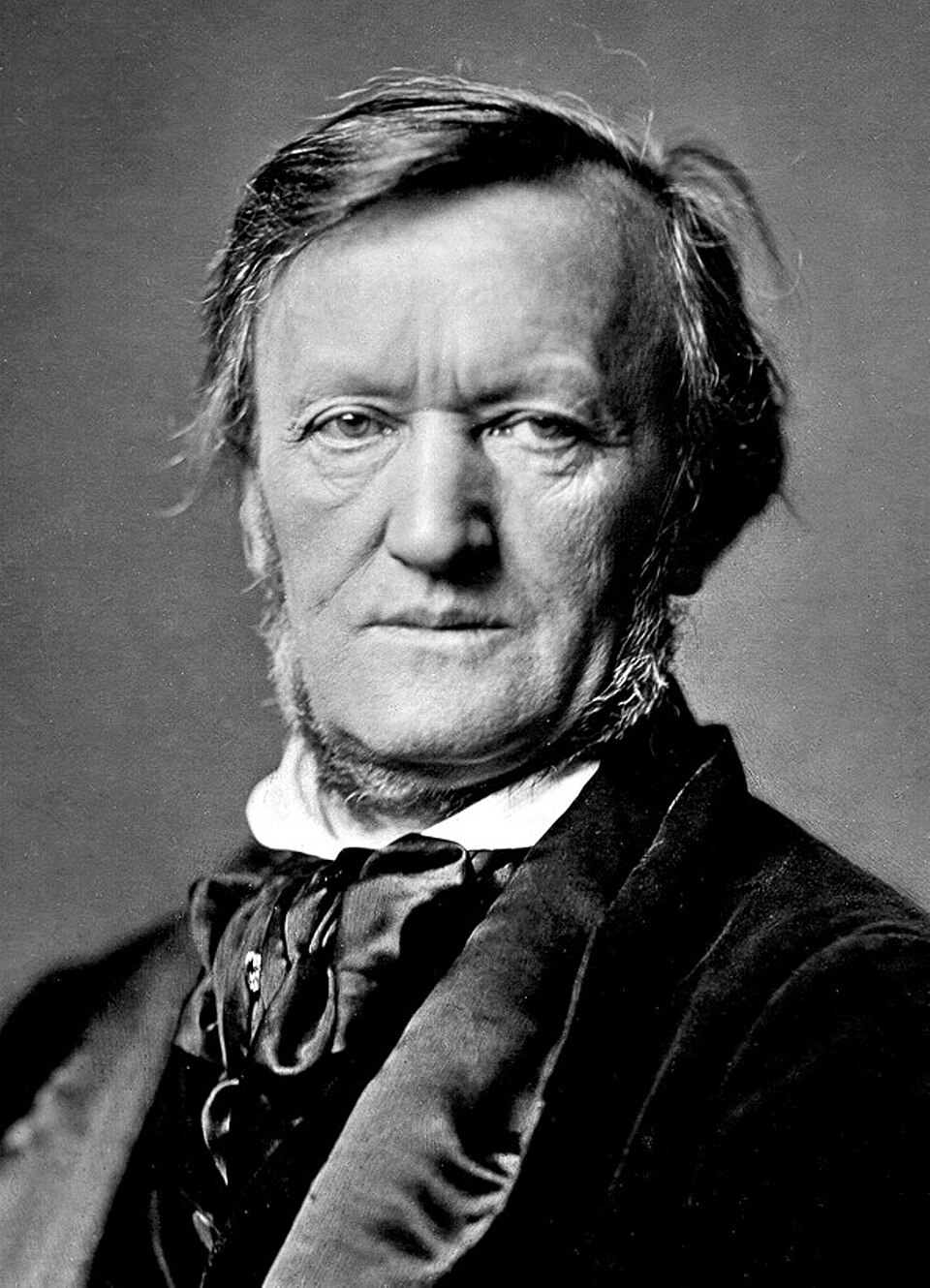
Richard Wagner
Musician · Germany · 1813–1883
Richard Wagner was a German composer known for his innovative operas and music dramas.
Wagner was born on May 22, 1813, marking the beginning of a revolutionary career in music.
One of his most famous works is "The Flying Dutchman," which showcases his unique style.
Biography
Early Life
Wilhelm Richard Wagner was born on May 22, 1813, in Leipzig, Germany. He grew up in a musical environment, which greatly influenced his future career as a composer. Wagner's early exposure to music and theatre set the stage for his later innovations in opera and music drama. He was known for his intense passion for music and literature, which would shape his artistic vision.
Career
Wagner's career spanned several decades, during which he became one of the most influential composers in the history of Western music. He is best known for his operas, which he referred to as music dramas, and for his revolutionary ideas about the integration of music, poetry, and visual art. His notable works include "The Flying Dutchman," "Die Walküre," and the monumental four-opera cycle "Der Ring des Nibelungen." Wagner's concept of the Gesamtkunstwerk aimed to unify all artistic elements in a single performance, fundamentally changing the landscape of opera.
Influence and Legacy
Wagner's influence on music is profound, introducing new harmonic ideas and the use of leitmotifs, which have become staples in modern classical music. His later works, particularly "Tristan und Isolde," pushed the boundaries of tonality, paving the way for atonality in the 20th century. Despite his musical genius, Wagner's legacy is complicated by his controversial views on race and antisemitism, which have sparked ongoing debates about his impact on culture and society. He passed away on February 13, 1883, leaving behind a complex and lasting legacy in the world of music.
Collected from open sources (4) · facts link to sources · AI-processed
Discography
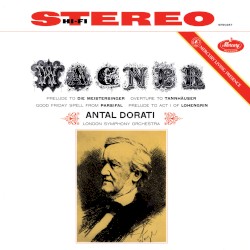 Prelude to Die Meistersinger / Overture to Tannhäuser / Good Friday Spell From Parsifal / Prelude to Act I of Lohengrin1962
- 1.Overture to “Die Meistersinger von Nürnberg”
- 2.Good Friday Spell, From “Parsifal”
- 3.Overture to “Tannhäuser”
- 4.Prelude to Act I of “Lohengrin”
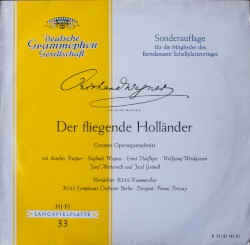 Der fliegende Holländer: Großer Opernquerschnitt1961
- 1.Der fliegende Holländer: Aus der Ouvertüre2:55
- 2.Der fliegende Holländer: 1. Akt: Steuermannslied "Mit Gewitter und Sturm aus fernem Meer"4:23
- 3.Der fliegende Holländer: 1. Akt: Szene Holländer/Daland "He, holla, Steuermann"6:44
- 4.Der fliegende Holländer: 2. Akt: Lied und Szene "Summ und brumm, du gutes Rädchen" (Mädchen/Mary/Senta)3:37
- 5.Der fliegende Holländer: 2. Akt: Ballade der Senta "Jo ho, hoe! Traft ihr das Schiff!"5:38
- 6.Der fliegende Holländer: 2. Akt: Duett Erik/Senta "Mein Herz voll Treue bis zum Sterben"2:09
- 7.Der fliegende Holländer: 2. Akt: Traumerzählung des Erik "Senta, laß dir Vertrauen"2:39
- 8.Der fliegende Holländer: 2. Akt: Finale "Ach, möchtest du, bleicher Seemann, sie finden" (Senta/Daland)3:56
- 9.Der fliegende Holländer: 2. Akt: Duett Holländer/Senta "Wie aus der Ferne längst vergangener Zeiten"7:33
- 10.Der fliegende Holländer: 2. Akt: Terzett "Verzeiht, mein Volk hält draußen sich nicht mehr" (Dalland/Senta/Holländer)2:18
- 11.Der fliegende Holländer: 3. Akt: Matrosenchor "Steuermann, laß die Wacht"4:10
- 12.Der fliegende Holländer: 3. Akt: Cavatine "Senta, o Senta, willst jenes Tags du dich nicht mehr entsinnen" (Erik)2:43
- 13.Der fliegende Holländer: 3. Akt: Finale "Verloren, ach verloren"5:58
 Rhapsodies: Liszt, Enescu, Wagner, Smetana1961
- 1.Hungarian Rhapsody No. 2 in C sharp minor8:49
- 2.Roumanian Rhapsody No. 1 in A major, Op. 11/111:44
- 3.Má Vlast, No. 2: Vltava (The Moldau)12:29
- 4.Prodaná Nevesta (The Bartered Bride): Overture7:08
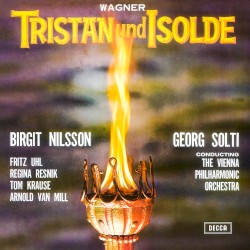 Tristan und Isolde1961
- 1.Tristan und Isolde: Prelude / Act 1 - Part 1: "Westwärts schweift der Blick"
- 2.Tristan und Isolde: Act 1 - Part 2: "Das sage Sie der frau Isold!"
- 3.Tristan und Isolde: Act 1 - Part 3: "Du merke wohl, und Meld es gut!"
- 4.Tristan und Isolde: Act 1 - Conclusion: "Tristan ... Isolde ... Treuloser Holder!"
- 5.Tristan und Isolde: Act 2 - Part 1: "Hörst du Sie noch?"
- 6.Tristan und Isolde: Act 2 - Part 2: "Isolde ... Tristan ... Geliebter!"
- 7.Tristan und Isolde: Act 2 - Part 3: "Unsre Liebe? Tristans Liebe?"
- 8.Tristan und Isolde: Act 2 - Conclusion: "O König, das kann ich dir nicht sagen"
- 9.Tristan und Isolde: Act 3 - Part 1: "Kurwenal! He!"
- 10.Tristan und Isolde: Act 3 - Part 2: "Hei nun? Wie du kamst?"
- 11.Tristan und Isolde: Act 3 - Part 3: "O Wonne! Nein!"
- 12.Tristan und Isolde: Act 3 - Conclusion: "Ich bin's, ich bin's süssester Freund"
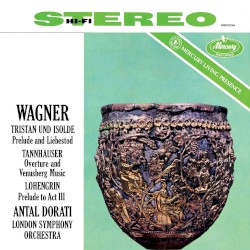 Tristan und Isolde: Prelude and Liebestod / Tannhäuser: Overture and Venusberg Music / Lohengrin: Prelude to Act III1960
- 1.Prelude and Liebestod (from “Tristan und Isolde”)
- 2.Overture and Venusberg Music (from “Tannhäuser”)
- 3.Prelude to Act III of “Lohengrin”
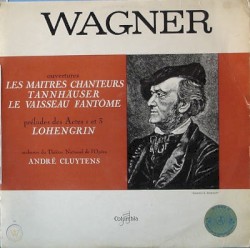 Ouvertures1960
- 1.Le Vaisseau Fantôme - Ouverture
- 2.Lohengrin- Acte I Prélude, Acte III Prélude
- 3.Les Maîtres Chanteurs - Ouverture
- 4.Tannhäuser - Ouverture
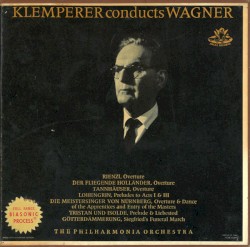 Klemperer Conducts Wagner1960
- 1.Rienzi: Overture11:00
- 2.Der fliegende Holländer: Overture11:28
- 3.Tannhäuser: Overture14:47
- 4.Lohengrin: Prelude, Act 110:07
- 5.Lohengrin: Prelude, Act 33:00
- 6.Die Meistersinger von Nürnberg: Overture11:01
- 7.Die Meistersinger von Nürnberg: Dance of the Apprentices and Entry of the Masters, Act 36:57
- 8.Tristan und Isolde: Prelude & Liebestod15:54
- 9.Götterdämmerung: Siegfried’s Funeral March, Act 37:47
 Reiner Conducts Wagner1960
- 1.Die Meistersinger (Excerpts): Prelude Act I10:01
- 2.Die Meistersinger (Excerpts): Prelude Act III5:45
- 3.Die Meistersinger (Excerpts): Dance of the Apprentices3:04
- 4.Die Meistersinger (Excerpts): Entry of the Masters3:20
- 5.Gotterdammerung: Dawn and Siegfried's Rine Journey13:17
- 6.Gotterdammerung: Siegfried's Funeral Music8:16
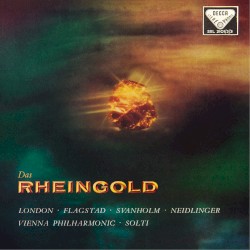 Das Rheingold1959
- 1.Das Rheingold: Weia! Waga! Woge! Du Wellen
- 2.Das Rheingold: Hehe ihr Nicker
- 3.Das Rheingold: Lugt Schwestern!
- 4.Das Rheingold: Interlude
- 5.Das Rheingold: Geheimnishehr hallt mir dein Wort
- 6.Das Rheingold: Heda! Heda! Hedo!
- 7.Das Rheingold: Abendlich strahlt der Sonne Auge (Entry of the Gods Into Valhalla)
- 8.Das Rheingold: Wotan, Gemahl! Erwache!
- 9.Das Rheingold: Hilf mir Schwester!
- 10.Das Rheingold: Sanft schloss Schlaf dein Aug'
- 11.Das Rheingold: Endlich Loge!
- 12.Das Rheingold: Gezahlt hab'ich
- 13.Das Rheingold: Bin ich nun frei? (Alberich's Curse)
- 14.Das Rheingold: Fasolt und Fafner nahen von fern
- 15.Das Rheingold: Weiche, Wotan! Weiche! (Erda's Warning)
- 16.Das Rheingold: Umsonst sucht ich (Loge's Narration)
- 17.Das Rheingold: Interlude (Wotan and Loge Descend to Nibelheim)
- 18.Das Rheingold: Hehe! Hieher! Tückischer Zwerg
- 19.Das Rheingold: Wer hilft mir!
- 20.Das Rheingold: Gehorchen muss ich dem leiblichen Bruder
- 21.Das Rheingold: Was wollt ihr hier? Interlude (Wotan and Loge Return From Nibelheim)
- 22.Das Rheingold: Da, Vetter, sitze du fest!
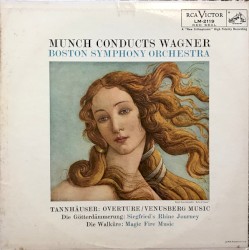 Munch Conducts Wagner1957
- 1.Tannhäuser: Overture and Venusberg Music (Paris version)
- 2.Die Walküre: Act III: Magic Fire Music
- 3.Die Götterdämmerung: Siegfried's Rhine Journey
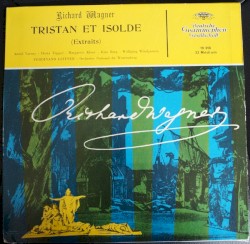 Tristan et Isolde (Extraits)1957
- 1.Prélude du 1er Acte
- 2.Wec', Ach Wehe Dies Zu Dulden
- 3.Einsam Wachend In Der Nacht
- 4.Tatest Du's Wirklich
- 5.Wie Sie Selig, Hehr Und Milde
- 6.Mort d'Isolde
 Prelude & Liebestod from "Tristan Und Isolde" / Dawn & Siegfried's Rhine Journey, Siegfried's Funeral Music from "Die Gotterdammerung"1955
- 1.Tristan und Isolde, WWV 90 - Concert version : Prelude10:26
- 2.Tristan und Isolde, WWV 90 - Concert version : Liebestod5:52
- 3.Götterdämmerung, WWV 86D - Concert version / Prologue : Dawn and Siegfried's Rhine Journey10:30
- 4.Götterdämmerung, WWV 86D - Concert version / Dritter Aufzug : Siegfried's Death and Funeral Music11:44
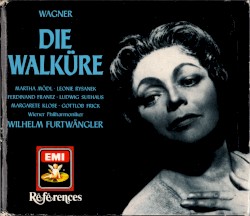 Die Walküre1955
Tracklist not collected yet.
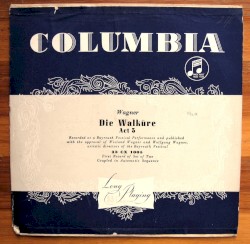 Die Walkure, Act 31952
Tracklist not collected yet.
 Die Meistersinger von Nurnburg1952
Tracklist not collected yet.
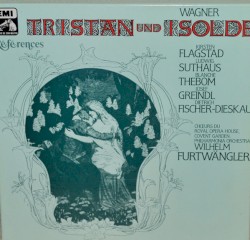 Tristan und Isolde1952
Tracklist not collected yet.
 A Wagner Concert1944
Tracklist not collected yet.
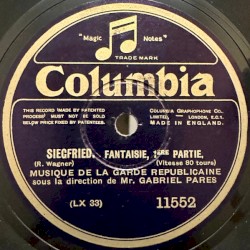 Siegfried. Fantaisie1927
Tracklist not collected yet.
 Tristano e Isotta2000
Tracklist not collected yet.
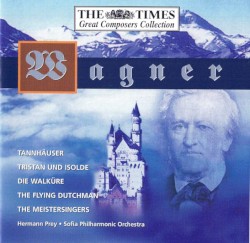 Richard Wagner1998
Tracklist not collected yet.
 Wagner's Greatest Hits1996
Tracklist not collected yet.
![Wagner - Die Walküre - Frida Leider, Göta Ljungberg, Emmi Leisner, Friedrich Schorr, Berlin State Opera/Blech and LSO/Barbirolli [Pearl]](/img?u=https%3A%2F%2Fcoverartarchive.org%2Frelease-group%2F77681e19-b2e9-4bdb-96e4-fab57ea3687c%2Ffront-250) Wagner - Die Walküre - Frida Leider, Göta Ljungberg, Emmi Leisner, Friedrich Schorr, Berlin State Opera/Blech and LSO/Barbirolli [Pearl]1989
Wagner - Die Walküre - Frida Leider, Göta Ljungberg, Emmi Leisner, Friedrich Schorr, Berlin State Opera/Blech and LSO/Barbirolli [Pearl]1989
Tracklist not collected yet.
 Die großen Opernchöre1987
Tracklist not collected yet.
 The Flying Dutchman (highlights)1965
Tracklist not collected yet.
 Arias • Duets With Melchior
Tracklist not collected yet.
Gallery


Achievements
- Award
- Bavarian Maximilian Order for Science and Art
Influenced by
Groups
- Siegfried Der Ring des Nibelungenoriginal, other vocalscurrent
Similar artists


Archive
Passport
Identifiers & aliases
Also known as: R Wagner, RichardWagner, Rihards Vāgners, Wagner, Wilhelm Richard Wagner, Рихард Вагнер
Wilhelm Richard Wagner was a German composer, theatre director, essayist, and conductor, best known for his operas, although his mature works are often referred to as music dramas. Unlike most composers, Wagner wrote both the libretti and the music for all of his stage works. He first achieved recognition with works in the Romantic tradition of Carl Maria von Weber and Giacomo Meyerbeer, but revolutionised the genre through his concept of the Gesamtkunstwerk, which sought to unite poetic, musical, visual, and dramatic elements. In that approach, the drama unfolds as a continuously sung narrative, with the music evolving organically from the text rather than alternating between arias and recitatives. Wagner outlined those ideas in a series of essays published between 1849 and 1852, most fully realising them in the first half of his four-opera cycle Der Ring des Nibelungen.
All links
Opinions of fans — not verified facts.
…