
Steve Reich is an American composer born on October 3, 1936, known for pioneering minimal music.
Reich grew up in a musical household and began studying music seriously at the age of 14 after discovering Baroque and 20th-century compositions.
His early work included innovative pieces like "It's Gonna Rain," which utilized tape loops and phase shifting techniques.
Biography
Early Life
Steve Reich was born on October 3, 1936, in New York City to Jewish parents, June Sillman, a Broadway lyricist, and Leonard Reich. Following his parents' divorce when he was just one year old, he split his time between New York and California. Growing up, he had limited exposure to music before 1750 or after 1900, but at the age of 14, he began to study music seriously after discovering Baroque and 20th-century compositions. He studied drums to play jazz and graduated from Cornell University in 1957 with a B.A. in Philosophy, where his thesis focused on Ludwig Wittgenstein.
Career
Reich's career took off in the 1960s as he became a pioneer of minimal music. His early compositions included film soundtracks and innovative works like "It's Gonna Rain," which utilized tape loops and phase shifting. He studied composition with notable figures such as Hall Overton, William Bergsma, and Luciano Berio, and earned a master's degree at Mills College. His unique style, characterized by repetitive figures and slow harmonic rhythms, was articulated in his essay "Music as a Gradual Process." Over the years, he released numerous influential albums, including "Music for 18 Musicians" and "Drumming," solidifying his status as a leading figure in contemporary music.
Legacy
Reich's contributions to music have earned him numerous accolades, including the Pulitzer Prize for Music and the Praemium Imperiale. His innovative approach has influenced a wide range of artists across genres, from John Adams to Björk. Critics have hailed him as one of America's greatest living composers, with his work continuing to resonate in both musical and visual arts. His legacy is marked by a profound impact on the direction of modern music, inspiring generations of musicians and composers.
Collected from open sources (4) · facts link to sources · AI-processed
Discography
 Another Look at Counterpoint1993
Tracklist not collected yet.
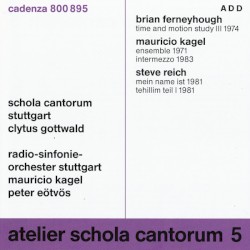 Atelier Schola Cantorum 51993
Tracklist not collected yet.
 Six Pianos / Variations / Music for Mallet Instruments1993
Tracklist not collected yet.
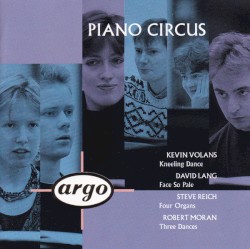 Volans: Kneeling Dance / Lang: Face So Pale / Reich: Four Organs / Moran: Three Dances1993
Tracklist not collected yet.
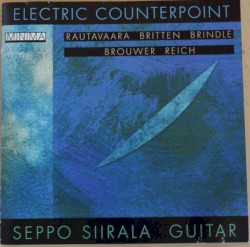 Electric Counterpoint1991
Tracklist not collected yet.
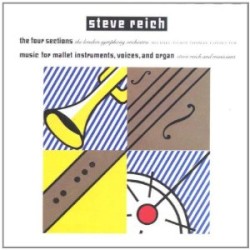 The Four Sections / Music for Mallet Instruments, Voices and Organ1990
Tracklist not collected yet.
 Steve Reich: Six Pianos / Terry Riley: In C1990
Tracklist not collected yet.
 Minimalist1990
Tracklist not collected yet.
 Music for Mallet Instruments1990
Tracklist not collected yet.
 Different Trains / Electric Counterpoint1989
Tracklist not collected yet.
 Drumming1987
Tracklist not collected yet.
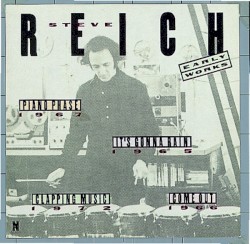 Early Works1987
Tracklist not collected yet.
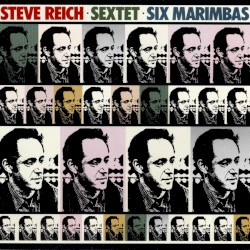 Sextet / Six Marimbas1986
Tracklist not collected yet.
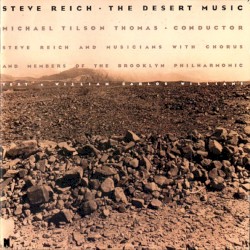 The Desert Music1985
Tracklist not collected yet.
 II.1985
Tracklist not collected yet.
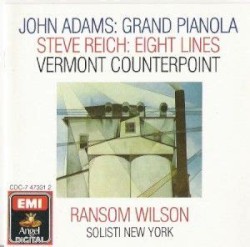 John Adams: Grand Pianola / Steve Reich: Eight Lines / Vermont Counterpoint1985
Tracklist not collected yet.
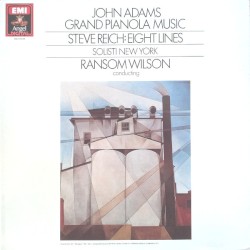 Adams: Grand Pianola / Reich: Eight Lines1984
Tracklist not collected yet.
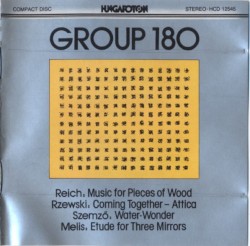 Reich: Music for Pieces of Wood / Rzewski: Coming Together / Attica / Szemző: Water-Wonder / Melis: Etude for Three Mirrors1983
Tracklist not collected yet.
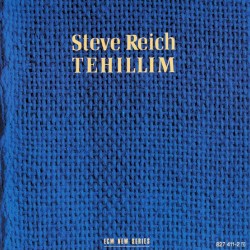 Tehillim1982
Tracklist not collected yet.
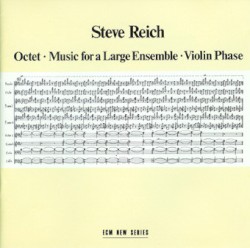 Octet / Music for a Large Ensemble / Violin Phase1980
Tracklist not collected yet.
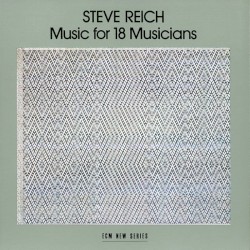 Music for 18 Musicians1978
Tracklist not collected yet.
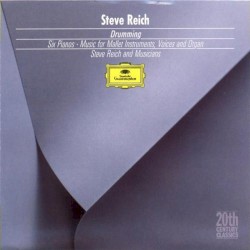 Drumming / Six Pianos / Music for Mallet Instruments, Voices and Organ1974
Tracklist not collected yet.
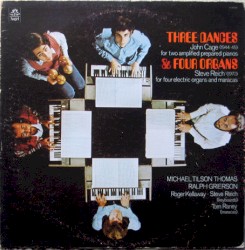 John Cage: Three Dances / Steve Reich: Four Organs1973
Tracklist not collected yet.
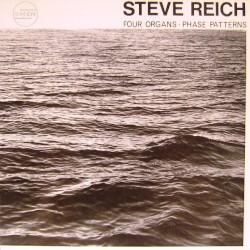 Four Organs / Phase Patterns1970
Tracklist not collected yet.
 Live / Electric Music1968
Tracklist not collected yet.
Gallery


Label
- Record label
- Deutsche Grammophon
- Record label
- ECM Records
Achievements
- Award
- Commandeur des Arts et des Lettres
- Award
- BBVA Foundation Frontiers of Knowledge Award
- Award
- Nemmers Prize in Music Composition
- Award
- Praemium Imperiale
- Award
- Guggenheim Fellowship
- Award
- honorary doctor of the Royal College of Music
- Award
- Pulitzer Prize for Music
Groups
- Steve Reich and Musicianscurrent
Archive
Passport
Identifiers & aliases
Also known as: Reich, Stephen Michael Reich
Stephen Michael Reich is an American composer best known as a pioneer of minimal music in the mid to late 1960s. Reich's work is marked by its use of repetitive figures, slow harmonic rhythm, and canons. Reich describes this concept in his essay "Music as a Gradual Process" by stating, "I am interested in perceptible processes. I want to be able to hear the process happening throughout the sounding music." For example, his early works experiment with phase shifting, in which one or more repeated phrases plays slower or faster than the others, causing it to go "out of phase." This creates new musical patterns in a perceptible flow.
All links
Opinions of fans — not verified facts.
…