
Johann Wolfgang von Goethe
Musician · Germany · 1749–1832
Goethe is widely regarded as the most influential writer in the German language, with a career spanning from 1749 to 1832.
His novel "The Sorrows of Young Werther" is often considered the world's first best-seller, igniting the Romantic movement.
Goethe was not only a writer but also a scientist, making significant contributions to color theory and morphology.
Biography
Early Life
Johann Wolfgang von Goethe was born on August 28, 1749, in Frankfurt, Germany, into a well-to-do family. His grandfather, Friedrich Georg Goethe, had moved from Thuringia and established a successful tavern, which provided a comfortable upbringing for Goethe and his family. His father, Johann Caspar Goethe, was an Imperial Councillor who ensured that Johann received a comprehensive education, including languages and the arts, from private tutors. Despite the family's wealth, Goethe faced personal tragedy early on, as most of his siblings died young, leaving him and his sister Cornelia as the sole survivors.
Career
Goethe's literary career began to flourish in the 1770s with the publication of his first major works, including the tragedy "Götz von Berlichingen" (1773) and the novel "The Sorrows of Young Werther" (1774), which catapulted him to fame and is often credited with igniting the Sturm und Drang movement. His time in Weimar was marked by significant collaborations, particularly with Friedrich Schiller, leading to the creation of notable works such as "Wilhelm Meister's Apprenticeship" and the fable "Reineke Fuchs." Goethe's later years saw the completion of his magnum opus, "Faust," which remains a cornerstone of German literature.
Legacy
Goethe's influence extends beyond literature into the realms of science and philosophy. He was a pioneer in color theory and made significant contributions to natural science, amassing a vast collection of minerals. His works have inspired countless thinkers, including Hegel and Nietzsche, and he is celebrated as one of the leading figures of Weimar Classicism. Goethe's legacy as a polymath continues to resonate, with his writings shaping modern thought and artistic expression.
Collected from open sources (4) · facts link to sources · AI-processed
Discography
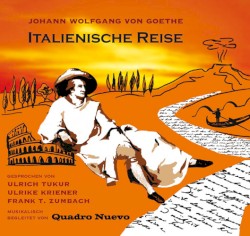 Italienische Reise2009
Tracklist not collected yet.
 Faust: Der Tragödie zweiter Teil1985
Tracklist not collected yet.
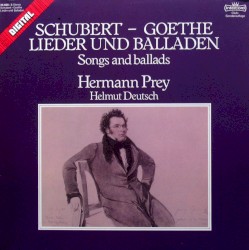 Lieder und Balladen1982
Tracklist not collected yet.
 Reineke Fuchs1958
Tracklist not collected yet.
 Italienische Reisen: Johann Wolfgang Goethe 1786 – Michael Schrott 19862007
Tracklist not collected yet.
 Hamlet • Don Carlos • Faust1997
Tracklist not collected yet.
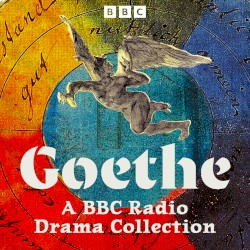 Goethe: A BBC Radio Drama Collection2023
Tracklist not collected yet.
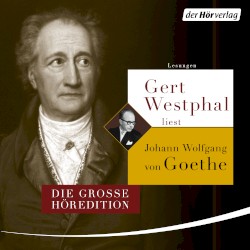 Gert Westphal liest Johann Wolfgang von Goethe2017
Tracklist not collected yet.
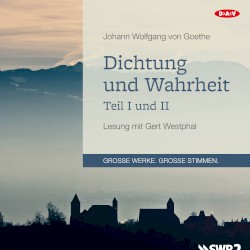 Dichtung und Wahrheit, Teil I und II2016
Tracklist not collected yet.
 Dichtung und Wahrheit, Teil III und IV2016
Tracklist not collected yet.
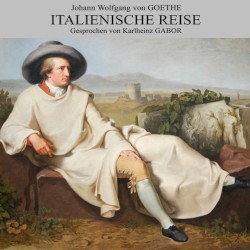 Italienische Reise2016
Tracklist not collected yet.
 Hermann und Dorothea2015
Tracklist not collected yet.
 Die Wahlverwandtschaften2014
Tracklist not collected yet.
 Faust II2013
Tracklist not collected yet.
 Faust I2011
Tracklist not collected yet.
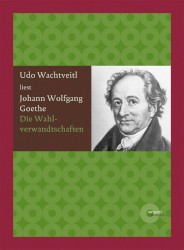 Die Wahlverwandtschaften2006
Tracklist not collected yet.
 Lutz Görner spricht und singt Goethe Superstar live!1999
Tracklist not collected yet.
 Faust: Der Tragödie erster Teil (Gründgens-Inszenierung, Düsseldorfer Schauspielhaus)1998
Tracklist not collected yet.
 Die Leiden des jungen Werther1996
Tracklist not collected yet.
 Urfaust
Tracklist not collected yet.
 Reineke Fuchs
Tracklist not collected yet.
Gallery


Achievements
- Award
- Officer of the Legion of Honour
- Award
- Order of Saint Anna, 1st class
- Award
- Grand Cross of the House Order of the White Falcon
- Award
- Knight Commander of the Order of Leopold (Austria)
- Award
- Order of Leopold
- Award
- Grand Cross of the Legion of Honour
- Award
- Merit Order of the Bavarian Crown
Influenced by
Similar artists




Archive
Passport
Identifiers & aliases
Also known as: Johann Wolfgang Goethe, Johans Volfgangs fon Gēte, V. Gēte, ヨハン・ヴォルフガング・フォン・ゲーテ
German writer, artist, natural scientist and politician (1749–1832)
Johann Wolfgang von Goethe was a German polymath who is widely regarded as the most influential writer in the German language. His work has had a wide-ranging influence on literary, political, Christian views, and philosophical thought in the Western world from the late 18th century to the present. A poet, playwright, novelist, scientist, statesman, theatre-director, and critic, Goethe wrote a wide range of works, including plays, poetry and aesthetic criticism, as well as treatises on botany, anatomy, and colour.
All links
Opinions of fans — not verified facts.
…