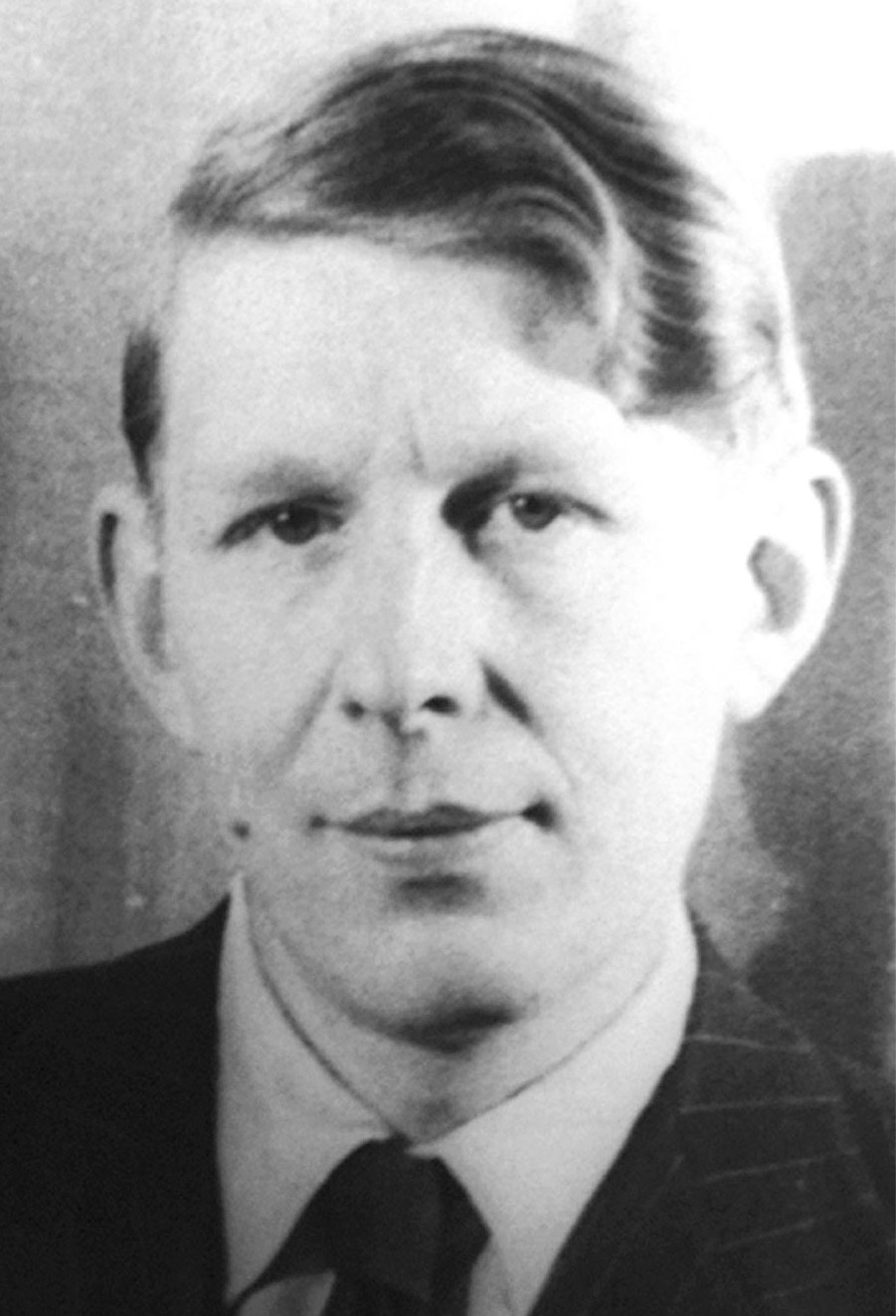
W. H. Auden was a British-American poet known for his stylistic and technical achievements in poetry.
Auden published about four hundred poems, showcasing a wide range of styles from modernism to traditional forms.
He was awarded the Pulitzer Prize for Poetry, highlighting his significant contributions to literature.
Biography
Early Life
Wystan Hugh Auden was born on February 21, 1907, in York, England, to George Augustus Auden, a physician, and Constance Rosalie Auden, a trained missionary nurse. Growing up in an Anglo-Catholic household, Auden was influenced by the church's rituals and music, which sparked his lifelong love for language and poetry. He was the youngest of three sons in a family with a strong clerical tradition, and his early experiences in the Pennine landscape would later inspire much of his poetry.
Career
Auden's literary career spanned several decades, during which he published around four hundred poems and numerous essays on a wide range of subjects, including literature, politics, and music. His poetry is celebrated for its stylistic diversity, ranging from modernist forms to traditional ballads. Notable works include "Funeral Blues" and "September 1, 1939," which reflect his engagement with political and social themes. Auden also collaborated with Christopher Isherwood on plays and opera libretti, and he worked with the New York Pro Musica early music group in the 1950s and 1960s. His willingness to revise or discard earlier works demonstrates his commitment to artistic integrity.
Legacy
Auden's contributions to poetry earned him numerous accolades, including the Pulitzer Prize for Poetry and the Guggenheim Fellowship. His work continues to influence poets and writers, and his exploration of complex themes such as love, politics, and religion remains relevant today. Auden passed away on September 29, 1973, leaving behind a rich legacy that has solidified his place as one of the most significant poets of the 20th century.
Collected from open sources (4) · facts link to sources · AI-processed
Discography
 The Voice of the Poet2004
- 1.The Wanderer2:07
- 2.O Where Are You Going?0:58
- 3.Our Hunting Fathers0:57
- 4.On This Island0:57
- 5.As I Walked Out One Evening2:15
- 6.Fish in the Unruffled Lakes1:04
- 7.Autumn Song1:04
- 8.Death's Echo3:19
- 9.Musée Des Beaux Arts1:30
- 10.From in Time of War3:42
- 11.In Memory of W. B. Yeats3:31
- 12.Law Like Law2:42
- 13.Under Which Lyre6:52
- 14.A Walk After Dark2:08
- 15.The More Loving One1:05
- 16.The Shield of Achilles3:48
- 17.Friday's Child2:19
- 18.Thanksgiving for a Habitat4:07
- 19.The Common Life3:54
- 20.August 19680:40
- 21.Moon Landing2:35
- 22.River Profile2:46
- 23.A New Year Greeting2:53
 Reading From His Works
- 1.In Memory O W. B. Yeats3:57
- 2.In Praise Of Limestone6:13
- 3.The Capital1:22
- 4.Schoolchildren1:22
- 5.As He Is2:35
- 6.Five Lyrics11:20
- 7.Bucolics (Winds)2:41
- 8.Bucolics (Woods)3:10
- 9.Bucolics (Mountains)3:35
- 10.Bucolics (Lakes)3:28
- 11.Bucolics (Islands)1:38
- 12.Bucolics (Plains)4:48
- 13.Bucolics (Streams)4:36
 The Spoken Word: W. H. Auden
Tracklist not collected yet.
 The Spoken Word: W. H. Auden
Tracklist not collected yet.
Gallery


Achievements
- Award
- Guggenheim Fellowship
- Award
- Bollingen Prize
- Award
- King’s / Queen’s Gold Medal for Poetry
- Award
- Feltrinelli Prize
- Award
- Pulitzer Prize for Poetry
- Award
- National Book Award
- Award
- St. Louis Literary Award
- Award
- United Nations Peace Medal
- Award
- Austrian State Prize for European Literature
- Award
- Golden Wreath
Influenced by
Similar artists


Archive
Passport
Identifiers & aliases
Also known as: Wystan Hugh Auden
Wystan Hugh Auden was a British-American poet. Auden's poetry is noted for its stylistic and technical achievement, its engagement with politics, morals, love, and religion, and its variety in tone, form, and content. Some of his best known poems are about love, such as "Funeral Blues"; on political and social themes, such as "September 1, 1939" and "The Shield of Achilles"; on cultural and psychological themes, such as The Age of Anxiety; and on religious themes, such as "For the Time Being" and "Horae Canonicae".
All links
Metrics in detail
Opinions of fans — not verified facts.
…